









Jenny Sanders explores the growing movement of older women choosing community and shared living over the isolation that can so often accompany later life. Reflecting on faith, family and the biblical call to care for the lonely, she asks whether co-housing could offer not only practical support, but also companionship, dignity and hope in the years ahead.
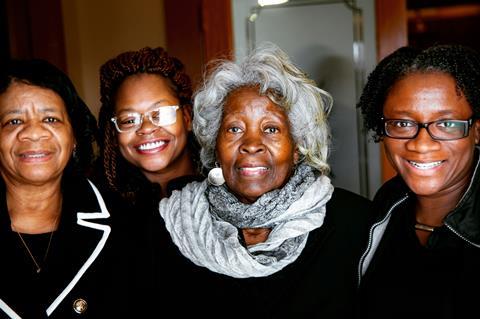
Psalm 68:6 tells us that God ‘puts the lonely in families.’ Family was his pattern and plan from the beginning but, while we’re all aware that some work better than others, we also need to be aware that they will inevitably look different as the seasons of our lives change.
Our children, if we have them, will grow up and, despite the financial crisis, most will eventually leave home. The empty nesters will have to regroup and find a new way of living within their new family shape and dynamic in the next chapter of their lives. But then what?
Statistics tell us that life expectancy for females in the UK is, on average, four years longer than for men. My own mother has been a widow for the past eight years. To lose your spouse and continue living in the family home is not always a viable financial option but changing location is potentially disruptive both geographically and relationally.
READ MORE: The new Chinese App for single people that asks if you’re dead yet and the importance of a God-created community
For every woman who is happy with her own company, there are many more who find their loneliness overwhelming.
For every woman who is happy with her own company, there are many more who find their loneliness overwhelming. Isolation can be crippling, leading to mental health issues including possible depression which, together with reduced economic circumstances, can combine to give a bleak outlook for many ladies of advancing age. The World Health Organisation considers loneliness an ’urgent, top-tier global public health threat’ which has been linked to around 871,000 death/year (that’s about 100/hour).
So what can we do? It may not be viable, or even desirable, to live with your adult children who may or may not have children of their own. Do we just have to accept that our twilight years may be long and lonely? I don’t think so, and neither do a whole raft of other women who are exploring new solutions in the form of co-housing.
READ MORE: When the gym replaces nights out: what are Christian women gaining—and losing?
Pat Dunn in Ontario recently talked to the BBC about how she reached out to other women facing the same challenges of widowhood via social media and inadvertently started an online community.
Pat Dunn in Ontario recently talked to the BBC about how she reached out to other women facing the same challenges of widowhood via social media and inadvertently started an online community. She’s found a new lease of life by sharing her home with two other women. Each has their own life and interests, but they generally eat together each evening enjoying companionship and chat while sharing the financial strain of being single. Each is flourishing in her own new space. Pat is delighted that once again someone is looking out for her, is concerned for her safety, worried if she’s not home when she planned and is invested in her wellbeing, just as she is for them.
My friends and I have talked about this only in a light-hearted way so far. By combining forces and budgets we may be able to combat loneliness and ensure we stay engaged with life and with people who share our values, but I wonder what it might look like in reality. Not quite a return to the raucous and rambunctious days of carefree student-hood!
READ MORE: The transformational power of restoring people’s sense of self-worth when they are isolated and lonely
We’d have to set our own boundaries for how our communal living might function if we could arrive at the stage of choosing anyone we would honestly be happy to share space with for the coming years. We all get used to doing things a certain way and it’s increasingly difficult to alter our habits, domestic or otherwise, as we get older. Those old bug bears of laundry, bills, cleaning and volume of music/TV might look vastly different at 70 or 80 from at 18 or 20 but, make no mistake, they would still exist. We’d need to seriously weigh up the pros and cons of such an arrangement before embarking on it.
Ten years ago, an all-party parliamentary group ‘recommended that more housing associations use their development skills and experience to help the UK’s fledgling senior co-housing movement.’ Co-housing in many forms is becoming increasingly popular here. Maybe it’s time the Christian community considered it more seriously.
Whatever transpires in the years ahead, Deuteronomy, Isaiah, Jeremiah, Psalms and James all tell me that God watches over widows, fights for their rights, sustains, protects and loves them. In an uncertain world where none of us knows what lies ahead, that’s reassuring.
























2 Readers' comments