






Writer Kate Orson reflects on why a wellness trend she once seriously considered now leaves her profoundly grateful she never followed through. Looking back through the lens of her Christian faith, she explores what placenta consumption reveals about modern wellness culture, spiritual discernment and the need to distinguish truth from deception.
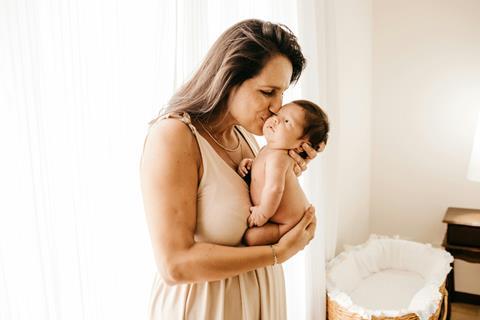
Fifteen years ago, when I was pregnant, I read about the supposed health benefits of mothers eating the placenta after giving birth. I’d always been interested in health and wellness, and it felt like doing so was reclaiming a natural and ancient practice that we’d somehow forgotten on the journey to becoming more ‘civilised’.
While discussing my birth preferences with the midwives at the hospital, I asked them to save the placenta for me. But in the aftermath of a 22-hour labour, after it had languished under the bed in a plastic bag, I just wasn’t sure anymore about taking it home to cook or figuring out how to have it encapsulated. So I simply left it there.
I wasn’t a Christian when I gave birth, and since becoming a believer I have heard Christians describe the practice as cannibalism, so I’m quite relieved that I didn’t go through with it.
READ MORE: ‘I was pregnant with my 5th child when my marriage and ministry fell apart’
I didn’t think much more about it until the other day, when I noticed a post on Substack from a woman warning others that after consuming her placenta she experienced the worst headache of her entire life. She also shared that “something about the entire experience felt deeply wrong.” Beneath her post were comments from other women who had felt unwell after eating their placenta, or who had considered it but ultimately decided against it because something instinctively felt wrong.
Many wellness trends feel like they’re reclaiming some lost part of our history, returning to more natural ways of doing things.
Many wellness trends feel like they’re reclaiming some lost part of our history, returning to more natural ways of doing things. But when it comes to eating the placenta, there’s actually no evidence that women have routinely done this in the past or across other cultures. Sara Reimold, a birth doula and Christian, has observed that many pro-placenta consumption resources claim there is historical evidence for the practice in other cultures, yet they fail to provide valid sources to support those claims.
READ MORE: God set me free from the stigma of having a C-section and now I’m just glad my baby is safe
Mark B. Kristal, a professor at the State University of New York at Buffalo, has conducted anthropological research into placenta consumption across different cultures. He found no evidence that routine placenta consumption existed in any documented culture. In fact, many cultures have regarded eating the placenta as taboo.
The Bible mentions eating the placenta in Deuteronomy 28, in a passage describing a woman so desperate from famine that she secretly consumes her afterbirth, alongside her own children, because she has no food.
I’m still a ‘crunchy’, alternative health kind of person, but I think this highlights something that can happen within wellness circles. Mixed in with genuine truths, the enemy also operates, spreading lies and, in this case, seemingly deceiving women into consuming their own flesh.
READ MORE: ‘God carried me when I was told I needed to terminate my pregnancy’
While many animals consume their placenta after giving birth, humans are not meant to.
While many animals consume their placenta after giving birth, humans are not meant to. I believe that points to a deeper truth. We are not simply a more intelligent or more complex form of animal life; we are human beings made in the image of God. God’s laws are written on our hearts. Whether believers or not, we sometimes follow those laws instinctively because of the way God created us. At other times, however, we are deceived and led into sin by the enemy.
As I’ve researched and written this article, I’ve felt incredibly repulsed by the idea of eating the placenta. Yet when I didn’t have the Holy Spirit and was immersed in New Age beliefs, I had no real hesitation about considering it. It’s a reminder of how easily we, as humans, can get things wrong. We call evil good and good evil, and in an increasingly confusing culture, we desperately need Jesus to help us discern right from wrong.