









As the nation gears up for another summer of football, writer Jenny Sanders highlights a troubling reality that often goes unnoticed amid the excitement of major tournaments. She explores the link between big matches and rising levels of domestic abuse, and why Christians must remain vigilant in protecting the vulnerable.
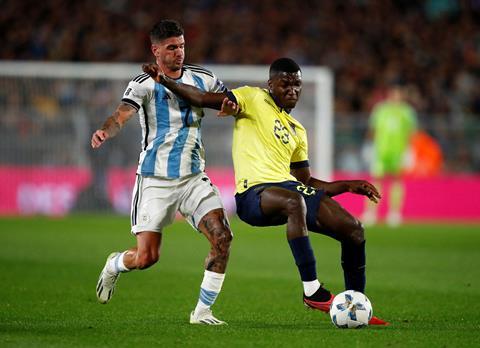
England is about to go mad for the football World Cup which begins today. Not only will your TV schedules be jammed with apparently never-ending footie, but cars, houses and shops will be fluttering the flag of St George like there’s no tomorrow. Pubs will be falling over one another in their attempts to lure in punters to watch matches on their ‘biggest ever’ TV screens while offering ‘bargain’ beer prices.
READ MORE: As a professional footballer and a Christian, I want the momentum around women’s football to continue long after the World Cup
Our first game (if you’re interested) is against Croatia on 17th June. Before then, money will change hands in bets while work-place sweepstakes will assign one of the 48 teams to individuals in an effort to pull everyone into the mayhem. It doesn’t matter that we haven’t won this thing since 1966, the degree of hype, excitement and fervour will be felt across the nation as kids pull on mini-versions of the England kit and collect album stickers. Advertisers and sponsors will thrust their campaigns at us from every conceivable direction and the number of sick days will inevitably soar whenever the men in white are scheduled to be on the pitch.
We know this because every four years the competition rolls around and the famous golden trophy so widely featured on everything from socks to breakfast cereal, named after Jules Rimet, the FIFA President who founded the tournament, will be the focus of every team.
READ MORE: The 2022 World Cup in Qatar is a wake-up call about labour exploitation – so what can the Church do to help?
Less widely featured is what happens off the pitch, usually behind closed doors, for some of the partners of football fans.
Less widely featured is what happens off the pitch, usually behind closed doors, for some of the partners of football fans. A study by Lancaster University concluded that incidents of domestic violence increase significantly whenever our national team plays. The university based their research on the three tournaments played between 2002 and 2010 and on supporters watching those matches on television rather than in person. Clearly the emotional atmosphere within a household changes in these instances.
Whether the team won, drew or lost, domestic abuse increased: by 26% in the first two cases and by 38% in the last. Despite being a relatively small study, we know that unregulated emotions fuelled by alcohol and peer pressure lead to higher levels of violence at home. In a ‘live’ situation there are the added factors of ‘tribal’ behaviour, misdirected nationalistic fervour, heightened atmosphere, misplaced aggression as well as agitators and influencers from various political persuasions spoiling for a fight. There’s no reason to believe these figures have decreased and statistics show clear spikes during major tournaments.
While football itself doesn’t cause this, the individuals who struggle to regulate their emotions and reactions are always responsible for their actions and responses. Nevertheless, all this is bad news for women and children who are the the primary targets of domestic violence and abuse. Perpetrators risk losing their families, homes and jobs; victims lose their trust, dignity and even their lives, while children can lose the people who look after them.
READ MORE: Five early warning signs of domestic abuse that Christians might miss
The National Centre for Domestic Violence defines this abuse under six headings: physical, sexual, violent or threatening behaviour, controlling or coercive behaviour, economic abuse and emotional or psychological abuse. According to their website, ‘The social and economic costs of DV are estimated at £66 billion in England and Wales in the year 2016-17. £14 billion of this is the cost to the economy arising from lost output due to time off work.’
Intra-family violence of any sort is clearly not part of God’s plan but we’d be naive and foolish to think that it doesn’t happen even within the family of God.
Intra-family violence of any sort is clearly not part of God’s plan but we’d be naive and foolish to think that it doesn’t happen even within the family of God. We need both wisdom and discernment to look out for our sisters both inside and outside the church family at all times, but particularly over this next six weeks.
Compassion and sensitivity may be required if we suspect that one of our friends is suffering at the hands of a family member. Asking perceptive, empathetic questions where trust is strong may open the door for patient listening and support. We can always point friends to resources online using our own phone if there’s monitoring at home, and even help construct a safety plan where necessary. Be the safe place for those who are potential victims.
Let’s support our sports teams appropriately but remember that God’s heart is always for the exploited and vulnerable.
If any of these issues have affected you, you can call Premier Lifeline for support. Premier Lifeline is a national, confidential helpline offering a listening ear, emotional and spiritual support from a Christian perspective. If you would like someone to talk with and pray for you, call Premier Lifeline on 0300 111 0101.
The National Centre for Domestic Violence: freephone 0808 2000 247
























No comments yet