
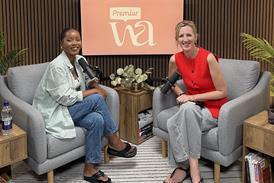







Hena J Bryan questions the imbalance she sees between the sexes within marriage, and says she does not want to see herself diminished by traditional expectations – she isn’t alone
At first, Orson appears to be her equal. He shares her faith, her values, her commitment to family and order. But that symmetry fractures the moment Bree allows herself to want something beyond the home. When her cookbook becomes a successful business, she orients herself towards something that exists outside of her role as a wife. It is here that the marriage begins to strain. Orson cannot accommodate her expansion. In one pivotal scene, he asks Bree to sell her company and return to being a wife full time – not out of necessity, but to preserve his sense of self. When she asks whether he truly expects her to give up the work that gives her pride and identity, he answers without hesitation: “Yes”.
I paused the episode there. The dynamic itself was not unfamiliar. I had seen variations of it before, both in fiction and in real life. Women adjusting themselves in order to maintain the emotional equilibrium of a man. At 29, I have spent nearly three decades building a life I recognise as my own. A career that reflects my abilities. Autonomy I have fought to maintain. A sense of self that has taken time to understand. I know what it has cost me to become this version of myself. I also know that I am not willing to relinquish it. I want love, partnership and marriage. What I no longer want is to become secondary within my own life in order to sustain it.
An unbalanced rhythm
Like many women raised within religious frameworks, I was taught that my life would find its fullest expression in becoming someone’s wife. For a long time, I accepted that as the truth. I evaluated relationships through that lens, assessing both the men I encountered and myself against what I understood wifehood to require. Over time, something shifted. The longer I remained unmarried, the more space I had to observe, to listen and to think critically about the examples of marriage I had been given. What I began to notice was not partnership defined by mutuality, but a pattern of imbalance: women carrying the weight of emotional, domestic and mental labour, often without acknowledgment.
I am aware that my ability to question this is shaped by privilege. That awareness does not diminish the questions, it sharpens them. In Proverbs 31, the ideal woman is industrious, disciplined, generous and deeply committed to her household. She rises early, manages her home, contributes economically and serves with diligence. It is, in many ways, a portrait of capability and strength. What is less frequently examined is how this ideal is interpreted in practice: as endless giving, often without the expectation of reciprocity.
I have come to understand that I am not built for a life defined by one-directional service. The relationships that sustain me are rooted in mutual care. There is a rhythm to them, a sense that effort is shared and presence flows in both directions. What I have observed of wifehood, both within and beyond my immediate context, often feels misaligned with that rhythm. The imbalance may not always be intentional, but its effects are difficult to ignore. Patriarchy does not require deliberate malice to function. It is embedded in the structures we move through, shaping expectations in ways that often go unquestioned.
Refusing to be diminished
I consider the life I have built to be intentional. It has taken time, reflection and a significant amount of unlearning to arrive at a place where I feel both grounded and expansive. There was a time when I might have exchanged that for the comfort of conformity. That is no longer the case. Knowing myself has clarified both what I want and what I am unwilling to accept. The version of wifehood I have encountered, one that appears to require a diminishing of self, sits firmly within that boundary.
The phrase ‘you would make a good wife’ has never been a compliment. It feels like a reduction, a suggestion that the most valuable expression of who I am lies in how well I might serve someone else. In reality, the qualities people are recognising are already present in my life. I care deeply. I show up consistently. I invest in the people around me. None of that requires the title of ‘wife’ to be legitimate. As a baptised Christian, holding this perspective can feel isolating. Many of the people around me still view marriage, and more specifically wifehood, as the natural culmination of a woman’s life. What I struggle to admit, even now, is that I do not want to become a wife, at least not in the way I have seen it lived.
Conversations around the conflict
I began to wonder whether this conflict was mine alone. For Tumisha Balogun, a 29-year-old based in London, the distinction feels immediate. “I want to be married,” she tells me, “but I don’t want to be a wife.” What she resists is not intimacy, but expectation. As she has gotten older, her relationship to marriage has shifted. What once felt aspirational now feels complicated by the sense that it might require her to compromise the life she is building for herself.
For her, the word ‘wife’ carries weight – less a partnership, more a role shaped by expectation. What she wants instead is something simpler, and far more difficult to sustain in practice: a relationship that allows her to remain connected to her own ambitions. “I don’t want to wake up and forget my dreams,” she says.
Terri Nwanma, 31, articulated it this way: “I want to get married as a statement of commitment to someone I want to go through life with, but being a wife feels like succumbing to societal definitions of often unappreciated and unsupported work.” The distinction, for many of us, has become impossible to ignore.
I want love, partnership and marriage. What I no longer want is to become secondary within my own life in order to sustain it
For Dorea Helena, the conflict takes a different shape. At 23, her desire for marriage remains steady, but it is tempered by an awareness of what it requires in practice. Where some resist the idea of wifehood altogether, she approaches it with gravity. “It’s a serious occupation,” she tells me, describing it as a role that carries both authority and responsibility. Her understanding of marriage is shaped by faith. Rather than rejecting the structure, she reframes it. Marriage, in her view, is a covenant rooted in mutual service, where both partners are accountable to God and to one another. That framing allows her to acknowledge the imbalance she has observed without abandoning the institution entirely. “I’m not discouraged,” she says, “just determined not to repeat those conditions.”
For Perola Janice, the desire for marriage exists alongside a clear awareness of what it might demand. “Some days, it feels like a scam,” she says. “Other days I think: I get to spend my life with someone I love.” What she has observed makes that contradiction difficult to ignore. “Everything falls on the woman,” she tells me.
As a Muslim woman, she is careful to distinguish between religion and culture. “Islamically, women don’t have to take on all of the domestic labour,” she explains. “But culture and religion get mixed together, and it ends up feeling like they do.” That distinction matters. It suggests that the imbalance many women associate with marriage is not always inherent to the institution itself, but to the way it has been practised. Even so, the effect remains. “I don’t want to feel like I’m married but doing life alone,” she says. “I know I could do it. It’s just not what I want for my life.” Her position is clear: “It has to benefit me. Otherwise, I don’t want it.”
Josephine Oppong-Bimpeh’s perspective is more measured. Marriage is not something she resists, but neither is it something she centres her life around. “It’s not really at the forefront of my mind,” she tells me, “but I know what I would want from it if it happened.” Like many of the women I spoke to, she draws a clear distinction between marriage and wifehood. “I don’t really like the word wife,” she says. “Not because of what it could mean, but because of what it often represents now.”
The qualities associated with it – caregiving, nurturing, emotional labour – are not undesirable in themselves. What concerns her is how often they are tied to expectations of submission, and the assumption that a woman’s identity should fold into the life of her husband. “I don’t want to be defined only by that role,” she explains. “It may be something that I am, but it’s not all that I am.”
That clarity is shaped, in part, by what she has seen at home. In her family, marriage was not structured around rigid roles, but around adaptability and shared responsibility. “My parents were equal in how they showed up,” she says. “They both took on what was needed.” That example has set the standard for what she believes marriage can be, even as she recognises that it is not always what it is. Her faith complicates that understanding. While she values the emphasis on mutual respect within Christianity, she finds herself questioning teachings that centre submission as a defining feature of wifehood.
Joy Basebya describes the dynamic bluntly: “It seems to be implied that a wife’s life mission is to be her husband’s executive assistant.”
Continuing to ask the questions
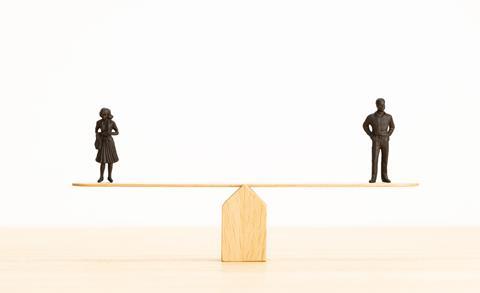
Across these conversations, something became clear to me. The desire for marriage has not disappeared. What has shifted is the willingness to accept the terms that have historically defined it. Increasingly women are asking questions that once felt unnecessary. What does it actually mean to be a wife? What does it require? And why have those requirements been so unevenly distributed?
What concerns me most is how seamlessly the expectations of culture have merged with the language of faith
There are those who will say that this imbalance is simply part of marriage. That love and commitment demand sacrifice. But it is worth asking whether the version of sacrifice that has been normalised is one that should be accepted without question. What concerns me most is how seamlessly the expectations of culture have merged with the language of faith. Much of what I have been taught about wifehood feels less like scripture and more like tradition, repeated until it begins to resemble truth. When I think about what I understand of Jesus Christ – of love, of service, of mutual care – I struggle to reconcile that with the erosion of self I have seen in so many women’s lives.
I have, at times, wondered what this says about me. Whether questioning these ideas places me at odds with my faith, or whether it is a way of engaging with it more honestly. I have also wondered what it means for my future. Whether the kind of partnership I am looking for exists, or whether I will be asked, at some point, to compromise more than I am willing to give.
Perhaps most uncomfortably, I have wondered whether, if I were a man, I would want a wife. The answer, if I am being honest, is probably yes. Having one, as it is currently defined, seems to offer far more than it asks in return. That, more than anything else, is what I find difficult to ignore. I still want marriage, I still believe in partnership, I still believe in building a life with someone. What I am no longer willing to accept is a version of that life in which I disappear.
Hena J Bryan is a London-based writer and digital strategist, and head of reader engagement at Libraro. Her work explores Black British identity, beauty culture and literature, with bylines in Glamour UK, Refinery29 and HuffPost. @henajbryan

















1 Reader's comment