







Jenny Sanders reflects on Princess Catherine’s remarkable Three Peaks Challenge and why it offers far more than an inspiring story of resilience after cancer. As England chased goals on the football pitch, Sanders explores what Catherine’s achievement can teach Christians about setting faith-filled goals that are truly worth pursuing.
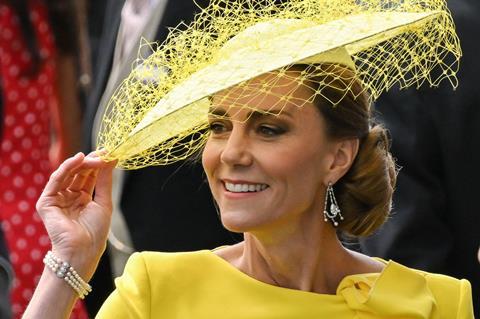
While much of the UK was sweating in blistering sunshine, or holding their breath to see whether England could score in their World Cup game against Panama, Catherine, Princess of Wales, worked up her own sweat and simultaneously scored a personal ‘goal’ by quietly and methodically completing the Three Peaks Challenge.
This notoriously tough challenge involves climbing the highest peaks in Scotland, England and Wales: Ben Nevis, Scafell Pike and Snowdon – a trek of approximately 22 miles, all within 24 hours.
It’s a frequent choice for charity fundraising. Catherine chose to complete the challenge to raise money for The Royal Marsden Hospital, where she underwent cancer treatment in 2024 and which, the Princess said, ‘does extraordinary work supporting those living with and beyond the disease.’ It’s also the hospital where my own sister was successfully treated last year.
READ MORE: Princess Catherine is in remission – what a gift to face mortality, and be given a second chance at life
Motivated by gratitude for coming through her health ordeal and now being both strong enough and healthy enough ‘to walk these hills’, Kate explained that she wanted ‘to give something back’ and use the challenge as a way to contribute ‘to all the wonderful work that’s been going on.’ In a personal statement, she spoke about the impact cancer can have on the whole person and, consequently, the importance of holistic healthcare as individuals ‘manage the deeply personal challenge of diagnosis.’
The public have never been told the details of Catherine’s treatment or the severity of her illness, but it’s clear that she’s become a champion for those who either have, or one day will have, an unwelcome diagnosis.
READ MORE: ‘Kate and I appear to be two lives affected by cancer that will never be the same again’
We’ve not been told how much money has been raised. Social media posts showed her on a ‘well-being’ walk in the Peak District back in February, but we don’t know anything about her training schedule. We do know that her family were there to greet and congratulate her as she descended the final peak.
I’ve often toyed with the idea of doing the Three Peaks Challenge, but that’s as far as it’s got: an idea.
I’ve often toyed with the idea of doing the Three Peaks Challenge, but that’s as far as it’s got: an idea. Recently, I wrote for Woman Alive about having ‘a faith-filled bucket list’, but there’s a marked difference between bucket lists and genuine goals. The former are wishes; daydreams compiled in the vague hope that one day they might actually happen. They rely on a vivid imagination without the constraints of practicality or budget. The latter are more substantial and often more worthwhile, as Kate has so vividly illustrated.
Having completed her treatment, she seems to have been keen to prove something to herself; perhaps that she is truly well and hasn’t simply become another impersonal statistic on a medical graph. A goal implies a specific, defined outcome. Unlike the often passive bucket list, it requires planning, personal engagement, training and discipline. It can only be achieved through active involvement with the task. Goals don’t fall into our laps through inertia, fantasy or wishful thinking. They are clear and measurable, but usually only achievable through strenuous personal effort. Goals require focus, grit and determination.
READ MORE: God told me to invite people on a walk but I had no idea how much the weekly activity would change people’s lives
The Bible speaks powerfully about goals.
The Bible speaks powerfully about goals. Jesus had a goal. Hebrews 12:2 says, ‘For the joy that was set before him he endured the cross.’ His eyes were firmly fixed on the ultimate goal of sharing eternity with those He liberated from the burden of sin and death. Us. That’s what He was looking forward to and longing for; that’s what motivated Him to ‘drink the cup’ the Father assigned to Him. We are the reason He endured everything during His 33 years on earth.
Had He chosen a different, pain-free goal, we would be left floundering, lost and without any means of restoring our relationship with God. Our ultimate goal now needs to be the same as Paul’s, laid out in Philippians 3:14: ‘I press on towards the goal to win the prize for which God has called me heavenwards in Christ Jesus.’
That’s going to involve those same ingredients: focus, grit and determination. It will require strenuous application and authentic, active faith if we’re to burst through the final tape with our eyes on the prize and peace in our hearts.























No comments yet