
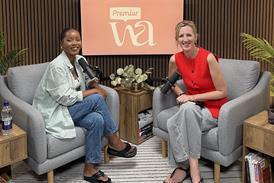



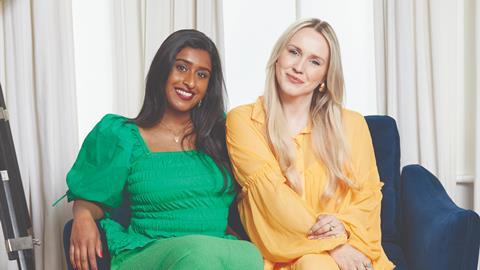


Former Woman Alive editor Tola-Doll Fisher and current editor Jemimah Wright spoke to commissioning editor Charisa Gunasekera and publishing director Lauren Windle about calling, representation and platform
Meet Penguin’s Christian commissioning editor
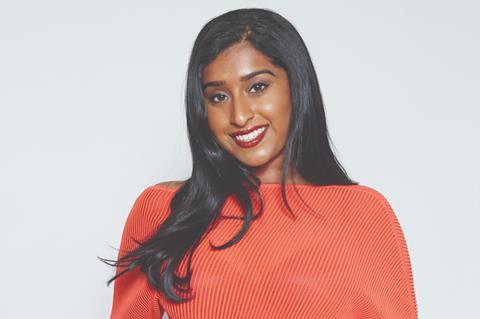
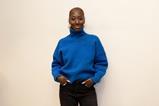
When Penguin Random House launched its first dedicated Christian imprint, it marked a significant moment for faith publishing in the UK. At the centre of it is Charisa Gunasekera.
Originally from Texas and now based in London, Charisa has spent years working across the publishing world – from literary agencies in New York to SPCK and now one of the world’s best-known publishers, Penguin.
Tola-Doll Fisher (TDF): For readers meeting you for the first time, tell us a little about your role.
Charisa Gunasekera (CG): I’m a commissioning editor at Penguin Random House, specifically launching the first Christian imprint there, which is called Ebury Vine. I’m also the religion and faith editor across the wider business, so I’m the dedicated person who gets to work on books connected to faith across Penguin, which is very exciting.
TDF: Penguin is such a legacy publisher. Why launch a Christian imprint now?
CG: Ebury is a very insights-driven division of Penguin – we publish non-fiction only – and we have an in-house team that tracks trends, buying habits and what people are talking about.
Back in 2024, they started noticing growing interest in faith, particularly among younger people. Even before a lot of public reports started talking about it, Penguin could see people moving towards faith through social listening and consumer trends.
There was also a wider sense that we were missing something. Most major publishers have some form of Christian publishing presence, and it felt like a real missed opportunity that Penguin didn’t have someone dedicated to this space.
TDF: I know you came from SPCK. What did the rest of your career journey look like before Penguin?
CG: I always had a strong sense of calling towards books. I grew up in Texas, surrounded by books – my dad now teaches at Biola University – and from a young age I felt God calling me to be a light in the literary world.
I was always writing, and my dream school was New York University (NYU). By God’s grace – I really mean by God’s grace – I was accepted.
My family, however, were slightly concerned about me moving to New York. Then NYU came back and said they were launching a new programme where a small group of first-year students would begin their studies in London instead. They also offered me a good scholarship, which made a huge difference. For some reason, my parents were much happier with the idea of London.
So I did my first year with NYU doing English and Global Liberal Studies in London, then moved to New York for the next stage of my degree. But I missed London so much, I eventually came back for my third year.
During my degree, I interned at Faber and Faber, then worked at a literary agency in New York, and later at Yale University Press in London before joining SPCK.
At SPCK, I started as campaigns manager and later became marketing manager and editor, so I’ve worked across editorial, sales, marketing and publicity – which is really helpful now as a commissioning editor.
TDF: What did your faith journey look like in this season?
CG: When I was in New York, I felt quite disconnected from my sense of purpose. I’d grown up with a strong sense that my calling was to be a light in the literary world, but I wasn’t feeling that anymore.
I’d drifted from faith a little. I’d walk away from it, then fall back on it when things got hard, then drift again. Eventually, I realised that cycle just wasn’t sustainable.
My grandmother became very ill, there was a hurricane back home in Texas, and I felt I needed to return home, help my family and really pray about what God was asking of me.
That season of stopping and listening changed everything. I genuinely feel like this role now is such a God thing.
TDF: Representation in publishing has been a huge conversation. As a woman of colour, is championing diverse voices important to you?
CG: Very much so. When I was interning at Faber in 2016, those conversations were just beginning. I remember realising I was often the only person of colour in the room. It made me very aware of how important representation is – not just visibility but having people in the room who can bring in different voices.
One of the biggest things I look for is underrepresented voices. People often associate Christianity with older white men – and of course there is value there – but actually, so much of the growth in the UK Church is happening among young people and people of colour. Those communities have a lot to say about faith, about church and about what Christianity looks like now. I want Ebury Vine to reflect that.
TDF: What kind of books are you looking to publish?
CG: I want books that represent Christianity well – books that are theologically sound, written by people with integrity and real credibility, but also books that are accessible to people who wouldn’t necessarily walk into church. This imprint sits in that in-between space: for the Church, but also for the wider world.
I want to bring Christian voices into more mainstream bookshops and secular spaces. I want people who may never have encountered Jesus to pick up a book because they’re interested in leadership, personal growth, folklore or culture – and then encounter something deeper.
TDF: There’s so much focus on Gen Z returning to faith right now. What would you say to older women who feel their voices matter less?
CG: Honestly, most of the people I commission are older. There is something so valuable about maturity, lived experience and having actually walked with Jesus through life’s ups and downs. My heroes are women of God who have run the race and run it well. They’ve known suffering, joy, disappointment and faithfulness. That depth matters.
Young people are looking for what is real. In a world where so much feels artificial and surface-level, people are hungry for depth, gravity and wisdom. That’s what older women bring.
Sometimes, women who’ve lived faithfully for decades think they have nothing to say – but actually, that’s exactly what people need. That kind of lived faith is incredibly powerful.
Meet SPCK’s publishing director
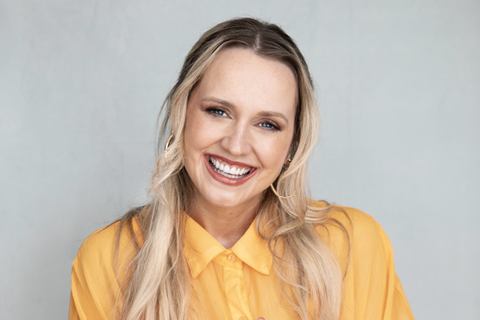
Lauren Windle is a UK author, journalist, speaker, presenter and now also publishing director at SPCK. Her LinkedIn profile describes her as “proactive, personable and toxically efficient”. She also says she was once described as ‘Christian famous’ at a book signing and has been dining off it for 18 months.
Jemimah Wright (JW): Does being ‘Christian famous’ help in your role?
Lauren Windle (LW): ‘Christian famous’ is such a funny phrase, isn’t it? There’s definitely a part of me that loves it, and a part of me that absolutely bristles and hates it.
I’m not that well known – there are far better-known people – but there are certain spaces where I can walk in and people might recognise me, or follow me on Instagram or have engaged with my work. It’s a bit different in the Christian space, because I’m not doing this to build my own platform or get brand deals; I don’t do paid partnerships. I do it because I feel like God’s given me a message that might help people. When someone reads one of my books and messages me saying, “This is just what I needed,” that’s what I’m going for.
In terms of whether it helps in publishing, yes, I think the work I’ve done before definitely does. I worked with you on Woman Alive and met so many amazing writers. Those relationships are already in place. And, as a speaker, I get invited to conferences and festivals, which gives me opportunities to meet people.
JW: As an author, do you feel you have to embrace your platform in order to sell books?’
LW: I think I’m maybe a little more comfortable with it than some, because my background is in PR and marketing. But a lot of authors, especially in the Christian space, really struggle with promoting themselves. They don’t want to hold up a book and say, “Look what I did,” especially when they know they’ll make money from it (even though, as we both know, it’s not much money!). Here’s the tension: at SPCK, we publish books with really important messages. But if hardly anyone reads them, they’re not actually helping the people they’re meant to help. So you have to do both. You have to write well, follow where Jesus is leading and speak on important topics, but you also have to tell people about it. Otherwise, it won’t have the impact you want. It’s uncomfortable, but it’s vital if you want people to engage and for lives to be changed.
JW: Tell us about your journey into publishing. How did God lead you into this role?
LW: I wrote Notes on Love, which came out in 2021. That was my entry into Christian media. Before that, I’d been working in tabloid journalism and mainstream media. Then I worked with Woman Alive, did a TBN show with your former editor, Tola-Doll Fisher, popped up on radio, such as Premier Christian Radio, and started writing more widely. Then I got my second book deal for Notes on Feminism. Between drafts, my editor left, and I ended up working with two brilliant editors. It felt like such a gift.
At that point, I met with the deputy CEO at SPCK, and we had a great chat. She asked if I’d consider applying for a commissioning editor role. I did, and got the job. It’s very different from magazine editing. With magazines, if something doesn’t interest you, it might be a day’s work and you move on. With books, you’re committing to about a year of working closely with someone; you have to really believe in it.
After a couple of years, the publishing director began stepping back, and the role opened up. In a bigger organisation, you’d probably expect someone with more experience [to take over], but I loved the job, had ideas about strategy and reach, and put together a vision. They offered me the role. I started at the beginning of this year.
JW: Can you share some of that vision?
LW: I think there’s a big opportunity right now. There’s a lot of talk about church growth. In our own SPCK Group, we’ve tracked Bible sales, and they’re up 134% since the pandemic. So it’s absolutely skyrocketing. And, anecdotally, we’re seeing more people exploring faith.
When people start asking questions, the first thing they need is a Bible, but then they need resources to help them understand it and apply it.
That’s where we come in. We want to publish books that entertain, inform, unpack scripture and help people live out their faith. For example, we’re publishing a book by Belle Tindall-Riley called The Sacred Ache. It’s for people who feel a spiritual longing but don’t know where to place it. It talks about things like manifestation, crystals, tarot and then points to the depth of Christianity. That kind of storytelling – relatable, thoughtful, culturally aware – is exactly what excites me.

JW: Do you sense the Holy Spirit guiding decisions?
LW: Yes, I can tell when I’m really excited about something. I become like a dog with a bone! I’m constantly bringing it up, “What about this book? What about the cover?” I love all our books, but sometimes one just lights me up. And I do think that’s the Holy Spirit.
JW: Publishing numbers can be discouraging. How do you approach that?
LW: It’s true, numbers are often lower than people expect. Even in a church of 100 people, if you asked when they last bought a Christian book (not a Bible), it might only be a handful. So yes, the market is smaller, but the reading audience is smaller still.
We try to encourage reading habits, make books accessible in different formats and keep talking about them. One thing we say is: a book is always new if someone hasn’t heard of it. So we keep sharing.
JW: What makes a strong book proposal?
LW: It’s the combination of the right topic and the right author. If the answer is always Jesus, what’s the question? We want books that respond to real questions people are asking today, and that offer hope. What doesn’t work is something too vague or generic. We need clarity, specificity and a clear audience.
JW: What advice would you give aspiring writers?
LW: Create before anyone gives you a brief. Write blog posts, start a Substack, post on social media, speak at church. A book isn’t the start of a ministry; it’s the outworking of something you’ve already been doing. Also: read everything. Reading is breathing in; writing is breathing out.
JW: Finally, how is AI affecting publishing?
LW: People probably do use AI to help with proposals, but if someone relies on it completely, I think I’d notice. AI can be useful for research, but it tends to affirm your argument rather than challenge it. It has interesting potential for translation, especially for languages that might not otherwise get access to certain books, but it’s something we’re still grappling with. At the moment, strong, thoughtful writing still stands apart. AI can look like good writing from a distance, but when you read it closely, it often lacks depth and clarity. For now, I think we’re safe.
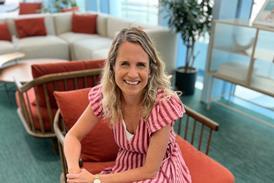
Charisa Gunasekera is commissioning editor at Ebury, the home of non-fiction at Penguin Random House UK. She launched PRH UK’s very first Christian imprint, Ebury Vine, in late 2025 and is the proud publisher of Martin Shaw’s Liturgies of the Wild; What Grows in Weary Lands by Tish Harrison Warren (which featured in May’s Woman Alive Book Club); Small Steps for Big Change by Patrick Regan; and This is the Main Event by Joshua Luke Smith – with much more to come! @charisagunasekera
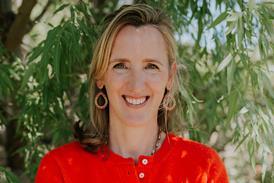
Lauren Windle is publishing director at SPCK, and also a UK author, journalist, speaker and presenter who writes about faith, relationships, feminism and addiction recovery. Her books include Notes on Love (2021), Notes on Feminism (2024) and Drawing as Prayer (2025). @laurenwindle_
To listen to Lauren’s full interview with Jemimah, go to The Profile podcast premier.plus/the-profile/podcasts/episodes













No comments yet