


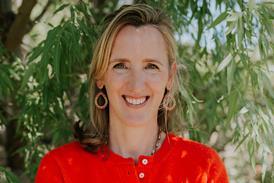





Dr Coco Parkinson-Huggins spent years hiding the scars left by self-harm, believing they were a source of shame. Today, the researcher, speaker and Christian writer shares how Jesus transformed her life—and why those same scars have become a powerful testimony to God’s grace and healing.
Mental health has been a feature of my life since my early teens. Looking at my upbringing alone, this might seem surprising. There was no major traumatic event in my childhood that could explain this feeling of utter hopelessness I felt throughout my teens and into my early 20s.
For those who knew me well or were around me a lot, however, my struggles, particularly at school, were obvious. My behaviour was erratic, and my mood was dizzyingly up and down. Whilst my academic confidence appeared to know no bounds, this masked a truly crippling lack of self-esteem. I struggled to maintain friendships and spent much of my time alone, studying or reading. I developed a deeply distorted attitude towards my own body and found ways to hurt myself in pretty much every way you could imagine. At times, going a month without ending up in hospital for one reason or another was a rarity.
READ MORE: Why do we struggle to face the reality of self-harm?
I took my GCSEs and passed with flying colours, 10 A*s, no less, but that did little to quell the despair which would periodically well up and consume me. Things got so bad that I had to drop out of school and be admitted for inpatient treatment. Things seemed hopeless, and I struggled to understand who I was and why I was (still) alive.
When I was in hospital, a friend, Lucy, visited me and wrote to me.
When I was in hospital, a friend, Lucy, visited me and wrote to me. She bought me my first Bible and told me she was praying for me. I became a Christian a few years later, when I was 19.
That was the start of a long, hard journey of truly accepting the love of Jesus and what that means. Initially, things got even worse, and the personal challenges I faced just seemed to get deeper and deeper. I was forced to wrestle with so many aspects of my behaviour, and the behaviour of others towards me, that were immensely difficult and destructive.
READ MORE: “I was a people pleaser and I thought it made me a better Christian”
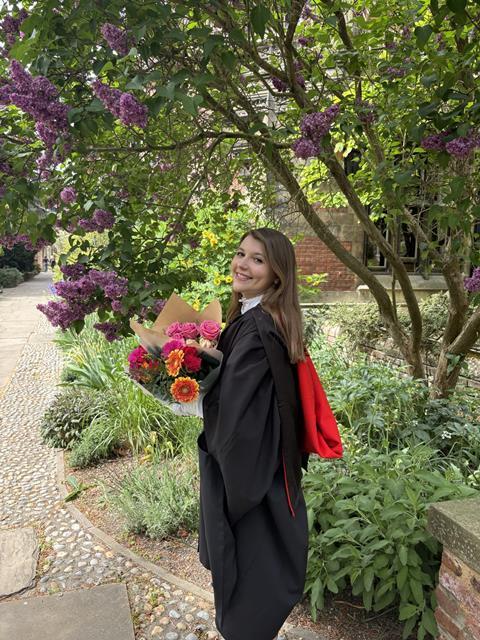
Over a decade on from dropping out of school, however, my life has changed beyond all recognition. I completed a PhD at the University of Cambridge and lectured there in the Department of Geography, publishing research and speaking at conferences across the world. I became a chapel warden at my college, preaching and sharing my love of Jesus, and got married there earlier this year. I am now a researcher based at Theos think tank, spending most of my working life reading and writing about society and religion.
Although it’s been many years since I’ve self-harmed, the literal (as well as metaphorical) scars of that time remain.
Although it’s been many years since I’ve self-harmed, the literal (as well as metaphorical) scars of that time remain. Wrestling with the stigma associated with this has been a significant part of my life, and I have spent much of my time trying to make sense of it, both socially and spiritually. Very well-meaning people regularly ask me what happened. Was I in an accident? Do I have allergies?
READ MORE: The prayer practice that calmed my anxiety when nothing else could
For a long time, I found this immensely challenging; sometimes I still do. But over the years, I’ve come to realise that, far from being conversations I should shy away from, they are ones I should embrace because they give me the opportunity to tell my story and give others hope that their lives can change.
Just as Jesus asks Thomas to put his hand on His wound, my scars offer those who meet me a chance to see and believe. They are a testimony written on my skin; an indelible mark and reminder of what God’s love has helped me to overcome. They are eternal, incontrovertible evidence not only of my suffering, but of the transformational power of Christ and His love. Every day, when I look at myself in the mirror, I am forced to confront the reality of what happened to me, and yes, it hurts.
But I also get to wake up every morning, trace my hands over my arms, and hold in my hands the beauty and magnitude of God’s grace. And for that, I am immensely blessed.
*Because of the Lord’s great love we are not consumed,
for his compassions never fail.
They are new every morning;
great is your faithfulness.”




















1 Reader's comment