








This week is Carers Week, shining a spotlight on the millions of people supporting loved ones. Writer Alex Noel reflects on the often unseen challenges of caring for ageing parents. Through the lens of faith, she explores the tension between responsibility, sacrifice and trusting God when the burden feels too heavy to carry alone.
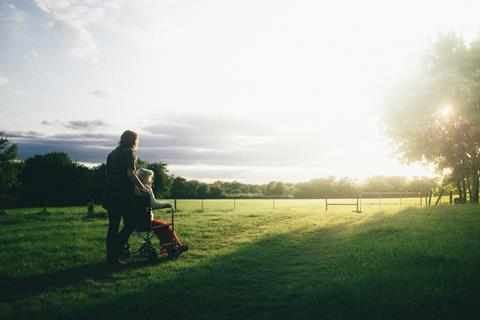
Photo by Dominik Lange on Unsplash
As I write this, a text comes through from my dad: Mum was whisked into hospital during the night with dangerously high blood pressure. She’s being closely monitored. Will I be able to visit her? he asks. A feeling of panic rises in me - I have a deadline first thing in the morning, and a list as long as my arm to get through before going out of town tomorrow; ‘Not today unfortunately’ I tell him. Thankfully she’s soon back home with new medication. But that’s not always the case.
My parents - both in their 80s - still live independently in their own home, but increasingly need support amidst the health issues and decline that comes with old age.
My parents - both in their 80s - still live independently in their own home, but increasingly need support amidst the health issues and decline that comes with old age. What that means for me as they get older is something I’ve been anticipating for years. Even as I face it down, it fills me with a visceral sense of fear. At times I want to run away - move to the other side of the world. But of course I’m unlikely to do that. I’m an only child: an eldest and only daughter by default - and unmarried. Often (but not always), these are the women charged with looking after parents and elderly relatives in families; a considerable sense of responsibility tethering us to them and overspilling into over-responsibility.
READ MORE: Carers need space for their own wellbeing
‘You’re not responsible for others, you’re responsible to them’ is a phrase intended to soothe the overwhelmed. While it’s an important distinction, feeling responsible for others is hardwired into many daughters who are raised or conditioned to be caretakers - whether of younger siblings or of elderly parents and relatives. Praised for being the capable and strong ones it can feel hard to ask for help or establish the boundaries needed to protect oneself, especially when ‘being there’ forms part of your identity. After all, you are the one who handles things, who takes control when the chaos hits and who is there to fix things when they go wrong. People come to rely on that especially in families where expectations can follow well-worn pathways. I worry that I don’t have the capacity to meet everyone’s needs and expectations. Where on earth is the line between being a daughter and being a carer, and is it possible to be loving and dutiful and also live my own life?
READ MORE: Life Lessons: ‘OK, Lord, it’s you and me’
The book I’m Your Daughter, Not Your Carer by Clare Jefferies goes a long way to answering these questions. Clare is a care professional, speaker and advocate who owns several franchises of award-winning home-care provider, Home Instead. The title of her book, published on 3rd June, was quick to grab my attention; within moments of reading the opening chapter I was in tears; it was immediately clear to me that she understands.
READ MORE: A lifeline for Christian carers
Caring for parents or ‘carenting’ as she humorously calls it, is rarely spoken about openly.
Caring for parents or ‘carenting’ as she humorously calls it, is rarely spoken about openly. When my dad became very ill during COVID with repeated stints in hospital, I had no idea how to care for him at home when it fell to me. No-one had ever taught me how to cook for the ‘elderly and infirm’, about medications or how to navigate the gap between primary and secondary care. It was an incredibly steep learning curve and I was flying by the seat of my pants. I was so anxious that my hair began falling out. When I did manage some self-care (the mantra ‘put on your own oxygen mask, before helping others’ ringing in my ears) it was a relaxing bath, and a new pair of pyjamas but always with the phone nearby just in case I was needed. It was incredibly hard to shut off. I found it nearly impossible to work; I didn’t have the time, nor the emotional or mental bandwidth. For a period I was the main carer for both my dad and my mum (who already needed considerable support) until we arranged separate care for her. Still, their house also needed someone to manage it, someone to do the shopping, cooking and to pick up the pieces. It was a crisis that forced us to get a better structure in place but it was no magic pill. The person responsible was still - in large part - me. And that’s just my parents, I have other elderly relatives who will need me.
Of course, as a Christian my mistake is thinking that it all depends on me and my efforts. It doesn’t. I remember that God is right there in the tension - between what I need and what my family needs from me. Perhaps then the most apt Bible passage is from Psalm 23: ‘when I walk through the valley of the shadow of death I will fear no evil, for you are with me; your rod and your staff, they comfort me.’























No comments yet