









Danielle Finch revisits To Kill A Mockingbird through the lens of faith, justice, and courage — and discovers its themes feel more relevant now than ever. From Atticus Finch’s moral conviction to the novel’s piercing challenge against Christian apathy, this classic story still has the power to convict and inspire.
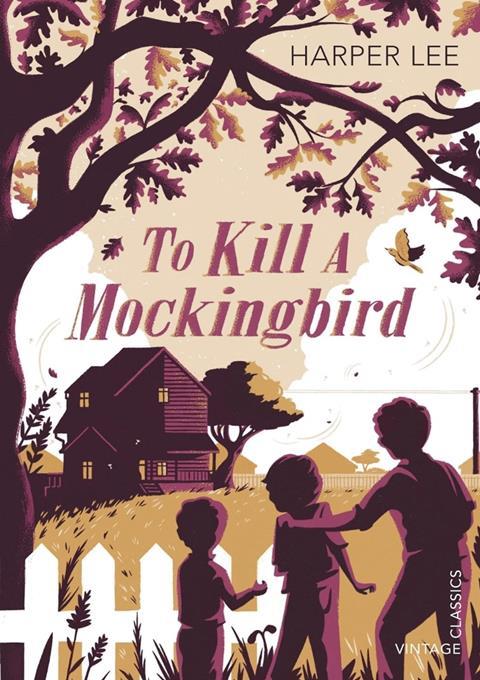
As I browsed through my emails a few weeks ago, a circular from the Liverpool Empire Theatre caught my attention. Aaron Sorkin’s stage adaptation of Harper Lee’s To Kill A Mockingbird was showing for just five days in May. I instantly knew I needed to try to get tickets. Thankfully I was able to purchase some, and it is safe to say the play did not disappoint.
To Kill A Mockingbird is a novel I fell in love with as a teenager while studying the text at school. So much so, that I remember asking my husband to consider giving our son the middle name ‘Atticus’ (our last name being Finch!). Sadly, he wasn’t keen.
READ MORE: The Faithful, starring Minnie Driver, reclaims women’s voices in the Bible
Set during the Great Depression in America’s Deep South, the book is a coming-of-age novel that tackles themes of racial inequality, prejudice, and courage in the face of peril. The story has come under some criticism in more recent years, with accusations of it being another example of a ‘white saviour’ narrative. However, I completely disagree that we are unable to learn from literature shaped by a particular time period or viewpoint. Great novels promote meaningful discussion and help us reflect on human nature. As Christians, I feel there is so much we can gain from To Kill A Mockingbird, and I hope you’ll allow me a few moments to share my thoughts with you.
Re-introducing father and lawyer Atticus Finch, long considered a ‘literary hero’ for his willingness to defend an innocent black man who faces the death penalty after being falsely accused of raping a white woman.
READ MORE: Jesus said we should be ‘like little children’ and the faith of the pre-teen protagonist in Judy Blume’s best-selling novel is a great example of this
One addition I truly loved in the stage adaptation was the subtle highlighting of Atticus’ flaws
One addition I truly loved in the stage adaptation was the subtle highlighting of Atticus’ flaws. He doesn’t always say the right thing, he rubs people up the wrong way, and he loses his temper. Yet despite his flaws, he recognises truth and courageously stands to vindicate the accused, Tom Robinson. In the novel, Atticus says: “Before I live with other folks, I’ve got to live with myself. The one thing that doesn’t abide by majority rule is a person’s conscience.” In a world that claims everybody can ‘live their own truth’, as Christians we are called to listen to The Truth: the unerring word of God.
The Bible tells us in James 4:17 that “…it is sin to know what you ought to do and then not do it.” Though we are all flawed and have fallen short, my prayer is that, by the power of the Holy Spirit, we would be convicted of truth and courageously point people towards it.
READ MORE: Why I believe women’s fiction is an important tool to share the gospel
Our God is a God of justice. “A faithful God who does no wrong, upright and just is He.”
Our God is a God of justice. “A faithful God who does no wrong, upright and just is He.” (Deuteronomy 32:4) Harper Lee’s narration comes through the viewpoint of Scout, our leading protagonist, as a child in the story, unfolding with the added benefit of adult hindsight. The innocence of Scout’s perspective is clear as she navigates the world around her. The way children view situations can often seem refreshingly simple, unmarred by the complexities of adult life. Their sense of justice is strong, and there is a scene in the performance that reflects this powerfully.
The children in the novel sneak into the courtroom daily as the trial progresses. But when Tom Robinson is interrogated by the prosecution, young Dill is outraged by his treatment. I remember feeling that same swell of anger the first time I read it. ‘How dare he patronise a grown man by calling him “boy”!’ I was sickened. But somewhere along the way, that outrage diminishes. We are so accustomed to hearing of daily horrors that very little shocks us anymore. Oh, that God might wake us from our apathy! During the same scene, another character, who has suffered tremendously as a result of racial inequality, responds to Dill:
“You’ll get used to cruelty. You’ll build up a tolerance for it. At first you’re like you are now: sick, outraged and disbelieving that instead of warm red blood, some folks have battery acid running through their veins. And you can’t tell who’s who just by looking, because when horror comes to supper it comes dressed exactly like a Christian.”
Ouch. Lord, let us be a people after your own heart, who not only see injustice, but do something about it.
The problems we face in the world today may seem insurmountable, but we can rest assured that our just and merciful God is making all things new. In his “I Have a Dream” speech, Martin Luther King Jr famously quoted Isaiah 40:4–5: “Every valley shall be exalted and every hill brought low; the crooked places shall be made straight and the rough places made smooth; the glory of the Lord shall be revealed, and all flesh shall see it together; for the mouth of the Lord has spoken.”
There is so much more that could be discussed, but I leave you today with the beautiful refrain of an old hymn sung during the performance:
Joy cometh in the morning,
Joy cometh in the morning;
Weeping may endure, may endure for a night,
But joy cometh in the morning.
N.B. To Kill A Mockingbird returns to the West End for a limited time from 25 June 2026.
























No comments yet