







Hosted by Claire Musters
This month I’m reading…
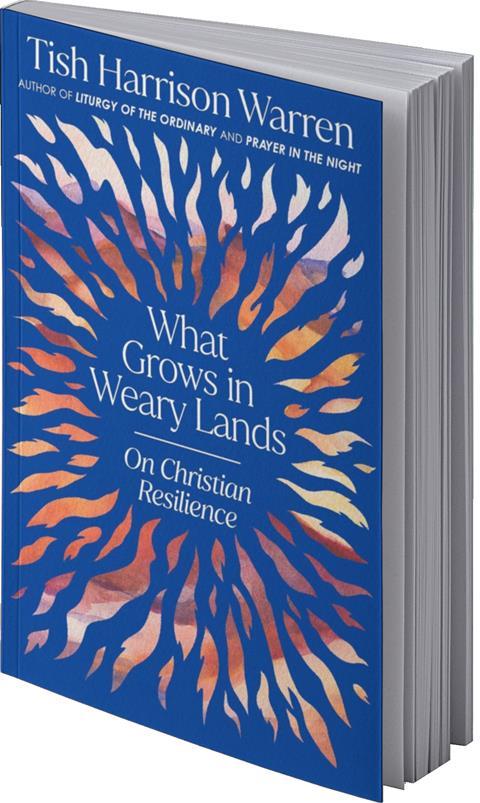
What Grows in Weary Lands: On Christian resilience By Tish Harrison Warren (Ebury Vine, 978-1911764076)
I have found Tish’s previous books so helpful (Liturgy of the Ordinary and Prayer in the Night). An Anglican priest and previous columnist for The New York Times, she is a thoughtful writer, and helpful guide.
Tish begins her latest book by sharing openly about her own time of being weary to her soul. This began her journey exploring how to keep going through a season when God felt distant. The narrative focuses on how to remain resilient – and how to thrive, even – within those times of weariness. Not the deep lows or big highs, but the “winding middle”, in which we are called to slowly keep going, and allow our faith to be cultivated even while it may falter.
Tish draws on the stories and sayings of the Desert Mothers and Fathers, the first Christian monks, who she found became “friends” and guides. We can often seek to escape seasons of “dryness”, but, as Tish explains, in times gone by, “desert” seasons were seen as vital for growth and maturity. She, too, is now convinced that in these times something good is happening, even if we don’t see it – that God wastes nothing. She describes finding the invitation to “go deep” and that the book contains “the field notes” of what she discovered.
Many would be envious of the description of your life you give at the start of your book: a weekly column for The New York Times, writing a book, working for a church, married with three children. And yet you were “weary of being weary”. What do you think led you to that point, and what was the experience like?
It is true that I had (and have) a rich life with much to be grateful for. That’s part of what threw me off about this season, where it seemed like I’d met with an overwhelming sense of uncertainty, emptiness and disorientation. My last book was about suffering and where God is in the midst of darkness and loss. But there wasn’t any acute tragedy or profound suffering happening in my life and God still seemed distant. Life and relationships seemed draining. I didn’t know how to plot where I was on a map. I had hard things in my life, of course, and struggles, but I had so much goodness in my life. And still, I felt so lost.
One of the things that felt clear to me is that we just don’t tell many stories about the middle section of our lives – particularly times where things feel “off”. When we do tell these stories, they tend to be about blowing up our lives and starting over. They are deconstruction stories, in one way or another. Or, alternatively, we tend to only talk about what is good, beautiful and positive about our relationship with God. Because of this, we don’t have stories of obedience in the middle of doubt, in the middle of life, in the middle of weariness. So I didn’t know where to turn. Part of why I wrote this book is that I wanted to tell “in the middle” stories.
We all have moments where we feel disorientated, and you are convinced that the practices of our faith, even when they “feel futile”, are vital. Can you explain why?
We tend to believe (and are expressly taught by our broader culture) that if something in our life feels like it’s not working for us – perhaps especially faith or the spiritual life – then we should give it up. But actually, I think that almost everything good is found on the other side of struggle. The things that are most valuable and give most meaning to our lives – and the deepest places of growth and flourishing – take a lifetime of commitment. This implies that, within that lifetime, there will be times of feeling unfulfilled. It’s only by walking through these times that we deepen and grow; we shed the things that are distracting and trivial and keep what lasts.
You were drawn to the Desert Mothers and Fathers. Could you explain here a little of who they were, and why you found them so helpful?
The Desert Fathers and Mothers lived in Egypt, Syria and other remote places (in the desert) from the third to the fifth centuries. I found them helpful in part because I found them so weird and wild. They wrote a ton about Christian practices, so it felt like I was going back to a very early source of wisdom as I was wrestling with how to practise the faith. I was also drawn to them because there are 1,700 years between us, but there were moments when they seemed so contemporary and relatable. They wrote a lot about boredom, irritation and spiritual dryness. They got angry and sulked. They struggled with God’s distance, even as they constantly fasted and prayed. They were even funny at times. They seemed so outside of the culture wars – like nothing in the news or the ‘Christian living’ section of a bookstore. I just felt like I needed their voices in my life.
Could you describe the concept of “staying in your cell” and what that could look like for us today?
When desert monks faced what we would now describe as burn-out, older, wiser monks would counsel them to “stay in the cell”. The cell was the place where they worked and prayed. It was the literal geographical site where they lived, but also represented their vows and commitments, their spiritual practices, and their work and way of life. Stay in your cell was a call to external and internal stability – to stay at the things God had called them to in the community and place they were in. This challenged me in my own life, allowing me to rediscover the need for stability. The call to stability is something we don’t talk a lot about in our mobile and consumeristic culture. This provided language for resilience and a steady continuation in our faith, work, life and relationships that was inspiring to me.
You explain that staying with spiritual practices will end up with us seeing the brokenness within ourselves, and that it is an uncomfortable, but necessary, part of the process. How does liturgy stop us from being discouraged by this?
Part of the whole experience of staying in your cell is that you must learn to stop blaming the circumstances or people around you for your problems. In other words, we have to stop externalising the aches within our souls. We give up the lie that if we were just around better people or in a better place or had more money or were more talented then we would be fulfilled, and we begin to look to God Himself for fulfilment. But this means that we begin to see how our own brokenness contributes to the state we find ourselves in. The most solidarity I feel with people in my church is when we confess together on our knees each week. It’s this liturgical rhythm of getting together and each of us admitting: “I am the problem here”. I find that so refreshing and counter-cultural. But a great thing about the Anglican liturgy is that you never confess without hearing the word of absolution and the “comfortable words”, which are scriptural words meant to remind us of our forgiveness and belovedness in God. Walking through that rhythm of confession and reminder of God’s love each week with my community allows us to hold the truth about ourselves without being discouraged or overwhelmed.
Tish Harrison Warren on: The books that have changed my life
So many books have impacted me that it’s hard to leave any of them out! So, I’ve named books that opened me up to new things or hit me at the right moment and sent me in a different direction.
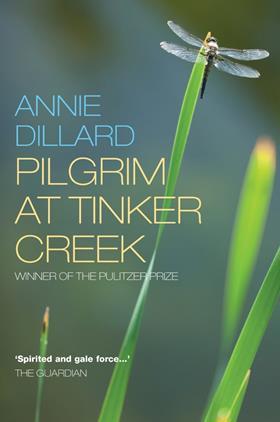
Pilgrim at Tinker Creek by Annie Dillard
Dillard opened me up to the vistas that language can create, how words can introduce us to to the glory of the world right around us. In a new, vivid way, she also opened me up to the sacramental dimensions of nature itself. I still return to Dillard when I need a shot in the arm of beauty.
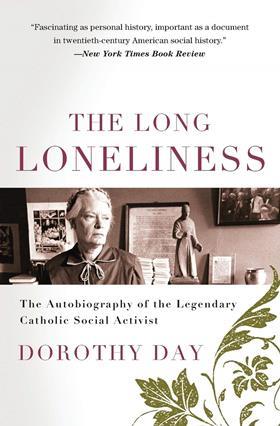
The Long Loneliness by Dorothy Day
This book helped me see how a prophetic life can only be sustained through contemplation and community. Reading it felt like having tea with a wise, prophetic women who has been through everything, and remained faithful and wildly alive through it all.
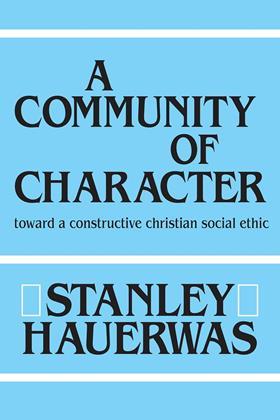
A Community of Character by Stanley Hauerwas
I first found Hauerwas’s work in college, when I was just discovering the world (and idea) of theology, making him one of my foundational theological influences. This book introduced me to a political theology that challenged me and helped me see that the Church is meant to be an embassy of the kingdom of God, pushing back against essentially all the political options in any culture.


















No comments yet