








Hosted by Claire Musters
This month I’m reading…
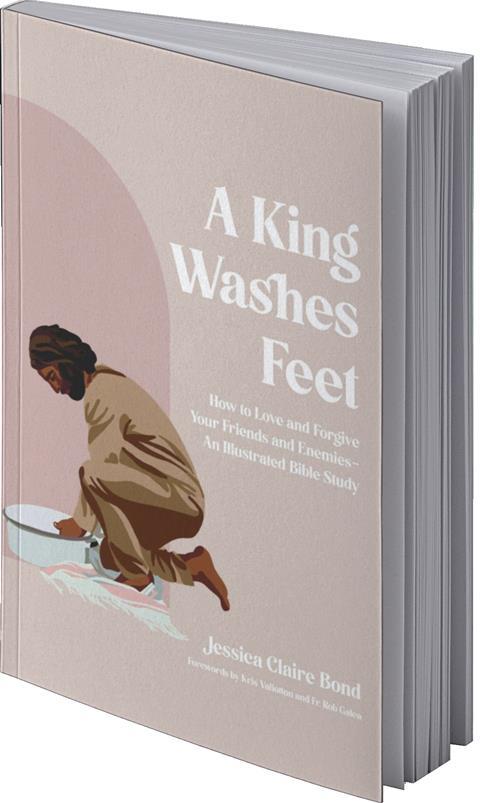
A King Washes Feet: How to love and forgive your friends and enemies By Jessica Claire Bond (Bethany House, 978-0764245312)
Jessica is the illustrator of the viral Footwashing Series of digital artwork on Instagram. Those images have been included within her new book, along with 40 readings that unpack the subject of foot washing, and why she believes it is still so relevant today (both literally and metaphorically).
Organised into four sections: Jesus, you, friends and enemies, the invitation is to sit on the foot washing stool and allow Jesus to wash your feet before being taught how to do that for others. There is much to challenge our own preconceived ideas about who deserves a place on that stool, which the author faced herself. Jessica says she felt resistance over drawing some of the people that she felt God asked her to represent – but became increasingly convinced that there isn’t anyone Jesus would turn away.
You say you would call yourself an evangelist more than an artist, so when and how did the Footwashing Series come about?
It was never something I planned and wasn’t even intended as a series. Originally, I simply drew the picture of Jesus kneeling and washing the feet of a bride (representing all of us) and shared it online, and was taken aback by the overwhelming supportive response. A few days later in my mind’s eye, the Lord showed me the same image of Jesus kneeling and washing feet, but the person on the seat changing. So, I began drawing, and each day released an image with someone new sitting on the seat; and that’s what became known as the Footwashing Series.
The series went viral – why do you think that was? And what were some of the responses/questions you got from people?
I believe that we all, whether we realise it or not, long for an experience of the love of God. I think the Footwashing Series went viral not because of exceptional artwork or convincing captions, but because each of us was wanting to see ourselves or someone we love represented on the seat. To see someone wrestling with anxiety, or an exhausted mother, or a person more interested in their phone than the God in front of them. And even beyond that, some of us needed to see our ‘worst enemies’ represented on the seat, as a tool to help us forgive them.
We are always going to react differently to different people represented on the seat. I might look at one image of a politician, for example, and be absolutely fine. But someone else might look at the same image and have a strong reaction.
The response to the Footwashing Series has been mixed – as I anticipated. There are some people represented within the series we find easy to see. But other images have been perceived as controversial – for example, a police officer and an inmate side by side, or two nations represented who are in conflict, or two politicians from opposing parties.
At the end of the day, I really believe in the phrase: “It’s not about who’s on the seat, it’s about Who’s washing the feet.” I believe Jesus died so that every single one of us – without exception – would have an invitation to receive His forgiveness and love.
How did the book come from that initial viral series?
A literary agent reached out to me in 2023, and I nearly deleted the email under the assumption it was spam! She believed (as did a whole team along the way) that I had more to say about foot washing than limited captions underneath artwork on social media posts, and it turns out that was true.
Could you explain what it was like the first time you saw a physical representation of foot washing after creating the series?
There was a beautiful moment – completely unprompted by me - while I was ministering in the Middle East. We were invited to visit a woman who had experienced abuse. We listened to her story, prayed with her and then one of our team members whispered to me: “I think we’re meant to wash her feet.” So, we asked permission, found a bucket and towel, and a grandfather on our team asked if he could wash her feet. She wept – we all wept! – as he gently washed and apologised for the way she had been treated. It was such a beautiful moment of healing, forgiveness and redemption.
While foot washing is usually a metaphor in our life, seeing this physical, tangible moment of foot washing with water and a bucket reminded me of the power behind the action. It’s not the water that’s changing a life – it’s the God we meet through it.
You talk about different people needing different temperatures of water when we come to wash their feet – what do you mean by that?
Everyone has had a different experience of God, Christians and the Church. Some have had a positive experience. But many others have felt burned by people or organisations who represent Jesus. That’s why I believe we can’t have one overarching approach for how to share Jesus with people. If the ‘water’ is too cold, the person might just feel like a project, or like you only care about adding another number to your salvation tally. But if the ‘water’ is too hot, you might scald someone with a compassionless approach to sharing the truth.
Whenever I have the opportunity to represent Jesus to someone – especially a non-Christian or lapsed Christian – I try to understand first what their experience has been of God/church before I launch into correcting their behaviour or inviting them to church. Where are they at with their relationship with God? Do they need warmer water, encouraging them to go all-in for God, or do they need cooler water, if they’ve been burned by harsh comments from a Christian before?
This isn’t about watering down the gospel. It’s about asking God: “How can I reach this person in a way they’d be open to receiving the gospel?”
Why can it sometimes be more challenging to let someone wash our feet (literally or symbolically) than for us to wash theirs?
When we’ve been hurt, sometimes holding on to unforgiveness can feel like the safest way forward as a form of self-protection. But the difficult reality is that unforgiveness is doing so much damage to ourselves. We have to understand that forgiving is not the same as saying what happened was OK, or returning to the person/circumstances that hurt you.
It can also take humility to allow someone else to wash our feet when we feel like a mess, unworthy or embarrassed.
You talk about how Jesus invited people to have their feet washed, whether they accepted Him or not. What can that look like in our culture today?
In Matthew 9, we find the passage where Jesus sits and shares a meal at Matthew’s house with tax collectors and sinners. Other than Matthew himself, we have no scriptural proof from this passage that any of the tax collectors and sinners left the table with a conversion of heart to follow Jesus.
What I take from this is that you do not have to be committed to following Jesus first, to have an encounter with Him. It is the same when it comes to foot washing. In John 13, Jesus kneels and washes the feet of His disciples – including Judas. Jesus still washed Judas’ feet, knowing that he would betray Him right after that moment.
I see foot washing this way. The open seat is not conditional upon your guaranteed acceptance of Jesus as your Lord and Saviour. You are welcome to sit down, and it is up to you whether you get up the same way or differently. It is your choice whether you let the encounter with Jesus change your life. God doesn’t control us – we have the gift of free will, for our love to be real.
Jessica Claire Bond on: The books that have changed my life
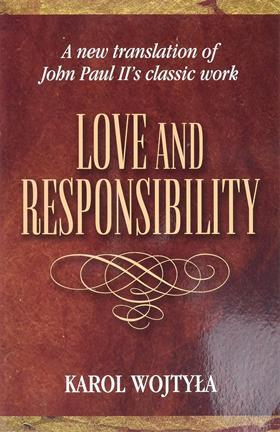
Love and Responsibility by Karol Wojtyla
This book is a deep dive into what human love really is and how God intended it to look in our relationships. It completely transformed my understanding of what love is and, in particular, how I’ll approach my future marriage. Not a light read, but a very worthwhile one!
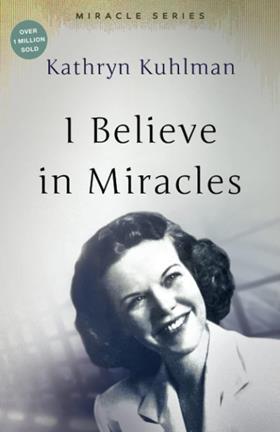
I Believe in Miracles by Kathryn Kuhlman
A book of testimonies of long-term healing, supported by medical records and comments by doctors and surgeons that show undeniable medical miracles. I wept in every single chapter. It really built my faith to pray for miraculous healings for people.
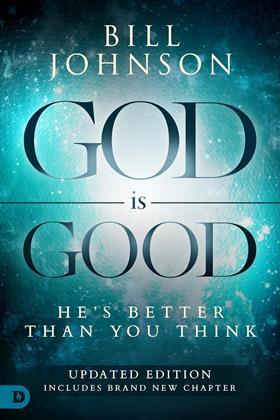
God is Good by Bill Johnson
What you believe about God will determine whether you run towards or away from Him in pain, and how you respond to situations in life. It is critical that we wrestle out this very important question: is God good? How you answer this question will impact your life.



















No comments yet