









Jemimah Wright explores the growing tension many Christian women feel between protecting their skin and getting enough life-giving sunshine in today’s extreme heatwaves. After personally struggling with chronic Vitamin D deficiency, she asks: have we become so afraid of the sun that we are forgetting the wisdom of balance?
There is a meme going around of a bright-red, painfully sunburnt father standing outside telling his pale son, glued to the PlayStation, to “go outside and enjoy the sunshine.” The son’s response? “Dad… maybe you should stay inside.”
On the one hand, we are warned constantly about skin cancer, pigmentation, wrinkles, and sun damage. So wearing sunscreen, especially on our faces, is a given for most women. On the other hand, many of us are discovering that hiding from the sun completely is not exactly helping our health either.
A few years ago, I felt absolutely awful for months. Tired, with pain in different parts of my body. After tests, it turned out I was chronically low in Vitamin D. I had no idea how much this little “sunshine vitamin” affects the body. Technically, Vitamin D behaves more like a hormone than a vitamin, influencing everything from mood and immunity to bone health, hormones, immunity, inflammation, and energy levels.
READ MORE: ‘God keeps me young!’: Katie Piper’s faith and the science of staying younger
When I got ill, it was the first year I hadn’t been sent somewhere warm for work in January and February. For the past few years I had been able to schedule writing jobs in warmer climes for the cold dark months in England. At the same time, I had been more scrupulous with my wearing SPF. I didn’t realise how much my body had needed that boost of vitamin D.
As Christian women trying to steward our health wisely, and age gracefully, how do we balance protecting our skin while still getting enough sunlight?
As Christian women trying to steward our health wisely, and age gracefully, how do we balance protecting our skin while still getting enough sunlight? Firstly, I think we can stop treating the sun like either a deadly enemy. I wrote recently about beauty expert Liz Earle’s new book ‘How to Age’ where she speaks of the importance of sunlight for our health. God created the sun for good. In Genesis, we are told that He made the greater light to govern the day. Sunshine lifts our mood, regulates our sleep cycles, warms the earth, and helps our bodies produce Vitamin D. But, wisdom is always about balance.
Too much sun and we burn, too little sun and we become pale indoor creatures surviving entirely on coffee, laptops, and LED lighting
READ MORE: Keep your body in balance so you don’t dread the winter months
So where does that leave us? Taking Vitamin D supplements? Supplements can absolutely help, especially for people who are deficient. But as Liz Earle also pointed out, sunlight does more for the body than just Vitamin D production. Natural sunlight affects circadian rhythms, sleep quality, serotonin, mood, and overall wellbeing in ways we are still learning about. In other words, a capsule cannot completely replace fresh air and sunshine.
When I was ill, I took Vitamin D3 with K2. Many health practitioners now recommend Vitamin D3 rather than D2 because D3 appears to be more effective at raising and maintaining Vitamin D levels in the body. Vitamin K2 works alongside Vitamin D3 by helping direct calcium into the bones and teeth where it belongs, instead of allowing excess calcium to build up in arteries or soft tissues. Essentially, D3 helps the body absorb calcium, while K2 helps tell the calcium where to go. They seem to work as a team, which is why many supplements now combine them.
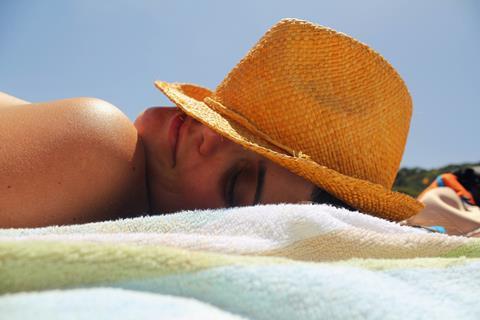
Again, I am not a doctor, and everyone’s medical needs are different, but it does seem wise to actually test Vitamin D levels if you suspect deficiency rather than randomly swallowing twenty-seven supplements because someone on Instagram said so. Personally, I think wisdom looks something like this: enjoy the sunshine intentionally, but not recklessly. Take a walk in the morning. Sit outside with your coffee. Let your children play in the garden. Hang washing in the sunlight. But maybe also wear the sunscreen during long beach days in a heatwave. Use hats, sit in the shade sometimes and drink water!
READ MORE: Five ways to avoid the summer haze becoming the summer laze (spiritually)
I also think this conversation reminds us how easily fear can drive modern life. One headline says the sun will kill you. Another says deficiency will ruin your health. Somewhere in the middle, wisdom says, “Perhaps go outside for ten minutes and stop panicking.”
We do not need to obsess over preserving ourselves perfectly. Ageing is not failure. Laugh lines are not moral weakness. But caring for the bodies God gave us is still part of good stewardship. That means nourishing ourselves properly, protecting our skin sensibly, and paying attention when our bodies are struggling. So maybe the goal is not to fear the sun or worship it, but simply to approach it wisely. Unlike the poor dad in the meme. He definitely needed SPF 50 and a long nap.























1 Reader's comment