






Writer Ann Louise Graham responds to Yuval Noah Harari’s provocative warning that artificial intelligence could one day “take over” religion. Drawing on Christian theology, lived faith, and global experience, she challenges the idea that belief is merely word-based—and asks what machines can never truly replace.
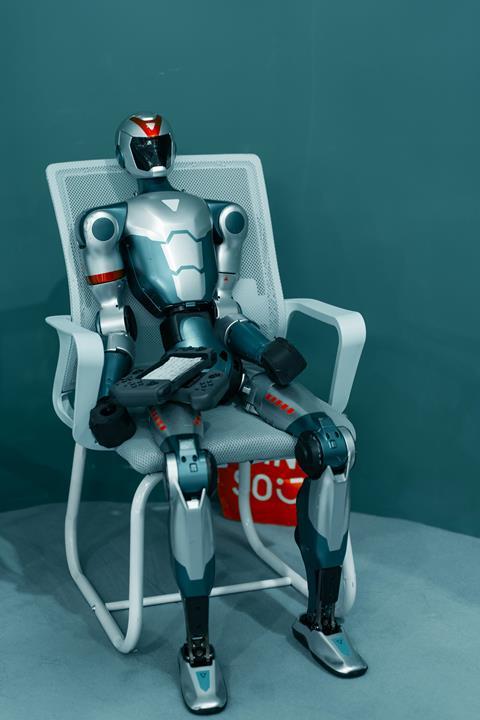
Religions and their sacred texts are in danger of being taken over by artificial intelligence, according to historian and author Yuval Noah Harari, who spoke recently at the World Economic Forum in Davos. Mr Harari argued that book-based religions such as Christianity, Judaism, and Islam are particularly vulnerable because artificial Intelligence has mastered the use of words and language and could therefore become not only a greater “expert” on existing religions, but even create new ones.
Unsurprisingly, Yuval Harari’s comments have, once again, sparked intense interest on social media, with reports that his speech has attracted more than one million views.
READ MORE: Artificial intelligence like ChatGPT may have it’s uses but God created creativity & it’s a gift humans shouldn’t hand over
His remarks raise an obvious question: what does he mean by a “takeover,” and how might that occur? Yuval Harari argues that if thinking is the act of putting words in order, then Artificial Intelligence systems (AIS) can already think. In this sense, he suggests, AIS is no longer merely a tool, but what he calls “agents” capable of thought. He goes on to ask whether such systems might one day be recognized by governments as legal persons, not as beings with bodies or minds, but as legal entities nonetheless, and whether they might even be permitted to develop their own religions.
And Mr Harari warns that if humans continue to define themselves primarily by their capacity to think in words, their sense of identity is likely to erode, since AI, he argues, can also “think.”
But returning to Yuval Harari’s comments about AI’s potential takeover of my faith, my thoughts kept focusing on two of his central ideas: that religion is essentially word-based, and that the words shaping our minds will increasingly originate in machines. If I were to accept those claims, there might indeed be grounds for alarm.
READ MORE: Woman ‘marries’ AI persona created on ChatGPT: seeking Christlike love in a tech-driven world
Yet while I do not dismiss the enormous, and potentially dangerous, power of artificial intelligence, Yuval Harari’s argument forces a deeper question: is faith really nothing more than words? And for all the enormous value I place on God’s written Word, it is not merely text on a page. I believe Scripture is inspired by God and meant to be embodied, not only in the ultimate embodiment of the incarnation of Jesus Christ, but in the lived expression of faith. Understood this way, the Word of God is more than an instruction manual; it is living and active, and its true understanding and application are made possible only by the Holy Spirit.
READ MORE: Can AI help your faith?
Still, I am unsettled by Harari’s suggestion that the words in our minds may soon largely originate from machines. Is that really true? For those of us in the West, who spend large amounts of time on laptops and phones, it may serve as a necessary wake-up call. As Mr Harari notes, AI has for more than a decade been treated as a kind of “functional person” in the form of chatbots, including the growing number of “Ask Jesus” chatbots now in circulation. This, perhaps, already points toward his prediction that AI could come to be seen, or even to become, a greater religious “expert.”
Ironically, my hope is kindled as I think of the oral culture I experienced while living in West Africa, and when I think about the early Christian church. I think, too, of the many admonitions in God’s inspired Word to meditate on Scripture and to store it in our hearts. Like you, I do not know whether the bleak picture Yuval Harari paints is likely. What I do know is that it serves as a reminder of the profound need we have as Christians to read and study the Word of God with other humans, created in God’s image and embodied with his Spirit, with the hope and expectation that we will be transformed by it, storing God’s Word in our hearts like a lamp that no machine can ever eplace, while we are still able.























No comments yet