
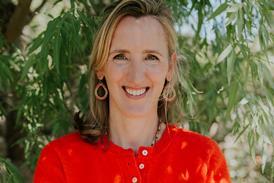





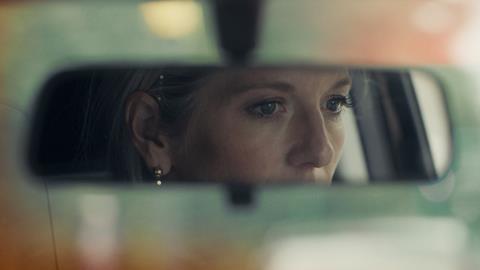

Fiona Rugg’s father, John Smyth QC, was accused of decades-long physical, psychological and spiritual abuse of boys and young men in England and Zimbabwe but died in 2018 before any charges were brought. Justin Welby, former Archbishop of Canterbury, stepped down from his role in 2024 because of accusations from the Makin Report in relation to his knowledge of John Smyth’s abuse. Smyth’s children, PJ, Caroline and Fiona, appeared recently in a Channel 4 documentary See No Evil about their father. Fiona spoke with Jemimah Wright before the release of the documentary
Jemimah Wright (JW): Fiona, you were only five when you moved to Zimbabwe from Winchester. In the documentary there was a picture of you hiding in a basket. You said you wanted to hide a lot. Do you know why?
Fiona Rugg (FR): No, except for the very obvious reason of feeling frightened. I don’t remember any of my childhood without the feeling of fear…wanting to keep out of the way. Dad had a violent temper; you never knew when he was going to fly off the handle. So I think you have an instinct as a child to stay out of harm’s way and hide yourself away from volatility.
JW: Was he very different at home compared with outside?
FR: I would say very much so. And part of my dislike of him, again from an early age, was this idea of the hypocrisy. We’d see him with people, particularly teenage boys, doing fun things, and I do remember thinking he looked such fun, but I didn’t experience any of that for myself. There was disinterest, anger – he was just scary. He definitely looked down on me and my sister. So yes, there were two sides. He was charming and fun with others.
JW: Did you ever try to get his attention?
FR: Of course I wanted his attention. I remembered the little things – when you change your hairstyle or wear a dress, wishing he’d noticed. I wished he would register me coming into a room. So you do want recognition and affection. But at the same time, I desperately didn’t want it because of how I experienced him. It was so frightening. I wished he would give me the attention I saw him giving those teenage boys, but I didn’t want the attention that he gave in the home – anger, criticism and horrible words. He was horrible to mum and cruel to us all; very, very volatile, stormy and aggressive.
JW: Do you know anything of his childhood, which could have impacted his behaviour?
FR: I don’t think he ever set out to hurt people. I believe it was a result of things happening rather than a calculated intention. There have been rumours of difficult things that happened to him as a child, but I don’t know if those things are factually true. I can also say that his extended family are incredibly lovely, faith-filled, kind, amazing people.
JW: Your brother PJ said he adored your dad at first, and your dad seemed to value boys and men above you and Caroline. I can understand how you would internalise the belief that men are better than women. How do you unlearn that misogyny?
FR: It’s a process of unlearning. As you move into adulthood you realise your parents aren’t right about everything. This idea of women being inferior; interestingly it took me quite a long time to associate it to women rather than just to me. I was so taken up with feeling valueless myself. With someone manipulative and narcissistic like my father, gaslighting is a real thing, and for a long time you think you’re wrong. I remember thinking, “Well, I guess I’m not as interesting as those boys.”
Jesus championed women and yet I was living with a man who put them down
Therapy helps hugely, as the light comes on and you see things more clearly. Knowledge helps you break free from false beliefs and identities. Moving away at 18 helped hugely. It’s like toxic air: when you’re in it, you don’t know anything’s wrong. And then I discovered one big lie – why he left England. He told us he was called by God to be a missionary there, but it was actually because he had to leave to get away from what had happened in Winchester. Moments like that helped me think: “If this was untrue, then what else is not true?” Massive chunks of the wall came tumbling down.
JW: Did you and your siblings have revelation on who your dad really was at the same time?
FR: I think we saw things at different stages…After I read The Road to Winchester [autobiography of the headmaster of Winchester College at the time Smyth was there] and realised something was not correct in dad’s narrative, I didn’t know what I know now. I didn’t know about the abuse. My siblings and I compared notes as adults. Hearing from my brother Pete about the hospital room was another massive revelation – my brother got cancer, and Dad said it was because he had dishonoured him, and dishonoured God and was therefore going to die young. The depths of dad’s manipulation and spiritual abuse – using scripture to keep control – became clearer at different stages.
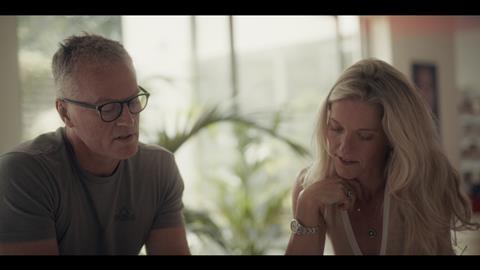
JW: Do you think he genuinely believed his own theology?
FR: I don’t know. It’s one of the things we ask a lot. How much did he really believe and how much was protection of his own plans? He certainly had bad theology – anyone using scripture like that is misusing it. But I can’t answer for what he really believed.
JW: How have you maintained a strong faith despite the example of your father?
FR: Amazingly, I’ve always known God’s presence with me. It’s inexplicable. My mum gave me Bible study notes called Stepping Stones when I could barely read. I was familiar with Jesus’ life and I looked to that as my measuring line.
My objections to Dad actually came from knowing the Bible. Jesus championed women and yet I was living with a man who put them down. So I think a huge saving grace for me was that I never confused my dad with God. In one of the recent interviews I did, the person interviewing me made a comment about the reason he didn’t like religion or Christianity was because so many men and women – but mostly men in leadership – cherry pick the bits of the Bible for their own justification. I didn’t say this, but actually afterwards, I thought: “You know, you’re in good company, because that’s what Jesus felt like.” His anger was really reserved for the people who were the religious leaders of the time who cherry picked the bits of the Torah to use for their own good. It has always been thus, and probably always will be that there are people who use scripture and manipulate it.
Forgiveness isn’t saying it’s OK: it’s a shift of power – not allowing Dad’s stuff to control my future
A really vital part of my journey of faith is that I’ve somehow had a relationship with God through the Bible and through my own personal experience. I’ve always talked to him. I think that’s protected me from ever looking to a man. If any of us look to humans for our representation of God it goes wrong, because we’re all terribly flawed to varying degrees.
JW: In the documentary we meet Andy Morse, who was a pupil at Winchester College and one of your father’s victims. He was also your godfather. Did you have much relationship with him?
FR: We haven’t had a relationship until recently, and then through the documentary we met and have got to know each other a little. I have huge respect for him, but also affection. He’s such a nice person – one of the best things to come out of the documentary has been meeting him. I felt his contribution was brilliantly authentic…honest and painful and vulnerable, but powerful.
JW: How have you coped with the shame associated with your father?
FR: With difficulty. When the news broke in 2017 it was incredibly difficult. I remember the day after it had broken, I’d gone to the petrol station and seen my dad’s face on the front of a newspaper with a horrible headline. And then I went to watch my children play sport at their school, and I was standing next to the headmaster and another parent. They started talking about my dad, this terrible guy, John Smyth, and what he’d done. [Note from editor: They didn’t connect him with Fiona because she uses her husband’s surname.] And I just felt odd. It’s hard to describe. I felt so mortified, crushed and embarrassed, but, at the same time, very aware that I agreed with them that he had done terrible things. Even though he wasn’t admitting it, I had no doubts that what he’d done was wrong and awful.
Because I am married I don’t have the Smyth name anymore, so my brother and I dealt with shame differently. Mine was feeling like it was a dirty secret. I was avoiding conversations yet craving authenticity. Shame tells you there’s something wrong with you, but when I’ve talked about it, I’ve never had anyone react badly. People say: “Of course I don’t hold it against you.” Part of why I agreed to the documentary is because bringing things into the light is always better.
JW: How have you been able to forgive your father?
FR: Forgiveness is both a moment and a lifestyle. I’ve had big moments of breakthrough and I continue to do so. There are still days I feel angry. Therapy has helped hugely. You can only forgive things for yourself. Forgiveness isn’t saying it’s OK: it’s a shift of power – not allowing Dad’s stuff to control my future. Another big part is compassion. When I became a parent I realised how flawed I am. Recognition of my own need for forgiveness brings a soft-heartedness – a little chink where you can begin to say: “I’m kind of in the same boat.” Those things have helped enormously.
JW: What could be done differently in the future to prevent situations like this from happening?
FR: We’ve come a long way in culture: words like narcissism, gas lighting, coercive control are everyday now. Understanding trauma would help. I’ve been amazed at the expertise of therapists that I have spoken to. When you’re in it, it’s incredibly difficult to recognise. But, looking back, there were warning signs, such as leaders without accountability. “My way or the highway” is always a red flag. Being alert to red flags would help.
The documentary See No Evil is available to watch on Channel 4.
Fiona and her brother have set up an organisation that supports adult survivors of trauma: survivor-2-survivor.org/


















No comments yet