







What is holding you back from living in freedom?
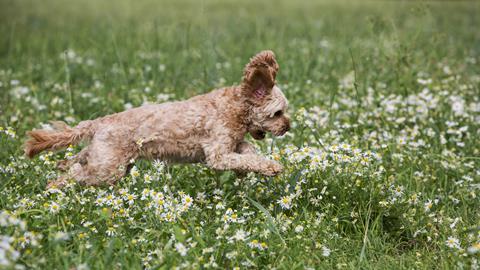
When have you felt most alive? Where were you, what were you doing, who were you with and when did this happy moment take place? I have a five-year-old cockapoo called Indie; she is intelligent, affectionate and very cheeky. She mostly misbehaves when we are at home. But when I take her to the park and let her off her leash, she runs wild and chases squirrels. It’s in these moments that Indie looks so alive and free; she’s totally present, completely in her element, and doing what she was created to do.
I feel a mixture of joy and slight envy whenever I watch Indie in the park. Her joy brings me joy because when those we love are happy, we are also happy. But watching her makes me wonder whether it’s possible for us to live life with more of this kind of freedom – where we are present and life feels full (in a good way) and we get to experience exhilarating joy, self-forgetfulness and a lack of self-consciousness. What is holding us back from living with more freedom in our lives?
Jesus promises us that he came so that we could have life and have it to the full (John 10:10). I am interested in the type of freedom and fullness of life Jesus offers us. The definition of freedom may be complex and multi-faceted, but there are unique things our Christian faith offers us when it comes to freedom. It is a freedom that differs from the world’s definition of doing whatever you want.
Loved by Jesus
The path to freedom begins with knowing whose you are and allowing yourself to be loved by Jesus. This is a daily practice. Jesus describes us as sheep who belong to a shepherd and through him we discover pastures, open and spacious places, where we receive nourishment and refreshment for our souls. Jesus says: “I am the good shepherd. The good shepherd lays down his life for the sheep. The hired hand is not the shepherd and does not own the sheep” (John 10:11–13). Hired hands are people who look after sheep purely for financial profit and self-benefit. Who are the hired hands in your life and what do they represent? Are they people, projects and pitches that promise everything on the surface, offering you some form of status or superficial freedom, but end up leaving you empty handed and enslaved?
Whenever I have tried to fit into the world and conform to the culture, I have never experienced real freedom. But when I have remembered that I belong to the true Shepherd who has laid down his life for me, I can trust him and remain secure in my identity – and it’s from that place that I have discovered authentic freedom. When I remember I am loved by Jesus, I move into greater freedom.

Listen to Jesus
The path to freedom also involves becoming aware of the voices around you and slowly attuning yourself increasingly to the whisper of Jesus. He says his sheep know and recognise his voice (John 10:3-4). There are practical ways to be more open to the voice of Jesus in your life and to sense his direction, guidance and promptings: through spaces of stillness and silence, reading scripture, prayer and reflection, meaningful rest and connection to a healthy Christian community. When we start to turn the dial up on listening to Jesus, the frenetic noise of the world begins to dial down and we can think more clearly and live more freely every day.
Led by Jesus
The path to freedom involves learning to lean on Jesus and allowing him to lead in our lives. Life in our modern world can look like living independently, being in control and calling the shots. That may work for a while but this way of living and operating becomes exhausting and isolating; it doesn’t lead to deep and lasting freedom. It’s not the way we are designed to live if we belong to Jesus. If we want to live a life marked with true freedom, we have to give Jesus permission and space to lead us, and trust that he will guide, provide and help us as we step out in faith.
I was struck by something I read in Eugene Peterson’s biography: A Burning in my Bones (Authentic Media), written by Winn Collier. Eugene Peterson was known for translating the Bible into a version called The Message. In his biography, Peterson was captured by a poet’s picture of a dog following its nose without any clear direction. The imagery spoke to him so deeply because he had been that dog for decades. “His life and work had been more like tracing a scene than following a map. Discovery not direction. In all those 55 years, Eugene had never truly mapped his future, never tried to lay some ordered path toward a clear career goal…The whole meandering journey had been a dog sniffing the wind, the next whiff being the only real clue. And what had been the scent? The presence [of God]…”
The most counterintuitive and paradoxical thing is that the path to freedom involves surrender, submission and service to Jesus. When we lay down our lives, that is when we discover it (Matthew 16:25). When I read the words of Peterson’s biographer, I immediately thought to myself: that sounds like freedom. To be like a dog that belongs to God. A bit like Indie.


















No comments yet