








After a Swiss tourist was jailed for disrespecting a sacred religious holiday in Bali, author Becky Hunter-Kelm reflects on what it means to travel as a Christian. She argues that when we visit another country, we have a responsibility to respect its people, customs and faith practices.
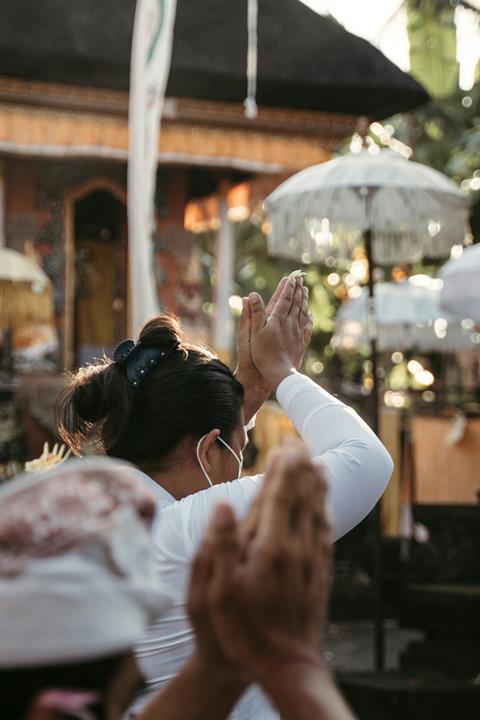
I have a friend who’s a digital nomad in Bali, Indonesia – and, from his social media feed, I can see he is one of millions. In 2025, Bali had a record seven million international visitors. There are also up to 50,000 expats living on the tiny island at any one time, enjoying its beauty while working remotely.
Bali was on my own bucket list until recent years, when the overcrowding of foreigners put me off visiting, to be honest. You see, I live in Türkiye, and over the last decade I have grown in my understanding of what it means to live as a guest in a foreign land. Recently I read about an incident involving a Swiss tourist in Bali made my toes curl.
Last week, the Swiss citizen in question, Luzian Andrin Zgraggen, 26, was sentenced to a year in prison after he insulted a sacred religious holiday in Bali.
READ MORE: A Shia Muslim finds Jesus through her Christian landlord
The Hindu holy day of Nyepi is known as the Day of Silence. It marks the Balinese Hindu New Year and is a time for reflection, meditation and renewal. The day is observed for 24 hours, and in 2026 the period of silence ran from 6am on 19 March until 6am on 20 March.
During Nyepi, people observe four religious prohibitions:
Amati Geni: No fire or bright lights.
Amati Karya: No physical work.
Amati Lelungan: No travelling or leaving home.
Amati Lelanguan: No entertainment or merrymaking.
READ MORE: Learning from my Muslim friends
These rules apply to tourists and locals alike, and even the airport closes for the day.
But instead of respecting these rules, in March 2026, Zgraggen posted a video on social media showing himself walking around an empty beach on the holy day of Nyepi. The video has now been removed, but he described the day as ‘crazy’ and used expletives. Little did he know the video would lead to his arrest and imprisonment for insulting Balinese religious customs.
During the trial, Zgraggen said he did not understand the extent of the Nyepi restrictions and did not mean to insult the Balinese.
‘I deeply regret what I did; I apologise to the Balinese people,’ the Associated Press reported him as saying in court. If only this young tourist had learned about Balinese religion and culture before he went on his trip.
It is a reminder that, as humans, we have to do better when we travel. And as Christians, whose faith is central to our lives, we should understand better than anybody how painful it must be to have visitors come to your land and disrespect your culture and faith practices.
READ MORE: Jesus asked me why I had rejected him
When we go on holiday to a Muslim or Hindu country – or any country where another religion is practised – we must remember we are there as guests. We owe it to ourselves and to our hosts to spend a little time researching the place we are visiting before we go. Bali, Türkiye, India… wherever it is, and however many tourists that country welcomes, those countries are home to millions of people. People whom God loves deeply. As ‘little Christs’, we have a responsibility to be examples of his kindness, honour and respect.
Where I live in Türkiye, I honour the customs and practices of Islam. When I go to certain parts of Türkiye, I dress more conservatively
Where I live in Türkiye, I honour the customs and practices of Islam. When I go to certain parts of Türkiye, I dress more conservatively. I respect the annual celebrations of Eid. Whether it’s not eating – or even drinking water – when I meet a Muslim friend during the holy month of Ramadan, or giving out sweets to the neighbours’ children during Eid, I am in Türkiye as a guest. And I deeply love this country, which has become my home, so I want to show love and care to my Muslim brothers and sisters.
Now, of course, I’m not perfect; I make mistakes. I once forgot it was Ramadan and chowed down on a simit (bread ring) in a rural neighbourhood! But my point is that, when we travel, let’s remember to do our research:
What is the main religion?
What local customs should I observe during my visit?
Are there any religious holidays happening during the month I am visiting?
What is appropriate to wear?
What are the local customs around hospitality, eating and drinking?
What is considered rude or bad manners?
And why not go one step further and learn ‘hello’ and ‘thank you’ in the local language? Whether it’s for work or pleasure, travel is a privilege. We are going as guests into someone else’s culture, and we must take the time to understand and respect local customs, laws and religious practices. And I think this is how we can become more like Jesus as we enjoy this amazing planet.


‘I was 33 and furious with God’: Kova International’s Emma Trueick on singleness, faith and finding her dream job with The Chosen

Generation Wed – are the new Gen Z influencers nailing it in terms of God’s design for women?

When does respect become complicity? What the Eiffel Tower’s ‘Invisible Women’ row can teach Christians



















1 Reader's comment