









As Christian nationalism gains traction in Britain, where should followers of Jesus stand? Kate Orson explores the tension between loving our country, welcoming strangers and remembering that our ultimate allegiance is to Christ and his kingdom.
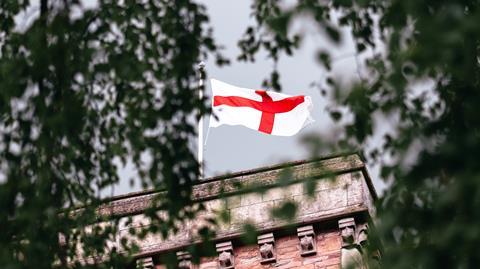
This year we have seen the rise of a movement of Christians and non-Christians who are calling for a stop to mass immigration and to try to prevent the rise of Islam in the UK. Unite The Kingdom marches organised by Tommy Robinson have mobilised citizens, and church leaders such as Bishop Ceiron Dewar are part of this movement, which calls for a return to Britain’s ‘Christian roots’. March attendees chanted ‘Christ is king’, carried crosses and sang hymns.
For many Christians, the movement is seen as racist and bigoted, the very opposite of what we are taught in the Bible about welcoming strangers. Yet others are genuinely concerned about the way the country is headed. What is the truth about Christian nationalism? Should we be putting our country first? Nationalist or not, I think any genuine born-again believer knows that Jesus comes first. Yet there’s a creeping nationalism that is causing many believers to draw their focus away from Jesus and the simple message of the Gospel.
In Matthew chapter 25, Jesus tells his disciples about the final judgement and how people will be judged on whether they fed, clothed and welcomed the ‘least of these’. This role of the Christian means we must approach the issue of immigration with a very careful balance of love and welcoming strangers with the truth that the Christian God is the one true God.
Some Christians may swing too far into a social gospel; a progressive message that is all about welcoming people but neglects to emphasise the core Gospel message that Jesus died for our sins. Others may swing to the right and be so focused on the ‘fight’ for the country that they are distracted by worldly events and less focused on the Gospel.
With the nationalist movement, there are many involved who like the idea of Britain being ‘Christian’ as opposed to Islamic, but don’t understand what the core Gospel message is
With the nationalist movement, there are many involved who like the idea of Britain being ‘Christian’ as opposed to Islamic, but don’t understand what the core Gospel message is. It’s up to us as Christians, wherever we find ourselves on the left or the right, to shine our light and show the way.
I was recently chatting with a friend of mine who is an active member of the Labour Party. He was approached on the street by a woman from his local church who gave him a word of knowledge. He knew what he heard must be supernatural and there was no other way she could have known this information. He had some openness to Christianity but has become increasingly put off because of the way it is becoming intertwined in nationalism.
It’s for people like him that we have to be careful what we say and the way we present ourselves. While celebrating Tommy Robinson’s movement will go down well in one sector of society, for others, the very association of Christianity with a ‘hate movement’ is enough to lead them further away from considering the truth.
For this reason, I think it’s important as Christians that we don’t get too caught up in worldly movements. While we might get involved in politics if that’s our calling, or have opinions on it, I think it’s vital we think about who we are talking to and how we are communicating. We must also guard our hearts against losing our focus.
I have noticed that whenever I’m online, the social media algorithm wants me to get caught up in having an opinion about Christian nationalism.
I have noticed that whenever I’m online, the social media algorithm wants me to get caught up in having an opinion about Christian nationalism. The internet algorithm thrives on controversy and promotes divisive topics that will attract a large number of ‘for and against’ comments. When these posts pop up in my Facebook or YouTube feed, I’m always a little suspicious because Jesus’s message was never one that was going to be popular in the world. When a Christian message is being promoted on the internet, I often ask myself, why?
Taking a strong nationalist stance comes with many hazards. It can put off non-believers like my friend. It can cause division in the body of Christ. It can lead people to become puffed up with pride when they think they’ve got it ‘right’ and are so much better than those left-leaning Christians that they believe are conformed to the world. Yet the ‘right wing’ has ways to draw us towards the world, just as the left does. The enemy plays both sides.
There is a narrow path, and I could say it’s between, but that’s not entirely accurate. It’s beyond. As Jesus said, ‘my kingdom is not of this world.’
























No comments yet