




In the light of Instagram ’fitfluencers’, Kirsten Rees explores how belief, culture, and power shape the messages we receive about our bodies—and how those messages are felt, questioned, and lived.

Recently the BBC Global Woman Instagram account highlighted Rhea Graham as a ‘faith fitfluencer’ to its 158k followers. It stated that Rhea is, ‘creating content around her two passions: fitness and Christianity.’ The BBC Instagram post said, ‘The link between faith and fitness dates back to the 19th century, with the emergence of ‘Muscular Christianity’, where athletics was seen as an expression of Christian values.
‘Critics argue that this movement encourages people to focus on themselves and their appearance rather than on others, and that people ‘start attaching moral value and language about a universal, God-ordained definition of what “a fit body” is’, says theology lecturer Kelsey Kramer McGinnis.
‘For Rhea Graham, it is clear: ‘I love the Lord, but I also love fitness. And they are not separate, but they are one and the same.’
Rhea launched @mellowfitness2.0 at 18, after struggling to find content for Black, Christian, female fitness fans online. I want to celebrate her for providing visible, affirming content for Black, Christian, female fitness fans online. Spaces where faith, movement, and Black woman are held together with intention and care matter. This work deserves to be named and honoured.
READ MORE: It’s time to get moving
Conversations about faith and fitness influencers can feel easy to categorise as empowering or problematic, faithful or self-focused.
Conversations about faith and fitness influencers can feel easy to categorise as empowering or problematic, faithful or self-focused. But the topic doesn’t sit in tidy boxes. A phrase I have begun to say is both/and. It can be two things at once. Fitness can be about health, function, longevity, body awareness, and empowerment and at the same time uphold societal constructs or norms around beauty and worth. Faith, too, can be about equality, inclusion, hope, compassion, and freedom, while also being deeply shaped by cultural systems of patriarchy, misogyny, power, and wealth.
Perhaps the same both/and applies to the influencer and the influencee. What if we changed the script by asking different questions. Not only what is being shared, but who is telling the story, who is listening, and why? What happens in the body of the person speaking, and what happens in the body of the person receiving the message?
READ MORE: ‘I can get you a six-pack, but I’m far more interested in getting you into heaven!’
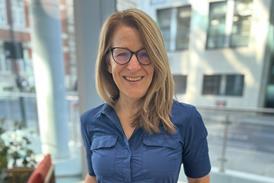
I want to honour the many women who find strength and meaning at the intersection of faith and fitness. For many, both are journeys toward healing and wholeness, and how they are expressed and interpreted matters. I am careful to separate the person from the message. My reflections are not about judging individuals, but about how messages land in the body, my body. Shaped by lived experience, culture, history, and nervous system. Context matters. Let me name mine. I am a white, middle-class pastor’s daughter raised in an American, predominantly white evangelical church, shaped by a Christianity entwined with Western culture, patriarchy, and power. As I turn 45, I now relate to faith, fitness, and embodiment very differently than I once did.
When I look at church history and what still echoes today, in the Western world, I ask who wrote the scripts around bodies, discipline, holiness, beauty, and obedience.
When I look at church history and what still echoes today, in the Western world, I ask who wrote the scripts around bodies, discipline, holiness, beauty, and obedience. It was largely white men with money and power, shaping theology to preserve control. These frameworks taught us to speak about bodies, especially women’s bodies and the bodies of people of colour, as something to be managed, disciplined, or made small.
For generations, women were taught their bodies were dangerous, did not matter, distracting, or secondary. When women reclaim strength, visibility, and agency, discomfort is inevitable. The question is whether we examine that discomfort or project it.
READ MORE: Rosemary Conley; ‘My life was a total mess …I needed divine help’
As I observed other faith and fitness influencers, some language unsettled me. Words like discipline, obedience, holy bodies, doing this for God once felt familiar. I spoke them fluently. Now my nervous system responds with alarm, knowing how easily they slip into fear, guilt, shame, and self-surveillance. This language mirrors wider systems of hustle, performance, perfection, valuing compliance over care. It is not language I want my children to internalise about their bodies.
I have been that woman and parts of me still are. I recognise myself in their certainty. I once needed that certainty too. It left me exhausted and ill. Forcing me to listen more carefully and seek out other stories. As I continue to disrupt beliefs that no longer feel true and repattern those that do feel at home in my body, I find myself more connected to my Creator, not less.
If the church truly believes in healing and wholeness, then it must also teach critical analysis. We need to learn how to ask questions, sit with discomfort. Responsibility lies not only with influencers, but with consumers. When we follow someone, we might ask: How does this message make me feel in my body? Who does it include and who does it leave out?
Faith has always carried many meanings. It is used to justify immense harm and inspire profound good. Perhaps instead of rushing to critique or defend faith and fitness influencers, we might ask better questions: Who is telling the story of the body? Why are they telling it? And does that story invite us toward fear or toward wholeness?
















No comments yet