







Katie Barringer shares how God grew her family in unexpected ways
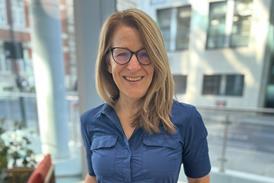
Katie Barringer met husband Tim while they were both living in Hong Kong. They married back in the UK in 2016, when Katie was 39. A natural optimist, Katie gave little thought to any challenges there might be in starting a family around the age of 40. Their first child, Sam, arrived the following year in 2017, and they soon started trying for a second baby. Katie had no reason to suppose there would be any problems.
However, this time she suffered several miscarriages – all in the early stages of pregnancy. They kept trying but still there was no viable pregnancy. God’s comfort came in unexpected ways. After one of her miscarriages, the foetal tissue was genetically tested. As she waited for the results, a very young Sam said, out of the blue: “Mummy, God makes babies, doesn’t He?” It felt like God was speaking through a small child. Five minutes later, the phone rang – it was the hospital with the results. They showed a serious genetic disorder, explaining why she had miscarried.
Several Christian friends were praying for Katie. One of them, who wasn’t a regular churchgoer or biblically literate, felt that God had spoken to her. She was reticent to share it, but Katie urged her to, and she said: “The word [I had] was ‘Sarah’”. She had no idea who Sarah was, but Katie knew immediately. It was Abraham’s wife, Sarah, in the Bible, and she explained to her friend: “She did have a baby, way past when you would naturally have thought it was possible” (see Genesis 18 and 21). It was amazing to them both. Katie believed God was promising that she would have another baby.
Taking a new route
Katie still wasn’t getting pregnant though. The disappointment she felt, and her longing for a larger family, was especially keen at Christmastime. Being the eldest of five sisters, Christmas had always felt like it should be “full of noise and chaos”, and, by contrast, it all felt a bit quiet with one child. Katie had always wanted to adopt, but only after she’d had a few children of her own: “I said to Tim, ‘I think we should go down the adoption route [now]’.” They decided that if she wasn’t pregnant naturally by her 46th birthday they would stop trying altogether (they decided not to pursue IVF). Her birthday came and went and still nothing, so they started to research local adoption agencies.
Living in west London, they settled on Adopt London West, and embarked on the rigorous process to become adopters. It culminated in their being ‘duly approved’ as both foster-carers and adopters. Altogether it had taken 18 months. It was coming up to Christmas 2023 and in the New Year they would start receiving profiles of children to adopt. A further option available to them was Foster to Adopt (also called Early Permanence). “I’ve always been quite attracted to [it],” says Katie, “I just think it’s lovely for the child, [and] I had an idea that maybe our child would come through that route.” One Friday, towards the end of February, their social worker emailed them to say: “We’ve just heard about a mum who is seven months pregnant…it was a concealed pregnancy [she didn’t realise she was pregnant]. She’s not able to keep the child – it’s a little boy. Would you guys be interested in fostering him with a view to adoption?” The due date was only a month away. “Our heads were spinning [thinking] ‘Oh my goodness, a month!’” But over the weekend Katie and Tim came to the same conclusion – it was a ‘yes’. On Monday, Katie shared their decision with their social worker. But there had been a development: the birth mum had pre-eclampsia and was to be induced that Friday. Their answer was still yes.
After scrambling to get everything together in time, they heard the following Tuesday that the baby had been born the day before after a long, hard labour. Katie coordinated with the baby’s social worker (a strong Christian) to visit the hospital unit where he was being monitored. They were then able to take the baby – Thomas – home on the Saturday, thanks to his “amazing social worker” going in on the weekend. Katie was euphoric: God had answered her prayers for another baby.
God expands their family again
Over the next year, the family happily settled into life together, and Katie and Tim officially adopted Thomas in February 2025. Thomas’ birth mum was keen to stay in touch, which is encouraged whenever possible. “It’s important for adoptive children to have contact with their birth families, and important for their identity” explains Katie. Known as his ‘Aunty’, Thomas’ birth mother visits the family regularly.
Katie had begun making preparations to return to work, as her maternity leave would end in the March. Thomas had started going to a childminder and Katie was looking forward to having time to herself before being back at work. She just needed to kick the germ she’d picked up, as she wasn’t feeling great. Collecting Sam from primary school one day, she bumped into a friend at the school gate. Greeting her warmly, Katie stepped back and apologised for hugging her. She didn’t want to pass her germ on but assured her it wasn’t the flu, she was just feeling tired and queasy. “She gave me a look and said: ‘You know what those symptoms are, right?’” But her friend didn’t know how old she was. “Don’t be silly,” Katie thought, and replied: “I’m not pregnant, I’m older than you think I am…I’m 48.” Her friend was sceptical, telling Katie that her best friend from university had had a surprise baby in her late 40s – 18 years after having her previous child. “Get yourself a pregnancy test,” she advised.
The reality of women’s fertility is not as bleak as the story we’re often told
Reluctantly, Katie did. There were other signs, once she thought about it, and she and Tim hadn’t been using contraception, convinced she couldn’t get pregnant. But still, she didn’t believe it. Back at home, she took the test: “It was an incredibly clear pink line,” she says. She was pregnant and “[it] felt like a bad joke”. However, over the course of the pregnancy (especially as she started to feel better), her dismay shifted to anticipation. And it was in telling Sam that it then transformed into joyful expectation. He was so excited about the pregnancy, just as he had been about Thomas; he couldn’t wait to have another sibling.
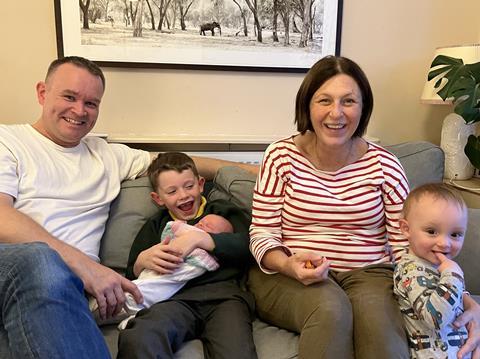
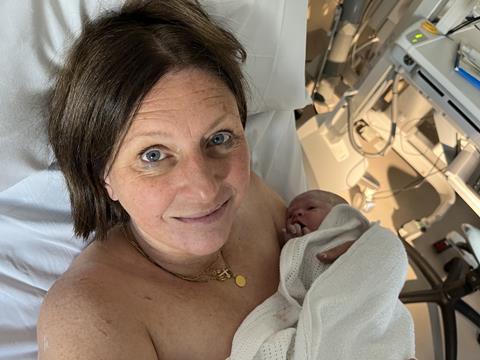
Tess was born on 4 September 2025, exactly 18 months after Thomas had been born. Katie was 49. She reflects on defying the odds to have a baby at that age. The birth itself was a dream: Tess was born in under two hours, with no need for an epidural. Katie felt incredibly empowered by the experience, especially when compared with the “very medical” birth of her first child. And though she is definitely “an outlier”, the reality of women’s fertility is not as bleak as the story we’re often told. More recent fertility studies back this up. And of course, with God all things are possible.
Katie may not be Sarah in the Bible, but conceiving naturally and giving birth to a healthy baby at 49 feels like a miracle. Beyond that, she believes that Thomas was always meant to be adopted into their family, and wonders whether it would still have happened if she’d given birth to a second child sooner. But God’s promise to her included being a blessing to others: “I always think that with God, things are win-win,” she says. “Out of a lot of people’s pain has come this extraordinarily beautiful thing.”
A shorter version of Katie’s story was published in the September 2025 issue, within our Signs and Wonders page.
Words by Alex Noel





















No comments yet