









Rhiannon Goulding shines a light on the hidden world of kinship care, a reality most people have never heard of until it becomes their own. Through powerful storytelling and a biblical challenge, she asks how the Church can better support the grandparents, relatives and family friends who quietly step in to keep vulnerable children safe.
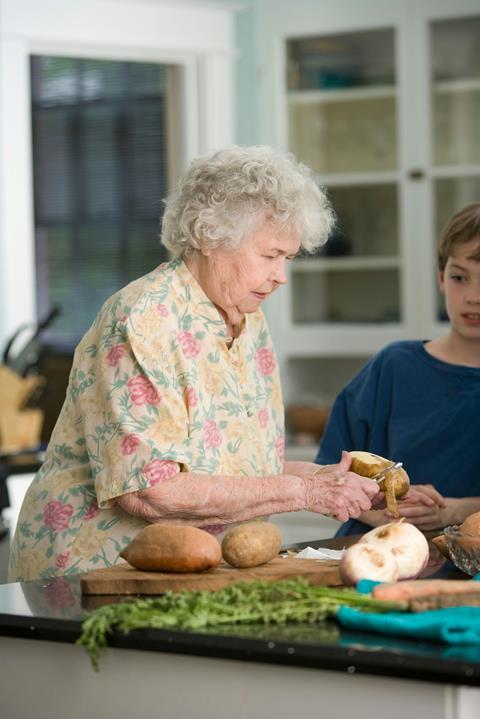
Have you ever heard of kinship care? It’s one of those phrases not many people have heard of until, suddenly, one day, it becomes your whole life. Imagine this. It’s 11:30 at night. You’re finally settling down after a long day when there’s a loud knock at the door. As you open it, you see two police officers standing there holding the hands of your grandchildren. They have a tiny bag between them. Pyjamas. A toothbrush. Maybe a teddy.
The officers gently explain there have been safeguarding concerns. Domestic violence. Drugs. Alcohol misuse. Abuse. Illness. Mental health issues. Things you may have known about, or things you never realised were happening behind closed doors. Then comes the sentence that changes everything:
“Can you take them tonight?”
So you say yes. Of course you do. At first, you think it might be for a night or two. A temporary arrangement. But then come the assessments, meetings, reports, safeguarding conferences, social workers, legal terms you’ve never heard before, and eventually the heartbreaking reality that these children may never return home, or that it is going to be a very long road before they can do so safely. At the stage of life when you imagined slowing down, or when you thought your family was complete, suddenly your world is turned upside down.
Holidays are cancelled and, in one moment, every plan and priority changes. You’re back to school runs and packed lunches.
Holidays are cancelled and, in one moment, every plan and priority changes. You’re back to school runs and packed lunches. Nursery drop-offs. CAMHS referrals. Meetings with teachers. Managing trauma responses. Learning acronyms like SGO, EHCP and LAC (Special Guardianship Order, Education, Health and Care Plan, and Looked After Child). Navigating a support system so complex and difficult to understand that even professionals sometimes struggle to explain it.
Alongside all this come feelings of grief, guilt, sadness, heartbreak and confusion. If you’re fortunate, you may find support from other kinship carers who understand the unique challenges you face. This is the hidden world of kinship care. Something that is probably already present in your church, your community or even your own family.
In the UK, thousands of people are becoming kinship carers. The charity Kinship Care Liverpool explains it like this: Kinship care is the full-time care provided by grandparents, aunts, uncles or family friends because the biological parents are no longer able to look after their child or children. This may be due to drug or alcohol misuse, mental health problems, custodial sentences or bereavement.
Kinship carers are also referred to as ‘family and friends foster carers’, ‘connected people’ or ‘relative carers’. There are many different types of kinship care arrangements. They may be private or informal arrangements, or they may be formalised through kinship foster care, Child Arrangements Orders or Special Guardianship Orders (SGOs).
The truth is, both these children and their carers often carry deep wounds. Many children were living with trauma long before anyone realised. Neglect. Fear. Unpredictability. Adults who were unsafe. Homes where shouting, addiction or violence became normal. Some have had to step up and become carers for younger siblings or even adults during times of crisis.
Kinship carers take on not only the practical task of raising children but also the weight of their history, pain and trauma.
Kinship carers take on not only the practical task of raising children but also the weight of their history, pain and trauma. They are often expected to hold all of this together with very little preparation. Many of these remarkable carers are carrying far more than anyone realises.
At a recent training day on fostering, kinship care and care-experienced young people, I heard stories that have stayed with me ever since. Stories of carers living permanently on a cliff edge. Stories of trying to navigate bewildering support systems. Stories of carers fighting for educational support, mental health provision and housing help while running on empty themselves. And isn’t that, in many ways, the heart of the gospel? Throughout Scripture we see a God who draws near to the vulnerable. A God who “sets the lonely in families” (Psalm 68:6). A Father who does not abandon frightened children but moves towards them with compassion.
God asks us to “Learn to do right; seek justice. Defend the oppressed. Take up the cause of the fatherless…” (Isaiah 1:17).
Not everyone is called to become a foster carer or kinship carer, but all of us can become part of the support network around them. Meals. School lifts. Listening ears. Respite. Financial support. Friendship. Prayer. Emotional encouragement. Churches can become places where exhausted carers do not feel judged but understood.
So perhaps the better question is not simply, “Have you ever heard of kinship care?” Perhaps the real question is: How could we possibly not notice the people quietly holding broken families together?
Five ways you can support a kinship care family
Notice and speak: Have you noticed someone in your church or community who has suddenly taken on the care of children? Let them know you see them. A simple, “How are you doing?” can mean more than you realise.
Be a friend: Check in, listen, invite them for a coffee. Don’t underestimate the power of simply being there.
Offer practical help: A meal, a lift, childcare, school uniforms or a shopping trip. Small things can make a big difference.
Welcome the child: Learn their name, celebrate their achievements, be patient, and help them feel that they belong.
Pray and include: Pray regularly, include them in church life, and remind them that they are not walking this journey alone.
























No comments yet