








A ground-breaking scientific discovery has revealed just how extraordinarily complex the human brain really is. Jenny Sanders reflects on the latest Nobel Prize-winning research and asks whether the intricate design of our bodies offers compelling evidence of a Creator.
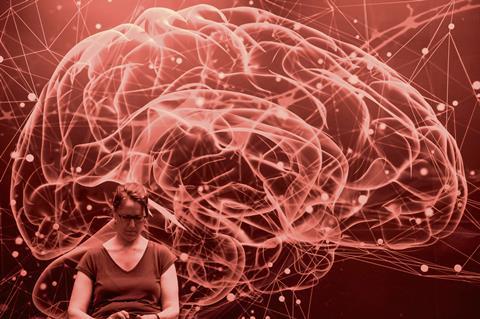
Photo by Markus Kammermann on Unsplash
On 5 October, the Nobel Prize in Physiology or Medicine was awarded to a group of three scientists for their work in a field of science I had never heard of: optogenetics.
This is a method of mapping the brain by combining light and genetics in a way that strongly indicates the possibility of controlling the activity of an individual neurone. Using a special protein sourced from algae, the scientists discovered that they could track specific neural pathways with light, and so control the electrical activity in targeted cells using the light from that protein.
It’s as complicated as it sounds, incredibly clever and has netted Karl Deisseroth, Peter Hegemann and Georg Nagel a whopping £900,000 in prize money to share. The chair of the Nobel Committee for Physiology or Medicine was particularly excited about this year’s award, declaring that it has opened up ‘opportunities for mapping the brain in a way that we could once only dream of.’
READ MORE: ’God keeps me young!’: Katie Piper’s faith and the science of staying younger
The results of the research have revealed a way of effectively turning some neural pathways on and/or off.
The results of the research have revealed a way of effectively turning some neural pathways on and/or off. These could be pathways that affect particular memories, emotional or behavioural reactions, which could therefore offer a potential lifeline for sufferers of trauma or some mental health conditions. Scientists are already investigating how these new findings might be able to restore sight to those with visual impairments, using the light-sensitive protein to influence the rods and cones in human eyes. You may or may not remember from school biology that these are specialised cells found in the retina, at the back of our eyes, which are particularly sensitive to low light and colour. They number in their millions in every human being, each type of photoreceptor cell working hard, both day and night.
All in all, this is excellent and exciting news for scientists and medics, especially those with an interest or focus on neurological and psychiatric disorders. To have effective research tools available to increase understanding of how the human nervous system works and how it interacts with cells around the body, from the heart to the gut, to the kidneys and liver, points to more breakthroughs for this branch of medicine.
READ MORE: Science catching up with the Bible
Not only that, but it’s yet another example of the incredibly complex systems at work in our bodies, highlighting yet again that there is an intricate design manifested inside each of us which points unrelentingly to a designer.
Random combinations of cells simply couldn’t operate as efficiently or effectively as the ones we discover arranged in functional harmony inside our own bodies. We seldom stop to think about what a slick machine we have at our command each day. Few of us are in tip-top condition physically, and the years don’t always feel kind; nevertheless, the real surprise is that our bodies don’t go wrong more often when there are so many intricate moving parts at work. Our conscious and unconscious functions of thought, digestion, breathing, circulation, temperature control, hormonal secretion and waste organisation are at work 24/7, keeping us alive and working hard to see us as healthy as the fuel we provide, the movement we pursue and the genetics we’ve inherited allow.
READ MORE: Do Christians believe in evolution?
It was King David who wrote a song in which he included the lyrics, ‘I am fearfully and wonderfully made,’ recorded in Psalm 139.
It was King David who wrote a song in which he included the lyrics, ‘I am fearfully and wonderfully made,’ recorded in Psalm 139. His awe and wonder at the miracle of life is captured as he goes on: ‘My frame was not hidden from you when I was made in the secret place, when I was woven together in the depths of the earth. Your eyes saw my unformed body; all the days ordained for me were written in your book before one of them came to be’ (v15–16). Science agrees 100 per cent!
How refreshing to come across a news story that points us towards God rather than away from Him. How welcome it is to have a smooth and accessible news story that can take us into a natural conversation about the greatness of God, His perfect design, our gratitude for His oversight and the unforced opportunity to make a response of thanks to Him.
























No comments yet