







We may know to check the ingredients on our beauty products, but are we as careful about the Christian content we consume online? Makeup artist and skincare expert Amy Dyas explains why reading labels has taught her an important lesson about biblical discernment – and why Christians need to check everything they hear against God’s Word.
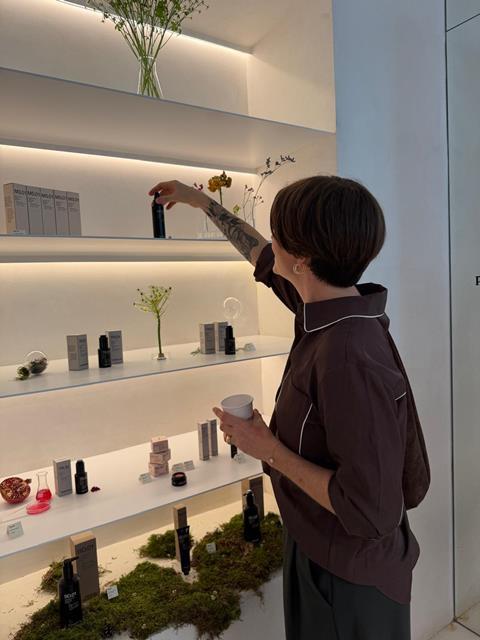
As a makeup artist and skincare expert, there’s one thing that really bothers me about the clean beauty industry – and that’s when brands inaccurately use words like “vegan”, “natural” and “organic” on their packaging. It allows them to make their products look safe and clean when that’s not necessarily true.
Clean beauty is not a regulated type of beauty, and the words associated with it also aren’t regulated. “Vegan” doesn’t guarantee against harmful ingredients, and there are many natural things that I wouldn’t put on my face! The word “organic” is only regulated on products certified by an organic body. If you find a product with a certification from an organisation such as COSMOS or the Soil Association, then you know that product has had to meet very high standards to be certified as organic.
READ MORE: Discovering ‘clean beauty’
However, if a product says it’s organic and has no certification, then the laws around this are very hazy and undefined
However, if a product says it’s organic and has no certification, then the laws around this are very hazy and undefined. Anything above 5 per cent organic seems to be about OK in the eyes of the law, yet people all over the world are buying these products, truly believing they are making a difference to their lifestyle and health.
This is one of the reasons I started my own clean beauty business – so that I could reliably offer people brands and products that are not only safe, but ones that I can vouch for because I have personally tried and tested them.
The issue of trustworthy advertising in the clean beauty industry got me thinking about the truth we have in knowing Jesus. The Bible is God-breathed – we can trust every word of it because it is God’s Word. However, have you noticed that if you go on social media, there are thousands of Christian accounts (from individuals to megachurches) preaching the good news?
READ MORE: Before Botox: What ancient women knew about beauty – and what God says about it
This may sound amazing! And honestly, it should be. I myself have a Christian account dedicated to helping women find God in their day-to-day beauty habits, encouraging women to seek God before beauty.
But how do Christians scrolling Instagram know that what they are seeing is completely in alignment with God’s Word? If it isn’t aligned with God’s Word, there’s a danger of being led down the wrong path.
It can be hard to discern content like this from a biblical point of view because so many of us don’t have the Bible memorised and at our fingertips! The Bible warns us that there will be wolves in sheep’s clothing “preaching” the Word who are not to be trusted.
READ MORE: A beautiful philosophy
So what must we do in a world where we can’t necessarily trust words like “natural” and “organic” and where, more importantly, we can’t automatically trust every representation of God’s Word?
So what must we do in a world where we can’t necessarily trust words like “natural” and “organic” and where, more importantly, we can’t automatically trust every representation of God’s Word? I have concluded that we must daily seek to be deep in God’s Word and in prayer, asking the Holy Spirit for his gifts of discernment and wisdom.
We need to be clothing ourselves in the armour of God and picking up God’s sword (his Word) to protect ourselves from unholy preaching. If we don’t, we risk being led by our feelings and emotions. And there are many verses in the Bible that tell us our feelings and hearts are not always to be trusted. We are told not to lean on our own understanding but to lean on God’s, because that is what keeps us safe. I encourage you to seek wisdom and pray for discernment, while putting in place disciplines to help you find trusted sources of Christian content online. When you are on social media, have a look at the profile behind the post and see what it says. Then have a look at their other content and ask the Spirit to guide you.
We mustn’t blindly follow accounts because they say they are Christian. In the same way that we need to read the fine print on beauty labels, we must read the fine print behind Christian content creators. I myself feel challenged to revisit and rewrite the profile on my Christian account and make sure that I am pointing people to truth. Because there are wolves in our midst, and we need to be wise.

















No comments yet