









Rhiannon Goulding reflects on how one challenging week working with children taught her that sometimes the best way to care for the next generation is to let go of old habits and learn a different way.
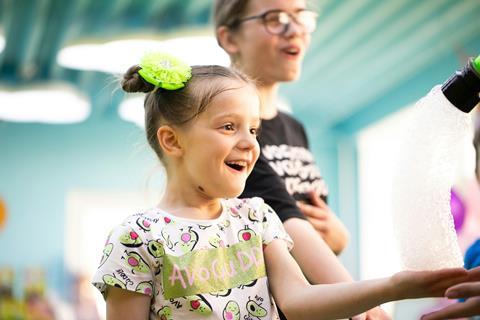
Photo by Ihnatsi Yfull on Unsplash
It was probably about 10 minutes into the conversation when Milly, my volunteer helper, and I looked at each other. I’m pretty sure we were both thinking: ‘That’s never going to work.’ We were running a week-long ‘Jesus and Me Club’ and, in preparation, we had organised a training session for the whole team. We brought in experts from a wide range of fields: a SEND teacher, mainstream teachers and even an academic from the local university.
We’d talked about creating spaces where every child could belong, including activities, breakout spaces and quiet spaces. We’d planned for children with additional needs and those who experience the world differently because of their background and family life. We’d listened intently and felt reasonably well prepared, if a bit apprehensive.
Then the children arrived, and a few of them reminded us that knowing something in theory and knowing what to do at 10.15am on a Tuesday morning are two very different things. Hence, Milly and I were now sitting outside the church, listening on speakerphone to an experienced play therapist telling us how we might respond differently to some of the children. We’d asked for her help because, frankly, we needed it. Nothing we’d tried seemed to be working.
First, she told us to stop using so many words. How? Fewer instructions, she said, and telling them what would be coming next throughout the day. More choices, offered in a neutral tone. No persuasion, no demands. Not, ‘We’re going to do this now,’ or, ‘It’s time to do this.’ Instead, we should say: ‘What do you choose? Do you choose to do this, or do you choose this?’ The word ‘choose’, over and over.
‘When we understand what they need, our response becomes much calmer.’
Then she suggested something else: ‘Name what you see: “You’re running fast.” “You’re throwing the toy.” “You’re banging the table.” Don’t fix it immediately. Don’t argue them out of it. Let the child know you’ve noticed. Let them feel seen and cared for.’ You’re helping them to regulate before expecting co-operation. Connection doesn’t mean letting children get away with things – we still have boundaries, but we lead with empathy.
That was the point at which Milly and I wondered how this was ever going to help. Telling the children what they already know? Offering choices? But we trusted the experts, so we gave it a try. At first, we felt a bit silly, offering choices for everything: ‘What shape of pasta do you choose?’ But slowly, we got better at it, using fewer instructions, fewer words and more choices. ‘Do you choose the blue hand soap or the pink?’ The instruction to wash their hands hasn’t changed, but now they’re excited to decide which one they will choose.
‘I can see you like to stamp. Here’s an egg box. Would you like to stamp on that?’ Instead of, ‘Stop jumping!’ we said, ‘Let’s go and jump on the mats over there, and you can show me your cartwheels.’ Rather than, ‘Stop running!’ we said, ‘Careful – slow inside, running outside.’ We asked questions: ‘Why do we go slow inside?’ When they come up with the reason, they have understood why we don’t run inside. We are teaching problem-solving and life skills, not just stopping arguments.
There were still difficult moments, but gradually something shifted. By the end of the first day, Milly said, ‘I can see a little bit of difference.’ By the Friday, we’d seen a significant change in how we connected with the children. By not shouting or demanding, we had built up a relationship of mutual respect. Everything felt easier.
Perhaps the biggest change was that we, as adults, were setting the emotional temperature. Something happened to us as a team, too. We’d learned to respond to the children differently, talk differently and use new ideas and ways of connecting. I’ve been thinking about it ever since.
I’ve been parenting for a long time. I’ve raised children with very different personalities and needs, and I’ve worked with families for years. Every Sunday, our churches are filled with families and children, and I’m surrounded by wonderful people who love them deeply. Yet I’m increasingly convinced that one of the best things we can do for the children in our lives is to remain open to change, especially when our go-to techniques are ones we’ve been using for years.
Over time, parenting styles change, and our understanding of children changes.
Over time, parenting styles change, and our understanding of children changes. More information is available to us these days, and we know more about neurodiversity, trauma, attachment, anxiety and sensory overload than most of us did when our children were small – and certainly more than our parents knew when they were raising us. So our habits and attitudes sometimes require unlearning. The biggest shift we can make is changing how we think about behaviour. The child who won’t sit still isn’t being naughty, the child who won’t join in the game isn’t being difficult, and the child who refuses to answer isn’t being rude. Instead of asking, ‘How do we get this child to behave?’, we need to ask, ‘What is this child trying to tell us?’ Instead of, ‘Why won’t they join in?’, we need to ask, ‘What might make joining in feel possible?’
This summer, I discovered with a hard bump that parenting and caring for children isn’t a qualification you ever complete. Just when you think you’ve learned the rules, another unique child comes along and reminds you that they haven’t read the same parenting book or listened to the same psychology podcast you did. And that’s not just OK – it’s fantastic. How wonderful God is, to make so many unique people with their own precious gifts and abilities.
Our job is to support and guide them, not make them fit into the mould of the majority or follow behaviours that were forced on us as children. Long after the club ends, they’ll remember how you made them feel. If they feel safe and valued, you’ve done a great job. Perhaps, as we do some work on ourselves and understand our own habits and attitudes, we can choose to be more accepting. Perhaps we can become secure enough to say: ‘Maybe I need to learn another way of caring, guiding and teaching.’
I suspect that some of the most important lessons I’ll learn about parenting in the years ahead won’t be about learning something new at all. They’ll be about having the courage to unlearn something old.
























No comments yet