









Lydia Jenkins reflects on the cultural phenomenon of Yesteryear, the bestselling debut novel that has sparked conversations about faith, femininity and the pressures of online influence. She asks what the story can teach Christians about authenticity, performance and what it really means to follow Jesus in a social media age.
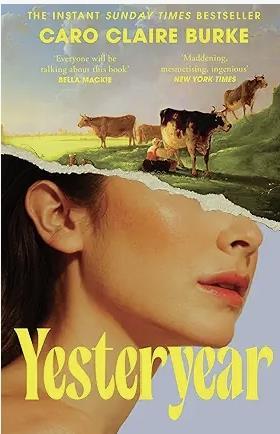
What does a bestselling novel about an American ‘tradwife’ and social media influencer have to do with following Jesus? Everything and nothing.
The debut novel by Caro Claire Burke exploring fundamentalist gender roles, performance and the religion of social media, has taken the entertainment industry captive. Having already surpassed 600,000 copies sold since its April release and with Anne Hathaway snapping up the movie rights, this novel will be part of our cultural conversation for some time.
As a follower of Jesus, an avid reader of strong female protagonists and someone who works in digital media, the premise hooked me immediately.
READ MORE: Jesus said we should be ‘like little children’ and the faith of the pre-teen protagonist in Judy Blume’s best-selling novel is a great example of this
Yesteryear follows successful influencer Natalie Heller Mills, who gains a massive following as a ‘tradwife’
Yesteryear follows successful influencer Natalie Heller Mills, who gains a massive following as a ‘tradwife’ (an online subculture of women who intentionally embrace traditional gender roles). She lives on Yesteryear ranch with her cowboy husband and their raft of children.
The novel begins by portraying her life of pronatalism (promoting large families), baking sourdough, church attendance, submitting to her husband and tending to her chickens – the highlights of which are shown to her millions of followers. Readers are then offered chapters where Natalie is stuck in some obscure version of life in the 1800s. I don’t wish to spoil what soon becomes a psychological thriller, but Yesteryear offers us, as followers of Jesus, something that goes beyond any political reflection of American nationalism.
What struck me most was her superficial faith.
What struck me most was her superficial faith. Critics have noted how the author, who was raised Catholic, makes Natalie’s denominational doctrine deliberately vague. God is merely mentioned in King James Bible references, or in Natalie’s apologies after she blasphemes; there is no recognition of the cross or the person of Jesus. Yet she precisely controls her online persona of a ‘good Christian woman’. Nothing can disrupt the image that’s giving her fame. Her husband floats the idea of becoming a kindergarten teacher and that is ‘humiliation incarnate’ to her. She needs a protective, ‘manly’ husband who fits her brand.
READ MORE: “I rewatched To Kill A Mockingbird, and one scene left me spiritually shaken”
How often do we use our faith as a tool for fame? We may not have millions of followers, but we might use our ‘Christian’ label as a badge of honour to find favour with others. The deep irony is that Natalie knows this, referring to herself as the ‘online’ and ‘offline’ Natalie. Inside her head, the reader finds little of the grace, compassion and spiritually healthy fruit that appears on her feed.
The question we must ask is, is that us? Are we living for the applause of the crowd or the approval of God? Or are we easily influenced by ‘Christians’ online who we know little about?
The author, in an interview with Good Morning America, commented that the question really is, ‘Are we all performing all the time?’ This is akin to the Pharisees and reminds me of what Jesus warns in Matthew 23:25: ‘You hypocrites! You clean the outside of the cup and dish, but inside they are full of greed and self-indulgence.’
READ MORE: The Christian message of redemption runs through the books of late bestselling author Barbara Taylor Bradford
Yesteryear is littered with Natalie’s desperation to control how she is seen, but the fruit is clear. This is no follower of Jesus. This is not a woman who experiences the true expression and omnibenevolent nature of a creator God. This is a woman raised on rigid fundamental structures who believes the world is hers to deceive.
She of course has no control at all; the tech Gods manipulate the algorithms in ways that have gone beyond the law. This is a comment Caro Claire Burke made herself, saying that social media is likely to surpass the Catholic church in terms of its impact on the world. Fame and performance will not get you points in the kingdom of God. We might have clean, aesthetically pleasing social media grids, but what’s going on inside our hearts? And do we come to Jesus with zero masks, cover-ups or political agendas? Following Him is often found in the hidden, private places that no one else sees.
I’ve been reminded that faith can’t be a tool we use to bring us recognition, but a state we operate from to bring God glory. I’ll be watching the developing conversations around Yesteryear with interest.






















1 Reader's comment