








Writer Becky Hunter Kelm celebrates Colombia’s landmark decision to outlaw female genital mutilation (FGM), becoming the first country in Latin America to ban the practice. Reflecting on her own studies and experiences, she explores why Christians should welcome this milestone while continuing to pray for the protection and dignity of women and girls around the world.
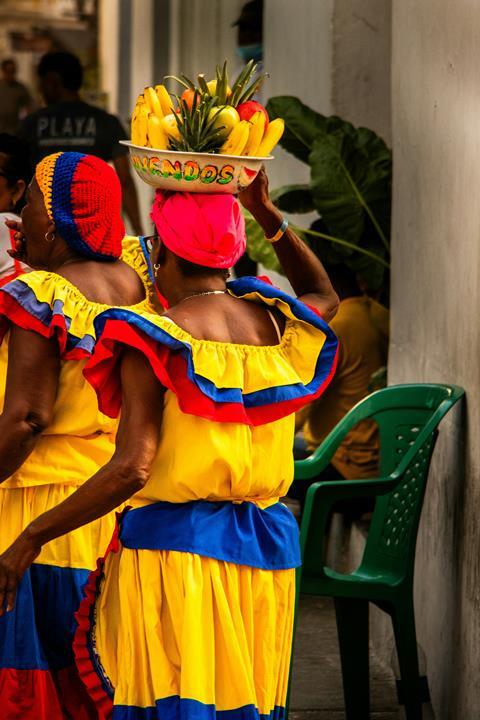
Colombia has just approved nationwide legislation prohibiting female genital mutilation (FGM). As the first Latin American country to do so, it’s being hailed as a turning point by Indigenous Embera leader Quiragama, who is from a remote community where FGM is still practised. Colombia is the only Latin American country where FGM is recorded, mostly in Embera communities in the western departments of Chocó and Risaralda.
“I’m grateful to all of the legislators,” Quiragama told the chamber last week. “This is what we need, for the needs we face in our territory to be addressed.”
READ MORE: One woman’s fight against FGM
For over two years, Colombia’s Bill 440, known by the slogan Niñas sin ablación (“Girls Without Mutilation”)
For over two years, Colombia’s Bill 440, known by the slogan Niñas sin ablación (“Girls Without Mutilation”), has been debated in the courts, and this Wednesday the bill was passed unanimously. It now awaits approval from Colombia’s president, Gustavo Petro. After decades of silence on the issue, FGM was assumed to have disappeared. But the shocking deaths of two girls who suffered infections from injuries caused by the practice brought the issue back to the forefront in 2007.
Female genital mutilation is recognised by the World Health Organisation as a human rights violation. It is defined as the “full or partial removal of genitalia for non-medical reasons, through methods like cutting or burning.”
We may not hear much about it in the UK. However, around the world, FGM is still widespread, with some 230 million women and girls estimated to have undergone the practice. Cases have been recorded in over 96 countries, with the majority concentrated in Africa and the Middle East. Typically, girls are aged 1–15 when they undergo FGM, but sometimes adult women are also subjected to it.
READ MORE: Iraq is proposing a terrifying law to lower its age of consent so that men can marry nine-year-old girls
During my degree in Theology and Religious Studies, I chose to do a whole module on African Traditional Religion.
During my degree in Theology and Religious Studies, I chose to do a whole module on African Traditional Religion. It was a fascinating course, and when we got to the lectures on FGM, it was pretty shocking for our 19-year-old brains to handle the realities of FGM and why it was practised. (I distinctly remember hearing a thud and looking to my left to see that my friend had fainted at her desk!) Academics couldn’t pinpoint exactly when FGM began, but evidence suggests it’s an ancient practice that predates Christianity.
So why is FGM practised? Well, like most anthropological discourse, it’s complicated. But we can start by acknowledging that it’s deeply rooted in harmful gender norms that directly contradict God’s plans for girls and women. Gender inequality and expectations placed on girls and women within communities play a huge role in the practice of FGM. Some of the beliefs that underpin FGM include:
-
FGM is a religious requirement.
-
The need to control women and female sexuality.
-
FGM is a rite of passage, preparing girls for marriage.
-
Unmutilated girls are “dirty”, while girls who have undergone FGM are considered more “chaste” and respectable.
FGM has devastating physical, mental, and emotional effects on girls and women. Aside from the immediate pain and trauma, victims can suffer a plethora of ongoing urinary and vaginal problems, permanent pain, scarring, cysts, and infertility. Childbirth is also riskier, with more complicated deliveries and a greater chance of maternal and newborn death.
READ MORE: Five of the toughest places to be a girl in 2021
When I was at uni, there was a seminar debating whether it was appropriate for us to speak into another culture and call practices such as FGM “wrong”. Some professors held that it was arrogant to do so. (They were male, I might add!) Twenty years on, and after a decade living in a country near the Middle East, I know with conviction that the gospel is good news for all cultures and communities, and that every single culture on this planet has parts of it that need redeeming, and FGM is one of them. God made women perfectly in his design. Their genitalia do not need changing, nor do girls and women need to be controlled. Both our femininity and our sexuality are gifts from him, to be cherished appropriately, not manipulated or abused.
This bill, approved in Colombia, is a huge win for women and girls, and I’m glad to see it in my lifetime. Because it takes a non-punitive approach, the hope is that it won’t criminalise communities but instead educate them and bring them on board in the effort to eradicate FGM nationwide. Let’s pray that this bill will inspire other nations fighting for the same cause.


‘I was 33 and furious with God’: Kova International’s Emma Trueick on singleness, faith and finding her dream job with The Chosen

Generation Wed – are the new Gen Z influencers nailing it in terms of God’s design for women?

When does respect become complicity? What the Eiffel Tower’s ‘Invisible Women’ row can teach Christians




















No comments yet