









When a hairdresser suggested Jemimah Wright might consider Botox, it prompted her to think about the pressure women face to look younger. The Danish Prime Minister’s response to unsolicited advice about her appearance offered a timely reminder that, as Christians, our worth is not found in chasing a face that never changes.
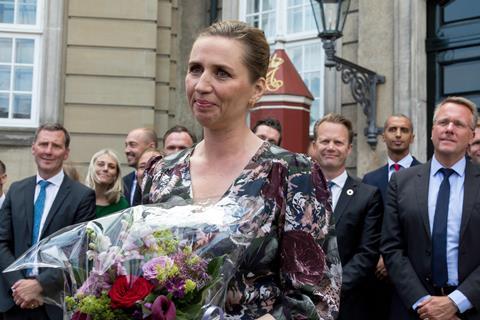
The Danish Prime Minister was recently offered plastic surgery to ‘fix’ her nose. She was having none of it. After returning from a visit to Ukraine, where she had heard air raid sirens as she prepared to leave Kyiv, Mette Frederiksen opened her messages to find an unsolicited note from a plastic surgeon. He offered to remove a small spot on her nose. ‘Come on,’ she wrote in response.
She said: “I’m happy with my body, as it is when you’re a woman approaching 50. I really don’t need a male plastic surgeon to have an opinion about it!”
Frederiksen said she had lost count of the number of messages she had received over the years about her appearance
Frederiksen said she had lost count of the number of messages she had received over the years about her appearance: comments about her teeth, her thin hair, a supposed ‘wart’ on her nose and well-meaning advice to get Botox. But she was clear about her response: she was happy with the way she looked. At 48, she did not need a male plastic surgeon to tell her otherwise.
READ MORE: The Beauty Trap: Has the Church bought into the world’s standards?
It goes without saying that if she was a man she would not have got those messages. There is a pressure on women to be beautiful, and we are treated differently if we are. Here was a woman returning from a war zone, where the sound of air raid sirens was still ringing in her ears, only to be confronted with a message suggesting that what she really needed to worry about was her nose.
Frederiksen has been Denmark’s Prime Minister since 2019 and is one of the most prominent political figures in Europe. She has previously described herself as non-religious, although she has spoken of enjoying church for its cultural significance in Danish life. So, this is not a story about a Christian leader making a theological case against plastic surgery or Botox.
A few weeks ago I was having my hair cut when my hairdresser mentioned that lots of her clients had Botox and then asked whether I had ever thought about getting it. Maybe, she suggested, I should.
READ MORE: ‘God keeps me young!’: Katie Piper’s faith and the science of staying younger
I was mostly surprised that so many of her clients had it. Sure, I’ve noticed that the crow’s feet around my eyes are getting larger. My face doesn’t look quite as it did a decade ago. But I’m in my 40s now. Isn’t that… normal? I don’t know whether I want Botox. I think the cost and the fact that it is essentially a toxin might put me off. But I don’t think there is anything inherently wrong with it, and I’m not writing this as a judgement on women who do have it.
What I did feel, though, was the pressure in my hairdresser’s words. If all her other clients were doing it, should I be too? Are we all changing our faces to look younger and prettier? I hate that amount of pressure being placed on what we look like. And I wonder what happens when ageing itself becomes something we are expected to resist.
Christians do have something to say about this cultural conversation. We believe that our bodies matter. We are not disembodied souls waiting to escape our physical forms. Our bodies are part of God’s good creation. Yet we also live in a culture that increasingly tells us our bodies are endlessly editable projects.
READ MORE: My thoughts as a Christian woman on Ulrika Jonsson’s bold rebuttal to ageism
The Bible offers a rather different picture. Yes, we are called to care for our bodies. But our worth has never been dependent on remaining young
We are called to care for our bodies, but our worth has never been dependent on remaining young. ‘People look at the outward appearance,’ God tells Samuel, ‘but the Lord looks at the heart’ (1 Samuel 16:7). Of course, that verse is not a command to stop moisturising. But it is a useful reminder when the mirror – or an unsolicited message from a plastic surgeon – starts telling us that we are somehow less because our faces have changed.
My crow’s feet have grown because I have got older. I have also laughed, cried, squinted in the sunshine and lived for more than four decades. The lines on my face are not evidence that I have failed to keep up with the beauty industry. They are evidence that I have been alive. We do not need to pretend that we never notice our changing faces. But perhaps we can learn to look at them with a little more grace.
Rather than asking whether I should get rid of my crow’s feet, I should be asking a different question: when did it become so strange for a woman my age to simply look like a woman my age? Mette Frederiksen has a spot on her nose. I have crow’s feet around my eyes. Perhaps neither of us needs fixing.
























2 Readers' comments