








Writer Alex Noel suggests that “Wuthering Heights” gives us what we want, but not what we need. Through a lens of faith, the contrast between Wuthering Heights by Emily Bronte and Emerald Fennell’s romantic adaptation reveals how easily truth is traded for comfort.
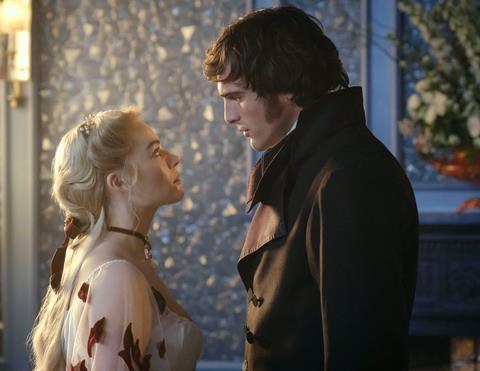
Wuthering Heights 2026 Jacob Elordi & Margot Robbie
“Wuthering Heights”, Emerald Fennell’s new film based on the classic tale by Emily Brontë, paints a starkly different story from the original book. While the title’s quotation marks are absolutely necessary, perhaps don’t take one reviewer’s advice urging cinema-goers not to bother reading the book at all. If anything the film makes a strong case for revisiting it.
READ MORE: Margot Robbie’s Barbie character just stopped short of finding Jesus on her road to self-discovery - and I’m here for it
An overarching theme of Emily Brontë’s Wuthering Heights, is its bleakness. This is felt in the barrenness of the Yorkshire moors, in the chaotic home of Wuthering Heights - battered by wind and rain, and in the darkness that stalks about it. And yes, in the relationship between Heathcliff and Catherine. Soulmates since childhood, their sense of enmeshment is captured as Catherine secretly admits to loving him: “He is more myself than I am. Whatever our souls are made of, his and mine are the same”. This is said with deep regret, she has agreed to marry their wealthy neighbour. And though her thoughts are only for Heathcliff, a union with him feels impossible. Their love and longing for each other, speaks of an aching wish to return to their inseparability as children, even as the realities of the adult world and their places in it, conspire to keep them apart.
Whether living up on the wild moors, or in the sheltered valley below, the various inhabitants of this community are subject to the wider social diktats that swirl about them - of class, race, gender, religion and an exacting Victorian morality which can be more cruel than kind.
READ MORE: Preachers are already kicking off about the Barbie movie, but here’s why I’m excited about it
Whether living up on the wild moors, or in the sheltered valley below, the various inhabitants of this community are subject to the wider social diktats that swirl about them - of class, race, gender, religion and an exacting Victorian morality which can be more cruel than kind. The interplay between these makes each vulnerable to the collateral damage of a system that bears down on them all. But none so much as Heathcliff, a foundling whose racial heritage ignites speculation, and whose presence exposes deeply ingrained prejudice and racism. While he and Catherine make their own bargains with this system, it only heightens their longing for each other, as well as the inevitable sense of betrayal when it comes. It animates their pain and dysfunction, transmuting it into jealousy, rage, and ultimately grief.
The book doesn’t sugar-coat any of this. It forensically tells the truth of this tale without rescuing its characters - frustrated victims of circumstance whose lives embody the consequences of a society that pits one against another. Nor does it rescue the reader, who is compelled to read on, ungratified. It resolutely refuses to soften the story, conceding nothing to notions of love requited which would make it more palatable. And so we are destined to be as haunted by Catherine and Heathcliff as they are by each other, forever lovelorn and wandering the moors. In a further turn of circumstance, the book bequeathes the forgiveness, love and reconciliation that so eluded Heathcliff and Catherine, to the next generation.
READ MORE: Preachers are already kicking off about the Barbie movie, but here’s why I’m excited about it
And so rather than tackle the book’s bleaker truths in any meaningful sense, Emerald Fennell’s film wholly romanticises them. In doing so she dispenses with some characters and amalgamates others; changing timelines and cutting the full story short. Her “Wuthering Heights” reimagines the story to put romance at the very heart. Our star-crossed lovers can finally consummate their desperate longing for each other - perhaps a redemption of sorts. Heathcliff and Cathy - played by Jacob Elordi and Margot Robbie, embark on a passionate love affair that plays out across the moors in a series of music-video montages. Of course, as an adaptation Fennell’s is a valid interpretation. There was lots to enjoy about it; its technicolour rendering offers up her teenage-self’s vision of the book, to which she is entirely faithful. And there are some beautiful sets, atmospheric effects, and high-fashion moments, artfully staged to show off Margot Robbie’s stunning costumes especially, which blend a range of era-defining styles for maximalist impact.
As a Christian, this is what I admire about the original book, whose author holds up a truthful mirror to an overbearing society where God’s love and grace are scarce, though much is done in God’s name.
But it is still a diminutive version of Emily Brontë’s Wuthering Heights. Reframing it as an intense romance, strips the story of its power to act as a significant social commentary on the uncontrollable forces affecting people both at the centre and margins of society. And which still has relevance today. Why stifle it? It might not be what we want, but it is what we need. As a Christian, this is what I admire about the original book, whose author holds up a truthful mirror to an overbearing society where God’s love and grace are scarce, though much is done in God’s name. Truth, however unsexy, offers us a chance to examine ourselves, and collectively address issues that have done untold harm. Our propensity to romanticise stories - our own included - serves to gloss over these implications, which if faced head-on could wholeheartedly redeem us. To exchange this opportunity for easy gratification, seems like the real tragedy of this tale. How might we avoid doing this ourselves?
























1 Reader's comment