


Writer Sophie Dianne attended Hay Festival 2026 to explore the role of faith within one of Britain’s most influential cultural events. Amid literary discussion, political debate, and celebrity appearances, she set out to discover whether Christianity still has a meaningful place in the festival’s conversation.
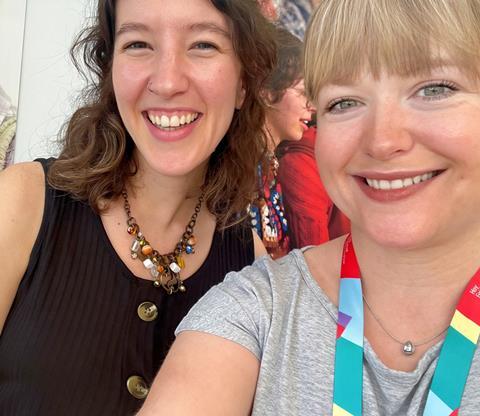
This year’s Hay Festival ran from 21–31 May in the book town of Hay-on-Wye, Wales. The event promised big literary names, political debate, and cultural conversation. But I wanted to find out whether there was still room for Christianity at one of Britain’s most influential arts festivals.
Hay is a charity that prides itself on being the “antidote to polarisation” through the production of global events. It brings together diverse voices to listen, debate, and create, while tackling some of the biggest political and environmental issues of our time.
The festival was founded in 1987 and, over almost four decades, has gone global. Hay events now run all over the world, from the historic city of Cartagena in Colombia to Peru, the United States, Mexico, and Spain, countries rich in cultural heritage.
READ MORE: I watched a prophecy be fulfilled as I worshipped with Justin Bieber at Coachella
This expansion has built an audience of millions and earned the charity multiple awards, including Festival of Sanctuary UK recognition and Spain’s Princess of Asturias Award for Communication and Humanities. In 2001, Bill Clinton addressed the United Nations and described Hay Festival as “the Woodstock of the mind”, proving that it is far more than a provincial literary festival.
Get ready to ‘go mental’ at the UK’s first mental wellbeing festival
I was glad to see the likes of Charlie Mackesy, Bear Grylls, and Reverend Richard Coles flying the flag for Christianity.
Hay 2026 was my first experience of the festival, and having a press pass afforded me certain luxuries, including access to the Green Room. Inside, I met celebrities, and it struck me that the importance placed on fame was somewhat unattractive. I found myself more interested in lesser-known authors. That being said, I was glad to see the likes of Charlie Mackesy, Bear Grylls, and Reverend Richard Coles flying the flag for Christianity. It was a sign that, among Oscar winners, broadcasters, and comedians, God was present.
My schedule at Hay was full of press activities, however, I still found time to see some of my favourite authors, including Elizabeth Strout. She is an American novelist who has won numerous awards, including the 2009 Pulitzer Prize for Fiction. Strout was raised by conservative, religious parents and describes herself as a “church hopper” with a deep and lingering interest in theology and spirituality. This curiosity often finds its way into her books.
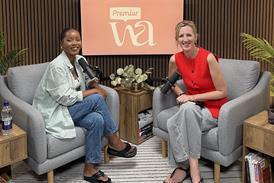
In the event programme I spotted several speakers who planned to discuss their Christian faith directly, the first being The Writing Life of Faith. During this session, the BBC recorded a live episode of its All Things Considered podcast, hosted by Rosa Hunt. It brought together an Anglican priest, a theologian, and Welsh novelist Elinor Wyn Reynolds. The panel examined the long-standing tradition of clergy as writers and how they navigate writing about faith for a modern audience.
READ MORE: If you’re heading to a Christian camping festival this summer, you’ll need these expert tips for getting a good night’s sleep in a tent
On the Meadow Stage, Misha Glenny spoke with prominent Oxford University professor Diarmaid MacCulloch about how Christians have historically tried to make sense of faith, sexual desire, and gender—a topic MacCulloch explores in his latest book. Elsewhere, Sir Tony Robinson of Blackadder fame took to the same stage to discuss his debut novel, The House of Wolf. He focused on early Christian centres such as Lindisfarne and Wessex, exploring the role faith played during the era of Alfred the Great.
These conversations demonstrated that Britain still values both democracy and the historic Christian landscape upon which it was built.
These conversations demonstrated that Britain still values both democracy and the historic Christian landscape upon which it was built. Outside the Global Stage, a banner displayed a quote from Nobel Peace Prize winner Kailash Satyarthi. He said: “At a time when the world is so divided, there is a dire need to globalise compassion. And events like the Hay Festival, which promote free exchange of ideas and dialogue, will help in ushering in hope and positivity.”
This serves as a further reminder that, when we are deeply divided by our beliefs or political views, cultural events like Hay can create safe spaces for open dialogue. Only then can we counter negativity and use these platforms to open people’s hearts to Jesus.



















No comments yet