
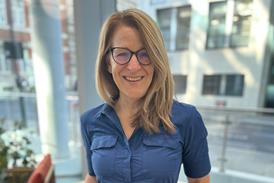





After a childhood marked by abuse, struggles with identity and a desperate search for belonging, Virginnia Logan converted to Islam and threw herself wholeheartedly into her new faith – but questions about Jesus wouldn’t go away. She tells Woman Alive’s Jemimah Wright how an unexpected encounter with two Christians outside a Manchester nightclub became part of a journey that ultimately led her back to Christ.
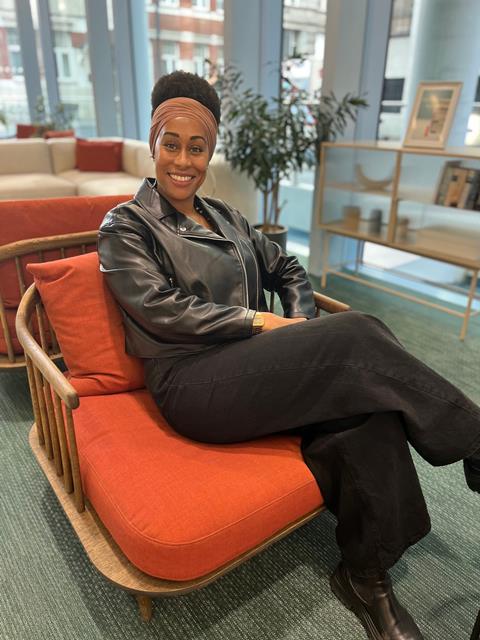
Virginnia, your journey to Jesus has taken you through some incredibly difficult places. Can you start by telling us about your childhood?
I was born in Salford, Greater Manchester, to a white British mother and a Sierra Leonean father. My childhood was really volatile. All I knew from a young age was abuse and violence, and for me it was normal. You don’t know something isn’t normal if that’s what you’re living in. My dad was a very broken man who had been through a lot himself, and that affected his ability to be a father. I’m not saying there weren’t times when he was loving – I loved my dad and still do – but he had a lot of things that were undealt with.
When I was 11, my parents split up and my mum got into another abusive relationship. This time, the abuse was directed more towards me. I also really struggled with identity. I’m mixed race and grew up in a very white, middle-class area. I experienced racial abuse at school, particularly because of my hair, and I was bullied. At 18, I met people who looked like me and felt like I’d finally found my people. They happened to be involved in gangs.
Were you actually part of a gang?
No, I was never a gang member. I didn’t even know initially that some of these people were gang members until I saw an article in the newspaper about them. But I felt like I belonged. I felt accepted and popular. I’d go to clubs and get things paid for me. I felt like I was part of something I’d never been part of before. My role was really being used to accompany people who were going to do criminal activity, but I was also being sexually exploited.
At the time, it felt like: I belong. I fit in. I’m wanted. I’d never had that sense of belonging before. Looking back, so much of my life before coming to Christ was about trying to find it.
Did you have any faith growing up?
We grew up Catholic, but we weren’t particularly religious. We went to church at Easter and Christmas and sometimes on Sundays. I had my Holy Communion and confirmation. But I was always very spiritual. I had this knowledge that there was more than what I could see around me, and I think that gave me hope through the abuse.
I also always had a love for Jesus. I had a red children’s Bible and sometimes I would sleep with it because there was something about it that made me feel safe. As I got older, though, I was struggling with so many things – my identity, my sexuality, depression and suicidal thoughts. There were times when I prayed, but I didn’t really know who I was praying to. I would beg: “God, if there’s a God, please help me.”
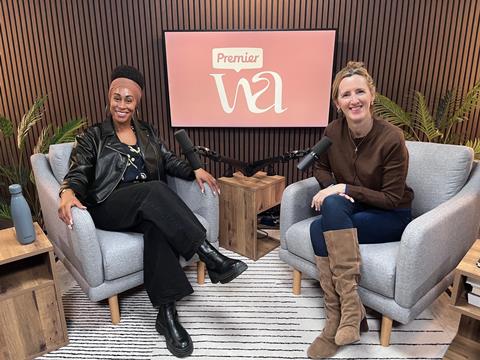
You actually had an encounter with Christianity when you were 21, didn’t you?
Yes. Christians were doing an outreach barbecue and I ended up going to a church event where a man was sharing his testimony. At the end, he said: “If you’re here and you want to give your life to Jesus, raise your hand.”
I remember waving both hands. I was desperate. I’m a zero or 100 per cent person. I’m either not in at all or I’m 100 per cent in. That night, I had an encounter with God. For the first time, I felt that God was real. The next morning I woke up thinking: I need a Bible. I need to start reading the Bible. But that journey didn’t continue. I wasn’t willing at that point to follow Jesus wholeheartedly and eventually I fell away.
Is that when Islam came into your life?
I’d actually been interested in Islam since I was about 18. I had Muslim friends, including people who had converted to Islam in prison. One friend was very outspoken about his faith and would give me CDs, books and pamphlets about Muhammad, the Quran and Islam. We would stay up until four in the morning talking about God.
For the first time, somebody was giving language to what I felt about the spiritual realm and the reality of God. Growing up around Catholicism, I hadn’t understood how I could actually live to know God. But these Muslims were practising their faith and showing me what following God looked like to them.
Then I met the man who became my husband. He was Muslim, we fell in love and eventually married.
Did you convert to Islam to marry him?
No. I refused to convert simply for marriage. His family wanted us to have a nikah, an Islamic marriage ceremony. I agreed because I thought it didn’t really mean anything to me. I said words I didn’t understand, some of them in Arabic, without really understanding what I was committing to. Afterwards, I regretted it. I was young and had entered a culture that was vastly different from anything I’d known. I started going to the mosque and asking questions. I genuinely opened my heart to Islam.
My marriage eventually ended, but my pursuit of Islam continued. It was after we separated that I formally converted and said my shahada in a mosque in front of around 100 people.
And you took your new faith very seriously?
Absolutely. Remember, I’m all or nothing. I fasted during Ramadan, wore loose clothing and went to Quran lessons every Sunday. I was surrounded by Muslim women who taught me how to live an Islamic life – what was halal, what was haram and how to practise the faith properly. I felt like: Finally, I’ve found my identity. Finally, I know where I belong. But then questions started coming up. The biggest was about Jesus. I understood Islam to teach that attributing partners to Allah was an unforgivable sin, while Christianity teaches that salvation is found through Jesus. For the first time, I realised these couldn’t both be true. If Christianity was true, this was hugely important; if Islam was true, that was hugely important. It sent me into a crisis.
What did that crisis look like?
I became filled with fear. I was trying desperately to please God, but I had no assurance. Eventually, I remember phoning one of the Muslim women I was close to and crying: “I don’t know what I believe anymore.” I didn’t want to leave Islam, but I couldn’t continue pretending I didn’t have questions. Then, in 2014, I was sitting in a car with a friend. They asked me: “Do you love God?”
I had a bottle of alcohol in my hand and a cigarette, and I said: “I hate God.” I was angry. I thought: Why are there so many religions? Why has God made it so difficult to know the truth? Then I said: “But I like Jesus. If Jesus was God, I’d follow him.” As I said that, the car filled with this overwhelming sense of peace and love. I’d never experienced the presence of God like that. I just cried and cried. I knew there was something about Jesus that was true.
But you didn’t immediately become a Christian?
No. I carried on running. I was drinking, going to nightclubs and living a very promiscuous life. Then, in August 2015, I was on Canal Street in Manchester on my way to a nightclub. Outside were some people playing music and giving out roses. On the roses it said: “You are loved.”
A girl told me: “You don’t have to give us any money. We just want you to know that you’re loved by God and he has a plan for your life.” I became emotional and said: “That’s nice, but I’ve tried God and he’s not for me.” I gave the rose back, but they told me to keep it. I went into the nightclub, but for the whole hour I felt this mixture of anger and frustration. I thought: I’ve had enough of my life being like this. This isn’t the life I want.
Eventually, I walked out and went back to those two girls. I said: “Tell me more about this God who loves me and has a plan for my life.” They looked me in the eye, spoke into my life and prayed for me. As they prayed, I felt that same presence I had experienced in the car – this overwhelming peace. It was like being surrounded by a warm blanket of safety. That was the start of my journey back to Jesus.
Was that the moment everything changed?
It was still a journey. There was about a year of wrestling and running. I thought I had to sort my life out before I could come to Jesus. But actually, I came to him at my lowest point. I was struggling with suicidal thoughts. There was one night when I drank a bottle of vodka and wrote a suicide note. Another time, I was in Manchester city centre saying on the phone that I didn’t want to be alive anymore. Two men overheard me. They came alongside me and sat with me for an hour outside Burger King on Market Street. They told me: “You’re going to get through this.” Then they walked me to the train station and made sure someone came to collect me.
Eventually, on Easter Sunday in March 2016, I said: “Right, I’m coming to Jesus. This is it.” I surrendered my life to him. I had an amazing church around me. People were there when I was struggling in the middle of the night. They prayed for me, loved me and walked with me through healing. Eventually, I thought: Now I’m going to go back into the places I came from and reach other people.
What did that look like?
I went back into Manchester’s Gay Village. We’d go into bars and clubs, give people bracelets with messages such as “Jesus loves you”, pray for people and share Jesus.
Then I started going into strip clubs and brothels, ministering to sex workers. We went to music festivals, carnivals and Pride events. I would go anywhere and share the gospel. I didn’t have evangelism training. I just knew I wanted people to encounter Jesus. In 2019, I moved to Cambodia and worked with sex workers there. Later, I gave up my career in the criminal justice system and child protection social work and went to America to train in evangelism. I returned to the UK and eventually began travelling, speaking at conferences, training churches and preaching.
You particularly have a heart for Muslims and the LGBTQ community, can you explain how that came about?
Because those are communities I understand. I know what it is to be searching for identity and belonging. I’ve seen Muslims begin questioning their faith and exploring Jesus, and I’ve seen people from the LGBTQ community encounter him too.
I remember preaching at Brighton Pride when a woman stopped and listened. She was crying and had an encounter with Jesus. She gave her life to him and began being discipled. A month later I was in Manchester and she came up to me. She said: “It’s you! You need to come into Pride and share what you shared with me.” She happened to be working there and got us guest passes. Suddenly, a door had opened for us to go in and talk to people about Jesus. I’ve seen things like that happen again and again.
What does your family think about the change in you?
They struggled at first because I didn’t just become a Christian and quietly go to church. I went all out! When I gave up my career, they were really worried about me. But now they’re beginning to see the fruit. My close family are supportive, and they tell me they’re proud of me. My mum even talks about me to her work colleagues. They’re not Christians yet, but they can see the difference.


I’ve heard bombs exploding over my head, but my faith in God remains unshaken: A missionary’s story from Ukraine

Louis Theroux reunites with Megan Phelps-Roper: She escaped America’s most hated church – and explains why they do what they do

Robert Pattinson, James Bond and faith: How my cousin became the first Bond girl – and left Ian Fleming wrestling with guilt

















No comments yet