








After experiencing two miscarriages and facing a year of unanswered prayers, Jamie Phear reflects on what it really means to trust God when life doesn’t turn out as we hoped. This Advent she shares how she has discovered God’s faithfulness in the waiting, even when the answers haven’t come.
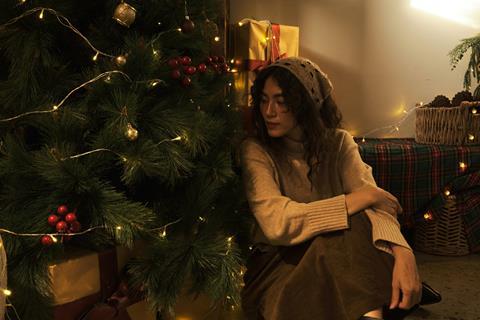
A year ago, God gave me a word for 2026 — trust. I had no idea how much that word would shape the year ahead. You might remember me sharing about this practice back in January.
At the time, I was ten weeks pregnant, just seven months after experiencing a miscarriage at twelve weeks. I felt miles away from trusting God in the ways I longed to — trusting him for my family, trusting him for my future, trusting him to form me into a person more capable of love and peace, trusting him to lead me through a new work season, a ministry I was building, and a creative life that always tugged at my heart for more time.
A few weeks after sharing that word with you, I found out I was walking through another missed miscarriage, and that word trust suddenly seemed so much weightier. I had to lean on God through the familiar journey of healing, the grief of another loss, and the confusion of a painful, unanswered prayer.
And yet, a year later, I can see just how deeply that word has shaped me. My prayers remain unanswered in many areas where I long to see God move — I don’t have the baby on my hip or the positive pregnancy test on my nightstand, I don’t have the perfectly laid-out plan for balancing a full-time job, ministry and a creative life, and I don’t quite know what’s next.
But God has been faithful to that word he gave me, not by giving me the outcomes I hoped for, but by meeting me in the uncertainty and teaching me what it means to trust him there.
But God has been faithful to that word he gave me, not by giving me the outcomes I hoped for, but by meeting me in the uncertainty and teaching me what it means to trust him there. Looking back on all I’ve learned this year, I suppose it’s both profound and profoundly ordinary. I’ve learned about trust in the painful places of grief and unanswered prayer, but also in everyday moments. In plans that haven’t worked out, ministry seeds I’ve planted without knowing what would grow, and the ordinary worries that occupy my mind.
I’m learning that trust and surrender go hand in hand. That sometimes the most faithful thing I can do is loosen my grip on the outcomes I’m desperate to control, and surrender is rarely a one-off decision. It’s something I return to again and again, bringing my worries to God instead of trying to work everything out myself. I’m learning that trust can deepen even in the most difficult seasons as I discover what it means to lean on God in new ways. To truly depend on him, inviting him into my questions and decisions, remembering that my own understanding will never be as sturdy a foundation as his wisdom and love.
I’m learning that trust isn’t passive, even in seasons of waiting. There is a life to be lived in the in-between — people to love, work to do, small steps of faith to take. Even while I’m waiting on God in some areas, I can trust him to lead me into what he has for me right now, and sometimes trusting him means leaning on the people around me, allowing them to remind me of his goodness when my circumstances make it difficult to see.
Perhaps most of all, I’m learning to become more comfortable with mystery, accepting that I won’t always understand what God is doing or why certain prayers remain unanswered. That spiritual maturity doesn’t necessarily mean having more clarity, but learning to trust God’s goodness in the midst of all I don’t know. And somehow, I’ve found myself becoming a little more at peace along the way. This isn’t because everything has worked out or my longings have gone away, but because I’m learning I don’t have to carry it all myself. Trust has less to do with how certain I feel about the future and more to do with how well I know the God who holds it.
As December ushers us into the final month of 2026, I’m remembering God’s faithfulness in what has been both a hard and deeply formative year.
As December ushers us into the final month of 2026, I’m remembering God’s faithfulness in what has been both a hard and deeply formative year. Perhaps that’s why Advent feels especially meaningful this year. It’s a season that invites us to acknowledge the darkness without surrendering our hope. To wait for the light, remembering that God has already come near to us in Jesus. That the God we’re learning to trust isn’t distant from our pain or unanswered prayers, but has entered into our human experience. We don’t need all the answers to trust in his goodness. We have the assurance of his presence, Emmanuel, God with us.
I don’t yet know my word for 2027. I don’t know what the coming year will hold or which prayers will be answered as I hope. But I know that as God leads me and forms me, I can trust him with what comes next. I can release the outcomes to him, knowing he is good and kind, and I am deeply loved. He is with me and he is for me. Though there’s still mystery in the journey, I can trust him to walk with me, bringing his light into the darkest parts of my life.
And the same is true for you. So maybe this year, as we put up twinkling lights and garlands, attend Christmas parties and carol services, we can sit for a moment in the darkness too, inviting God to bring in his light. We can trust him with the prayers we’re still praying, the questions we’re carrying, and the places we’re waiting to see him move. Because Advent reminds us that the light shines in the darkness, and the darkness has not overcome it. That God’s faithfulness isn’t just something we hope for in the future, but something he has already shown us through the gift of his Son.
Emmanuel. God with us. Even here, still in the waiting.
Prayer practice: Lectio Divina
Lectio Divina, meaning ‘divine reading’, is an ancient Christian practice of prayerfully reading Scripture, making space to slow down, listen to God and rest in his presence.
This Advent, find a quiet place and take a few moments to become still before God.
Read: Slowly read John 1:5: “The light shines in the darkness, and the darkness has not overcome it.” Read it a couple of times, noticing any words or phrases that stand out.
Reflect: Sit with those words. What might God be inviting you to notice? Where are you longing for his light?
Pray: Allow your reflections to become a conversation with God. Bring him your unanswered prayers, questions and places you’re longing to see him move.
Rest: Spend a few moments in silence, resting in God’s presence. There’s nothing to achieve or figure out. Remember that he is Emmanuel, God with us, even in the waiting.
























No comments yet