





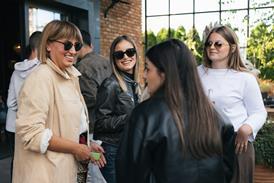



When family life takes a different path from the one we imagined, how do we respond with faith and love? As Christmas approaches, Rhiannon Goulding reflects on how raising her children challenged her expectations and taught her profound lessons about God’s love, acceptance and the unexpected gifts of parenthood.
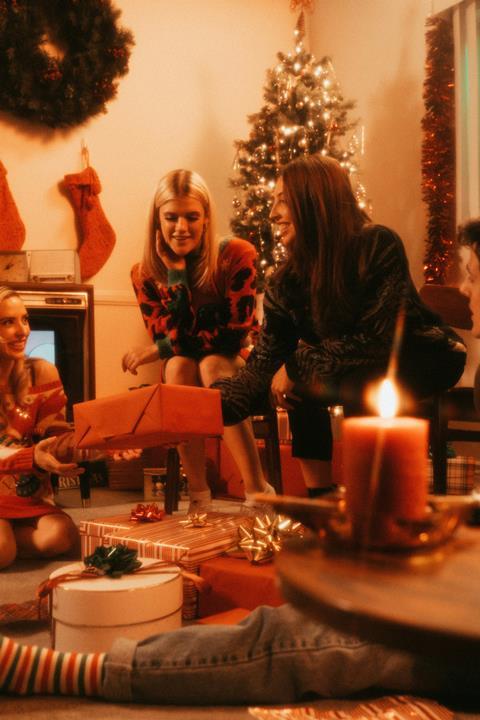
Christmas is coming. Tinsel and fairy lights, presents under the tree or in your stocking. Everyone loves to receive a gift. Children learn early that they can drop hints about what they’d like to receive, and doting grandmas and aunties will probably oblige. Because they also learn early that some people are capable of giving them something really unsuitable – a football for the unsporty child, or a fluffy toy for a child who has long outgrown their plushies. And Mum will nudge them to smile nicely and pretend that they love it, because that’s not lying, that’s being kind.
One year, I found a really exciting-looking box under the tree. It was big. It was heavy. It was a bread maker, and I hadn’t asked for it. I tried my best to look pleased, but my heart sank. It looked so complicated, and there was a huge manual about the different buttons to press and various programmes to produce different kinds of bread. For a long time, I left it on the kitchen counter and didn’t dare explore what it was capable of. But now, it’s my favourite gadget: it’s brilliant at making all sorts of things, from brioche to jam, and I use it all the time. It’s widened my baking repertoire enormously.
When I realised that I had two LGBTQ+ children, at first I didn’t see them as a gift.
There’s a much greater gift in my life that I also didn’t ask for. When I realised that I had two LGBTQ+ children, at first I didn’t see them as a gift. I didn’t understand why or how this had happened. I blamed myself and thought, “What did I do wrong?”
Parenthood is a gift, but it doesn’t come with a helpful manual. There were no instructions – I couldn’t open the packet and find out how best to help these two amazing individuals become the multifaceted, adaptable, brilliant people they were designed to be.
I had to learn by trial and error, not only how to support them, but how to deal with the rest of the world, including other Christian friends and their attitudes. I had to navigate isolation, prejudice and confusion, blizzards of Bible verses people flourished in my face, and always return to the core of my beliefs: that God is love, and that the home we were creating for our family was a place of love and nurturing.
And with God’s help, they grew and flourished. The gift I wasn’t sure about became one of the greatest blessings in my life, something I now treasure every day. Not only these two delightful adults whose faith is rooted in God’s love, but the gift God developed in me as a result of my experience of raising them: the gift of welcoming people, letting them discover who they are, allowing them to belong. Nowadays, when I see someone who doesn’t fit in, whose appearance – whether by choice or necessity – marks them out as different, I see someone who needs a warm welcome, affirmation and an acknowledgement that they, too, are a loved and precious child of God.
I don’t know what gifts God has given you, and I don’t know what shape your family is, or what your children are like. But I do know that when God created them, he looked across the universe and knew you were the perfect person to care for them, who could love and look after his gifts in your own unique way.
Parenthood is full of gifts, but they don’t necessarily arrive in the wrapping we imagined. There are children we desperately longed for; children who arrive unexpectedly; children who come into our lives through adoption, fostering, stepfamilies or kinship; perhaps even children who we thought would look one way and who turned out quite differently. And then there are the characteristics within our children that we might initially have wanted to change: the strong-willed child, the anxious child, the child who questions everything, the child whose choices take them somewhere we hadn’t anticipated. Yet sometimes the very thing we once struggled with becomes something we treasure.
We spend Christmas remembering that God gave the world the gift of a child – but even Jesus was not the gift the people were expecting.
We spend Christmas remembering that God gave the world the gift of a child – but even Jesus was not the gift the people were expecting. They wanted a king and got a baby. They asked for power and they received vulnerability. God’s gift didn’t arrive in the packaging anyone had imagined.
Not all gifts come with a bow – some come with a cost. For the parents of LGBTQ+ children, the cost may be simply the need to discard our assumptions, or our hopes, or even our desire to shape a child to a pattern we had in mind. It may be the social cost of gossip or coolness from people we once considered our friends. It may be the spiritual cost of raising a child with faith in the love of Jesus and reconciling that with some of the sermons and teaching they may hear in church. Sometimes it means living with anxiety about how the world, or their friends, or our friends, will treat them. Sometimes it means learning to be resourceful and finding ways to cultivate their resilience and protect their mental health.
I won’t pretend it’s always been easy, but it has always been rewarding. And never more so than when you meet up with your adult children and see them successfully living their independent lives and making their own way with love and kindness and wisdom and understanding of others’ needs. Perhaps the question for parents is always: “Can I receive the child in front of me, rather than continually wishing for the child I imagined?”






















No comments yet