
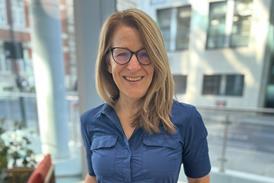


Author Lavinia Byrne shares insight into her life as a nun, and what caused her to leave the community
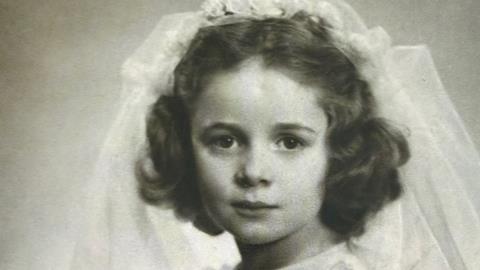
I was born in 1947 into what you might call an extremely Catholic family. Ours was a devout, joyful household, steeped in ritual and belief. The rhythms of church life shaped our weeks and the seasons of the liturgical year gave colour to our family calendar.
When I was about eight, we moved to Somerset, where I had a wonderfully happy childhood. I was one of four children, and life in the countryside was full of freedom and animals – dogs, chickens and a pony of my own. It was a world of small adventures and wide horizons.
At eleven, I went away to boarding school – St Mary’s School in Shaftesbury. I was genuinely happy there, and I admired the nuns who taught me. They were bright, thoughtful women, and I wanted to be like them. They had a sense of purpose, and weren’t afraid to think.
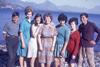
When I was 17, I joined the community. My world was shaped by the Church, and religious life was the highest form of service I could imagine. I entered the mother house of the Institute of the Blessed Virgin Mary at St Mary’s Convent, Ascot. This teaching order was founded by Mary Ward, who was a remarkable 16th-century Englishwoman. I began as a novice for two years, learning the rhythm of prayer, study and community life.
My early life as a nun
As a young nun, I was sent to London to study modern languages at Queen Mary College [now Queen Mary University of London]. It was a shock to the system – 2,000 students, 700 of them engineers and most with spanners in their back pockets! After years of convent schools and daily prayers, it was the perfect antidote: noisy, lively and gloriously secular.
I dressed fully as a nun in those days. My best friend at college, also a young sister, left in her final year to marry a lovely Catholic anaesthetist. They’re still happily married today. I stayed on the path I’d chosen.
After university, I spent several years teaching French, Spanish and Religious Education to O and A level students. I discovered a real joy in helping young people see that the Bible didn’t have to be dull or irrelevant. If you open it with an enquiring mind, you will find it’s full of drama, history and human truth. Every story has a context, every line a background worth exploring.
From there, I moved to Heythrop College in London, which was a Jesuit institution. I worked with two Jesuit priests, editing The Way, a journal of Christian spirituality, and I taught adult education courses on spirituality and the training of spiritual directors. It was liberating to shift from teaching children to engaging with adults who wanted to grow in faith.
Ruffling feathers
After six happy years at Heythrop, I joined the Council of Churches for Britain and Ireland. For another six years, I travelled across England, Scotland, Wales and Ireland, working ecumenically and speaking about the role of women in the Church.
It was an exhilarating time. The early 1990s were alive with debate about the ordination of women in the Anglican Church. I found myself drawn into that discussion passionately – not out of rebellion, but out of love for the Church and belief in its potential for justice and renewal.
By then I had begun to write, and my book Woman at the Altar was about the ordination of women in the Catholic Church. I wanted to open up conversation, to invite people to think and pray about it seriously. For a while, everything was fine. Then one day I was told by my superiors that the Vatican had taken a very dim view of my opinions. They were demanding that I recant my position on women’s ordination, and even on contraception.
I pointed out, quite reasonably, that I’d never spoken publicly about contraception. As a celibate woman, I didn’t feel it was my business to tell married couples how to live their lives. But the machinery of authority was moving, and it wasn’t going to stop.
By that time, I was doing quite a lot of broadcasting, including: Thought for the Day on Radio 4; Pause for Thought on Radio 2; Prayer for the Day on Radio 4, and various television appearances and debates. I loved the chance to communicate faith in ways that were relevant to ordinary people.
But the pressure from Rome intensified. My religious superiors in England were placed in an impossible position. The Vatican was heavy-handed, and I could see that if I stayed, my superiors would eventually be forced to dismiss me. I thought it kinder, and truer to the spirit of the gospel, to leave freely rather than be crushed.
So I left the community, believing that God wanted women’s voices to be heard clearly and confidently within the Church. That conviction has stayed with me ever since.
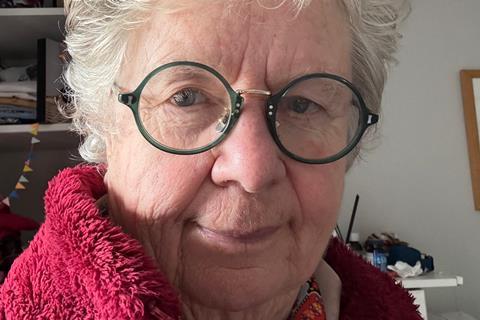
Freedom – and retirement
When I left, I was already teaching at Westcott House in Cambridge, training Anglican ordinands – future vicars – and I adored it. The students were lively, honest and curious. It was also a job that gave me financial independence, which meant freedom. I could remain Catholic without being controlled by Catholic institutions.
My faith was not shaken. I never stopped being Catholic. I simply believed that my Church, like all human institutions, sometimes needs to grow into the truth God is calling it to.
Eventually, I retired and moved back to Somerset. There’s something about returning to the landscape that shaped you as a child; it’s a homecoming of the soul. My parish here welcomed me warmly, offering not just shelter but belonging.
When I look at the Church of England now, with its first female archbishop, it feels natural and right. God writes straight with crooked lines, as the saying goes. The work of the Holy Spirit through human history isn’t neat, but it is effective. The Church of England’s action is not only good for Anglican women, it’s good for all women, because every act of recognition lifts us all.
Thoughts on faith and prayer
If I were to summarise my faith journey, it’s not one of sudden conversions or crises; it’s a story of continuity, of God’s fidelity. Despite all my doubts and failings, the thread of divine love runs steady through it all, like the words through a stick of seaside rock saying: ‘God so loved the world’.
In my years as a nun, prayer was structured and communal. We recited the Divine Office daily, attended Mass, and lived surrounded by the sacraments. It was a privileged way to live. But when you move into the countryside, things change. Now I’m lucky to attend Mass once or twice a week.
These days, prayer for me is quieter. It’s less about words and more about reflection. I think good theology matters; it’s not just saying prayers from a book but allowing yourself to think deeply about God. You dwell on God’s greatness, and prayer naturally arises.
That’s why I love meditation: taking a single sentence from scripture, sitting with it, responding to it. You don’t have to say much. Silence can be full of meaning. At 78, I’m often too tired for long formal prayers – but never too tired for deep thoughts about God.
If I could give any advice to younger readers, it would be this: don’t be afraid of ideas. Don’t be afraid of imagination, or of life itself. In the Ignatian tradition, which shaped me, imagination is central to prayer. St Ignatius of Loyola invites us to place ourselves inside a gospel scene. Take the Nativity, for example. You might imagine yourself as Mary, Joseph or a shepherd on the hillside. Or even as the ox or a little bird watching from the rafters, crying out: “Look, something wondrous has happened!”
When you imagine yourself into scripture, the story becomes alive. You’re no longer a distant observer; you’re part of God’s unfolding drama. That’s the power of imagination in prayer.
The passing of time
At this stage of life, my spirituality is about letting go, finding peace and contentment in small things, and accepting the gradual diminishment that comes with age. I have a frozen shoulder at the moment, so I live with constant pain. My eyesight isn’t what it was, and I expect my hearing will go next.
Age strips away the things that once made you feel powerful or capable. But this, too, is grace. It’s an invitation to humility. We are all, after all, preparing for death. I can’t stand the euphemism ‘passing’. We don’t pass; we die. And death, honestly faced, can be holy. I think the way to prepare for a good death is to practise surrender every day. Let go of pride, of significance, of the illusion of control. It’s strangely freeing.
Looking back, if I had to name the great theme of my life, it would be God’s fidelity. Through every change, loss and challenge, that has never wavered. As a Jesuit friend of mine used to say, rather wryly: “Cling to the rock and bleed.” When things get rough, that’s what you do. You hold on.
I’ve written many books over the years, but all of them share a single purpose: to encourage people to think, to move beyond platitudes and easy answers. Faith is not fragile; it can handle questions. I want to reassure believers, but also to stir them up, to help them see that thinking critically about God is not a betrayal of faith; it’s its deepest expression. Faith, imagination, thought and courage – those are the threads that have woven through my life. And through it all runs the unbroken line of God’s love: quiet, steadfast and utterly faithful.
Lavinia’s most recent book, A Place of Belonging: Finding Your Space in the Bible (Darton, Longman & Todd), is a guide through Lent and beyond and is available now.













1 Reader's comment