





Writer Jenny Sanders explores why heavy and painful periods remain so poorly understood, despite affecting millions of women. She looks at the shocking lack of research into menstrual health and considers what Jesus’ response to a woman suffering from chronic bleeding can teach us about how we should respond to women’s pain today.
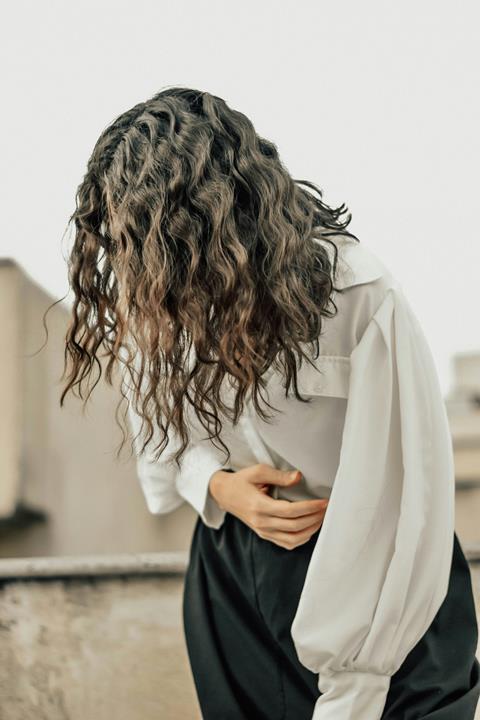
Aunt Flo visiting again? Riding the crimson wave? Enjoying Mother Nature’s gift? We have several funny euphemisms for our monthly cycle, but for thousands of women it’s absolutely no joke, especially for the one in four women who experience heavy or prolonged bleeding (menorrhagia) and/or debilitating cramps (dysmenorrhoea), often exacerbated by underlying issues such as endometriosis, fibroids or polyps.
It’s estimated that 5,581,186 days of work are lost each year as a direct result of the more than four million women in the UK who suffer this way – a conservative number since it’s a highly underreported condition. Approximately 75 per cent of those women refuse to tell their boss the real reason for being absent from work, avoiding embarrassment by citing stomach bugs, dental appointments and so on instead.
READ MORE: What to expect when you’re expecting (your period)
If you’re one of them, you’re all too aware of the impact a monthly period can have on your physical, mental and emotional wellbeing. Heavy or prolonged bleeding (a period that lasts seven days or more), blood loss of more than 80ml per cycle and/or coin-sized clots are typical. Changing tampons every hour; bleeding through clothes, pads and bedding; riding out excruciating stomach pains; nausea; vomiting; cold sweats; anaemia; dizziness; headaches and bouts of depression are probably horribly familiar to you. The humiliation of breakthrough bleeding and high levels of pain affect every aspect of life, making some days unbearable.
Unsympathetic GPs sometimes say it’s just a ‘normal’ part of being a woman. Granted, we all have different pain thresholds, but feeling that you’re not being heard by your doctor drives the condition underground. When hot water bottles and paracetamol don’t cut it, what can you do?
Research into a condition that affects approximately half of all women of reproductive age is pitifully small and long overdue. In the past ten years, there have been just 400 medical research papers on the topic. When you discover that 15,000 have been published on the subject of semen, the comparative balance is shocking. In the USA, a woman needs a blood transfusion every minute as a consequence of menorrhagia. Surely this shouldn’t be so?
READ MORE: Struggling with your period?
Jackie Maybin, a gynaecologist at the University of Edinburgh in Scotland who is involved in current investigations, says, ‘Women are probably owed years, if not decades, of research.’
Biological and genetic factors give some women a predisposition towards heavy menstruation
Biological and genetic factors give some women a predisposition towards heavy menstruation, but it shouldn’t be a taboo subject. Some of the challenges women experience may be symptoms of other conditions, so having a good diagnosis and perhaps a referral to a consultant is important. A laparoscopy may reveal painful endometriosis, which can manifest itself as abnormal bleeding and potentially increase the likelihood of infertility, pregnancy loss and cancer. It requires very specific treatment. Some doctors may prescribe a form of iron to help boost the production of healthy red blood cells. Last year, Good Housekeeping recommended a product similar to a TENS machine (which some women find helpful during labour) designed specifically for period pain relief.
READ MORE: Is it safe to have sex when I’m on my period?
New research is working on vaginal gels that may help to boost and restore local protein production for tissue repair without the side effects of ingested medicines. These are in development in the USA using ‘messenger ribonucleic acid (mRNA) technology’, which may also reduce the need for invasive fibroid surgery.
Did Jesus say anything on this subject? Remember the lady who pushed through the crowd to touch the hem of Jesus’ garment? She’d struggled with an unspecified gynaecological bleeding problem for twelve years, from which she knew no relief. Mark 5:26 says, ‘She had suffered a great deal under the care of many doctors and had spent all she had, yet instead of getting better she grew worse.’ While she bled, she was considered ‘unclean’. See how Jesus stopped and cared for her with gentle compassion and tender love.
It’s encouraging to know that women’s health may finally be getting the attention it deserves. How affirming to know that just as Jesus saw, heard and connected with that precious lady in her distress, His desire is to do the same with us. No detail of our life is too small for Him to care about or meet us in, including that inevitable time of the month.























No comments yet