







With warnings of growing global conflict and renewed calls to prepare for war, should Christians be worried about what lies ahead? Kate Orson reflects on the possibility of war, the lessons we can learn from persecuted believers and why spiritual preparation may be more important than stocking up on emergency supplies.

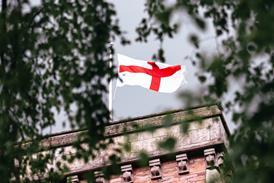
Photo by Ross Sneddon on Unsplash
We are hearing of wars and rumours of wars. Sir Richard Knighton, the UK’s Chief of the Defence Staff, warned during an interview on BBC Radio 4’s Today programme in June 2026 that the risks and threats facing Britain were greater than at any time he had known since the Cold War. The UK government has advised households to stock up on food in case of an emergency situation such as war, a natural disaster or a cyberattack. Pete Greig, founder of the 24-7 Prayer movement, was given a prophetic word to ‘prepare for war’. How should Christians feel about all this?
I recently moved back to the UK after twenty years of living abroad. I now live in a village where everyone stops to say hello, the children still play outside and milk is delivered in glass bottles. It’s such a peaceful, comfortable life. The idea of war, of rations, of instability, is horrific.
Yet perhaps many of you share that feeling that I’ve had for a while that change is coming.
Yet perhaps many of you share that feeling that I’ve had for a while that change is coming. Around two or three years ago, I went through a brief phase where I would wake in the night with short phrases in my mind that felt like they had been given to me by God. One of those was ‘radical change’. The other was ‘five years’. I don’t know what the phrases referred to, but whenever I hear about impending conflicts and disasters in the news, I wonder.
Shortly after becoming a Christian in 2021, a friend recommended the book The Hiding Place by Corrie ten Boom. I loved reading about how God gave Corrie peace in the darkest places; how the vision of riding away on a cart prepared her for being taken away to prison. How God performed miracles, allowing Corrie to access a Bible and conduct a prayer and worship group with the other women in the prison, away from the guards. It was reassuring to read how, in the darkest of places, God still works.
Then I took a trip with a friend of mine to the Waldensian valleys in northern Italy. In the late 12th century, predating the Reformation, there was a group of Christians who broke away from the Catholic Church to find a more authentic faith. ‘They loved not their lives unto the death’ (Revelation 12:11, KJV). These believers were persecuted, and many were killed. We visited a cave where they had hidden and worshipped. We heard many stories of how God worked miracles in these dark times too, including allowing one man to escape.
What always strikes me about stories like these is how deep the faith of these believers is. Their circumstances force them to rely on God. In my comfortable life, it’s so easy to forget God. I get distracted like Martha. There are days when I’m having a lovely time and want to ignore all the suffering and pain that comes from living in a fallen world.
My husband became a believer three years ago after he was diagnosed with melanoma.
My husband became a believer three years ago after he was diagnosed with melanoma. God revealed himself to him through a financial miracle while he was in hospital having surgery. I don’t think he would have been open to the truth unless he was face to face with his mortality. So many people live comfortable lives in the West, seeing no need to consider spiritual matters. As much as I hate the idea of war and suffering, I trust that if God allows it, he will work the situation for good, and perhaps many people will come to faith.
If war is coming, then how do we prepare? We can stock up on supplies and our ‘emergency kit’, but I think what’s most important is that we prepare spiritually. The Bible is full of reminders not to fear (Psalm 23 springs to mind). Spiritual preparations might involve memorising Psalms or writing down Bible verses that help us to cope with adversity. It involves remembering to take time to be with God when our minds seem more focused on cleaning the kitchen or doing another laundry load.
When I told a friend I was writing the article, she asked me, what kind of war? She reminded me that, in reality, there has been a spiritual war going on ever since the Garden of Eden. It rumbles on in the background, and many of us like to pretend it doesn’t exist, at least for a while, so we can have a nice meal out or a holiday in the sun. A real physical war reminds us of the truth and, amidst the suffering, might help bring many people to the truth. As Christians, having extra supplies to support friends and neighbours may be valuable. But above all, we must be ready to share the gospel and be workers for the harvest.





















No comments yet