









Kate Orson asks whether churches have become too focused on dividing people into age and stage groups. While these ministries have many benefits, she wonders if we’ve lost something of the biblical vision of one united family.
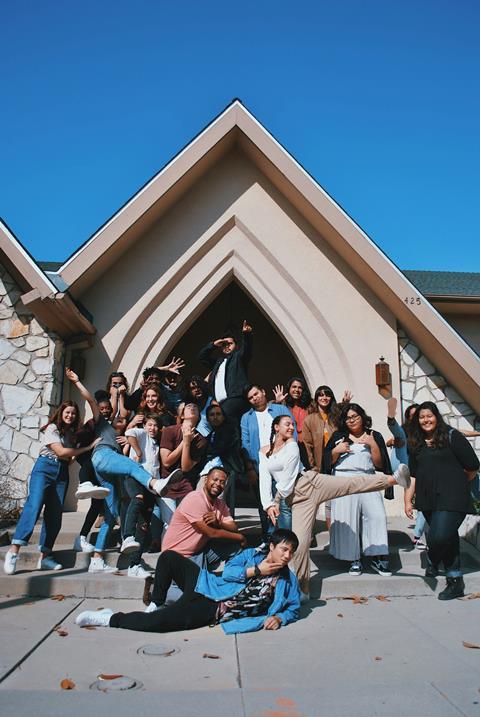
Men’s groups, women’s groups, youth groups, toddler groups. It can sometimes seem like the Church is obsessed with categorising people and dividing them up for social events. Should churches focus on socialising in subgroups, or try to find more unified ways of getting together? When I first started attending church, I naturally found myself befriending women of a similar age to me – those who had children in the pre-teen and teenage stage. During our get-togethers, we talked about the struggles in our lives and with our children. We prayed, encouraged one another and could relate to each other’s challenges.
There were definitely advantages to meeting up with women at a similar stage of life, but it was never meant to be a fixed group advertised for mothers of teenagers. It was simply friends meeting together. From time to time, other women joined us – women with younger children, or single women without children. It was open to whoever we befriended.
When it comes to more structured church meetings, I have sometimes wondered why the Church is so focused on dividing us all into separate groups. Aren’t we all meant to be one big family? I can see the benefits of meeting in age- or gender-specific groups. For example, young people can socialise, get to know one another and enjoy activities tailored to their age group. Women in a women’s group can open up and feel comfortable sharing things they might not discuss in a wider gathering.
Yet I can’t help feeling that something gets lost along the way with separate socialising.
Yet I can’t help feeling that something gets lost along the way with separate socialising. A young woman falls through the cracks because she doesn’t have a toddler to be part of the toddler group, or she isn’t married so can’t take part in the married couples’ group. Young people miss out on the wisdom of older, more mature Christians because they’re socialising separately. Men miss out on hearing the insights shared at the women’s Bible study, and vice versa.
In the Bible, we don’t see any sign of the structured church social groups that are so common today. Instead, we read about gatherings in homes where people of all ages and both sexes came together. Men, women and children gathered to break bread, talk and listen to the apostles’ teaching.
I wonder how people naturally divided into smaller conversations during those gatherings. Perhaps a few women shared something privately with one another. Maybe the children ran off to play together. Maybe newly married women talked about their struggles before an older woman joined them and shared wisdom gained through experience.
How did the Church become so divided?
One influence was the Sunday school movement. In the 1780s, Robert Raikes, a Christian publisher, newspaper owner and philanthropist from Gloucester, was deeply moved by the plight of poor children who spent six days a week working in factories. Sunday was their only day off, and many ended up roaming the streets because they had no education or supervision. Believing that literacy and Christian teaching could transform their lives, Raikes established Sunday schools where children learned to read using the Bible, memorised Scripture and received moral instruction.
Originally, these Sunday schools operated separately from local churches, but as their success spread, many churches began running their own Sunday school programmes for the children of families attending the church.
Originally, these Sunday schools operated separately from local churches, but as their success spread, many churches began running their own Sunday school programmes for the children of families attending the church. Further subgroups emerged during the 20th century as developmental psychology popularised the idea that different age groups required different learning environments. Modern consumer culture has also shaped the Church, with ministries and events increasingly marketed to specific demographics.
While these groups can help people develop friendships and grow in their relationship with Jesus, they may not always be as effective as we hope. For example, studies by Lifeway Research and Barna in the US have found that between 64 and 75 per cent of teenagers who are active in youth groups disengage from church after graduating from high school. This suggests that focusing primarily on a particular age or stage of life may not always help people become fully integrated into the wider church community.
Every church is different, and I don’t think there should be a blanket ban on organising groups around age or life stage. However, I would love to see a return to a more organic style of gathering, where men and women, young and old, naturally mingle and talk together, and nobody is excluded because they don’t fit into a particular subgroup.
As the body of Christ, we are called to live in unity, and I believe that should be reflected in the way we build community. As the apostle Paul wrote in Galatians 3:28: “There is neither Jew nor Gentile, neither slave nor free, nor is there male and female, for you are all one in Christ Jesus.”
























No comments yet