



When a Christian woman was confronted by her husband for reading books he disapproved of, it sparked a journey that would change her life. Alex Noel explores the power of reading, the importance of questioning what we believe and why faith and critical thinking should go hand in hand.
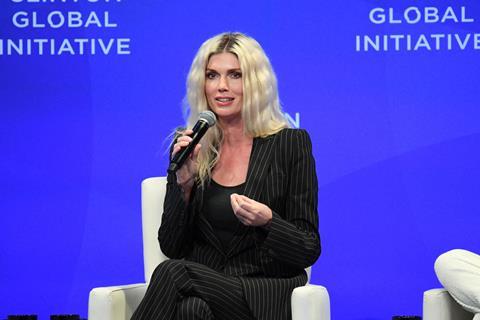
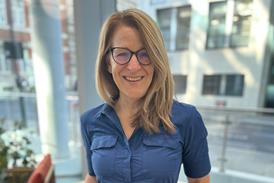
What happens when women read? For Julianna Glasse – now a founder, CEO and author – it’s a question that was abruptly answered in 2019, amid growing tensions in her marriage. When her now ex-husband, a Major League Baseball player at the time, found caches of her books hidden around their home (Plato’s Republic and Simone de Beauvoir’s The Second Sex among them), he confronted her, saying: ‘See, this is what happens when women read!’
As he spoke, ‘it was like the runway of my life lit up’, she said in a recent interview on BBC Radio 4’s Woman’s Hour. It would later inspire the name of her foundation, which advances ‘women’s intellectual autonomy through education, curriculum and community’, including women ‘leaving high-control religions and cults’. It is also the title of her just-published memoir: This Is What Happens When Women Read.
READ MORE: The transformative benefits of reading God’s Word daily
Glasse, who is American, grew up in a close-knit ‘fundamentalist conservative Christian family’
Glasse, who is American, grew up in a close-knit ‘fundamentalist conservative Christian family’; her father was her pastor and her mother homeschooled her. She was married at 18, and her life was soon consumed by church and family. Being a Christian woman meant her ‘proximity to God was in direct correlation to her proximity to men’; that her value was determined by being subservient. Even so, she had become a successful Christian pop star, which gave her a certain freedom ‘within the confines of the religion itself’, but no autonomy or agency. She describes how this ‘indoctrination’ distorted things, including the books she had loved to read from a young age.
It was after giving birth to her third child in 2015 that she really started to question her Christian faith and doubt what she had previously accepted as unquestionably true. While many women in similar contexts can feel fulfilled, Julianna was struggling to imagine her children growing up within an institution that felt so confining, and she was aware of the threat her thinking presented.
READ MORE: ‘Reading is a kind of magic’
In a frank essay for HuffPost, she describes in detail how her life began to unravel. She explains how there was little room for honest exploration outside a narrowly defined Christianity, where obedience to established roles and traditions was central to community life, especially for women. She also observed that people didn’t apply critical thinking to reading the Bible or to views espoused by church leaders that felt harmful.
As a touring musician, though, she was meeting other Christian women who helped her feel more liberated. She started reading books that articulated her frustrations and challenged her to examine the systems governing her own context. She knew her husband wouldn’t approve, so she felt compelled to hide them from him, along with her growing dissatisfaction and unhappiness. With no obvious means of escape, she started drinking – something else she studiously hid from him.
All of this ultimately led her to leave her marriage and her church. She has since travelled and explored new relationships and different spiritualities. She has also gained a degree from Oxford’s Saïd Business School and founded what has become a global movement.
READ MORE: Reading the Bible in another language taught me to slow down and meditate on God’s word
In terms of faith, she describes herself as ‘spiritually private’ – so it’s unclear what she believes or whether she is still a Christian in any way. There is also a lot more to Glasse’s story than the books she read, but reading was absolutely instrumental in giving her permission and confidence to question a set of beliefs and a context that felt controlling and harmful to women. It’s a very brave thing to do.
I feel fortunate that neither my expression of Christianity nor my church context discourages me from critical thinking or reading widely.
I feel fortunate that neither my expression of Christianity nor my church context discourages me from critical thinking or reading widely. Neither is incompatible with approaching the Bible or assessing the theology and Christian culture that inevitably shape how we interpret it. In fact, they are vital things to practise, especially in our current climate. And, if anything, Jesus encourages us, just as he encouraged Mary in Luke 10:42, sitting at his feet in the usual place of a male disciple, saying that ‘she has chosen what is better, and it will not be taken away from her’.
As a National Year of Reading champion for the National Literacy Trust, reading is especially close to my heart. As Glasse found, it can set you free. It opens your mind to new ideas, allows you to step into another person’s shoes and enables you to experience a whole world beyond your own limited purview. It fosters critical thinking, empathy and literacy, including a better understanding of your own thoughts and feelings.
In my experience, this is essential. Even so, books alone won’t transform our minds or wholly change us for the better, but Jesus, the ‘Living Word’, certainly will.













No comments yet