



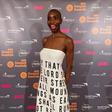
Since graduating, Woman Alive editor Tola-Doll Fisher has straddled work as a model and journalist. The recent America’s Next Top Model documentary on Netflix has given her a terrifying view of the life she might have had if her modelling career had taken off the way she once prayed for.
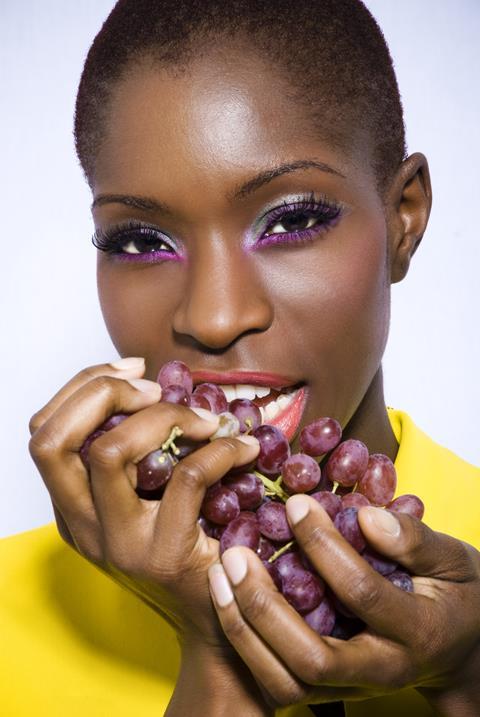
In my first year of university, I was asked to walk for a fellow student who was showcasing her “bridal collection”. This consisted of a tiny, barely covering my bum lace mini dress and I’m pretty sure I sauntered barefoot down the catwalk to one of then skater-boy Pharrell’s early greats with N.E.R.D.
Finally, my long arms and legs became a benefit, and I grew gently from awkward gangly teenager to model-in-waiting. Later that year, I joined an agency off Oxford Street and started getting castings (auditions for jobs) but it got raided one afternoon (don’t ask) when the owner ran into some financial issues and it was closed. Before that all happened, the founder gave me some career advice. She told me I should forget studying and continue modelling; and then return to study later if I still wanted to. Thankfully, there was no way my Nigerian mother was paying any attention to that advice.
READ MORE: ‘I am a Christian model, and this is why I decided to start an etiquette school’
During holidays I worked for Storm (Kate Moss’ long-term agency) in the office and hung around hoping to be discovered, which seemed to me the only legitimate route to make it as a professional model. Everyone kept asking why I wasn’t working [as a model] but no one signed me and as I looked at the new faces wall on which hung around a hundred cards with profiles of young women and teenage girls, I could not ignore the fact that only a couple of them were non-white. A trip to New York confirmed for me that it was in fact my skin tone that was stopping my progress in this area. Agencies would confirm that they liked “my look” but only one booker pulled me aside and told me the truth: that black models didn’t get much of a look in because clients didn’t ask for them. This meant that most agencies had already filled their quote of non-white models when they had one.
Determined, I tried elsewhere, this time entering a competition to be on Britain’s Next Top Model. I entered twice and both times got through to the finals. When my casting was aired, one of the judges mouthed ‘I love her!’ during my walk. When I got the rejection phone call, I remember being so frustrated at God: Why give me this desire and ability if you’re going to keep shutting it down?
READ MORE: Reality Check: America’s Next Top Model and the search for true beauty
At the time, I was straddling journalism and modelling and so I focused on my career in magazines instead, and the rest is history.
Except it isn’t, because when I tuned in to the recent Netflix documentary unpacking America’s Next Top Model, I realised how much I had been protected from by not getting on the UK version of that show.
Show creator, African American super model Tyra Banks, was one of the only black models of her time and her personal experience of prejudice and racism allegedly contributed to her plan to find and nurture a different type of model. Whether that meant diversity in skin colour, weight, height or/and “look”, her original intention was to show the industry the type of beauty they had been ignoring – and thus missing out on. Tyra fans on web forums suggest she actually did achieve this; plus-sized modelling wasn’t really a thing pre-ANTM and Winnie Harlow, who has a skin condition called vitiligo, was propelled into fame after appearing on the show in 2014.
Unfortunately, what stands out in this documentary is the development of an extremely toxic culture.
Unfortunately, what stands out in this documentary is the development of an extremely toxic culture. Past contestants talk of being filmed 24/7 in compromising situations all in the name of television (one girl was having sex in a bathroom after being exposed to copious amounts of alcohol). Another was “encouraged” to undergo major surgery to have her tooth gap closed with the suggestion that no one would want to book her with teeth like that. Ironically, on a later season, Tyra applauded another contestant for a similar gap and wanted to make it wider. Perhaps the most talked-about occasion is one where, having brought back Tiffany Tichardson, a black girl who had dropped out of a previous season, Tyra screams at her in front of everyone:
‘I have never in my life yelled at a girl like this!’
‘I was rooting for you. We were all rooting for you. How dare you?’
It was hard to watch.
Each episode included a task to encourage resilience and confidence which supposedly made them a better model. These included stunts such as jumping off buildings, posing with snakes or bees and extreme situations such as posing as murder victims or with chunks of meat or sewage. This was modelling with a heavy dose of reality television and God knows what I might have experienced had I made it to the live shows.
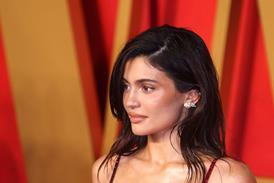
READ MORE: Model Bella Hadid has been scientifically declared as the world’s most beautiful woman. Is there any value for Christian women to engage with these kind of beauty standards?
I’ll be honest, in my limited experience of it, bullying, unwanted sexual attention on camera during shoots, eating disorders and drastic makeovers are not uncommon in the modelling industry. But wasn’t this supposed to be different? Wasn’t this groundbreaking show meant to be presenting modelling in a healthier light? And perhaps most heartbreaking is how some of the girls were treated after the show.
The winner was promised an immediate contract with a leading agency and Danielle Evans, the winner of America’s Next Top Model Cycle 6, revealed that she shared an apartment with [now] supermodel Chanel Iman in a model apartment in New York City shortly after her win. While living there, Danielle revealed that her agency viewed her as a “reality star”, a role that did not have the same kudos it has now, and she was treated differently - AKA she never got booked.
Friends have shared stories of their own early career “failures” only for it to have worked out something positive in another area of their lives
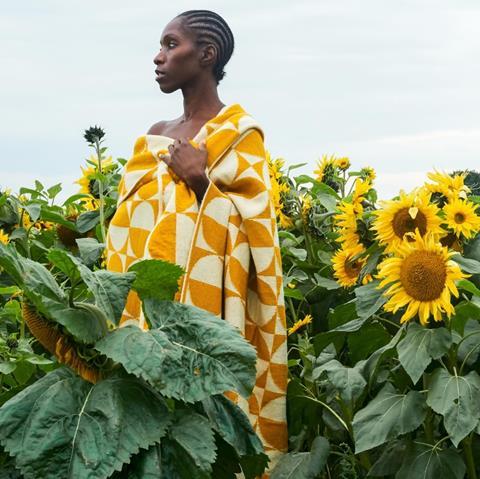
One thing I’ve learned on my journey as a Christian so far is that I will not always know why things happen the way they do, and I’ve learned to be okay with that. In this case, however, it is now glaringly obvious that God saved me from potentially a very dangerous lifestyle. It’s never too good to be desperate for something, and I know I would have done anything if I thought it would further my modelling career.
On discussing this with other believers, Romans 8:28 has come up quite a lot: ‘And we know that in all things God works for the good of those who love him, who have been called according to his purpose.’ One commented that this is a good example of rejection as a believer being God’s protection. Friends have shared stories of their own early career “failures” only for it to have worked out something positive in another area of their lives. For me, it enabled me to focus fully on my media career, developing magazines and content with the creative freedom that is so important to me.
And it’s funny how God works things out, because I’ve actually not stopped modelling over the years, and none of it has been through an agency. The vulnerability I had as a young woman has developed into a quiet confidence about who I am and who God has created me to be. So I can easily say “no” to things that feel like too much of a compromise, and I don’t feel pressured into doing anything that rocks my moral compass. Ultimately, the desire I had – and still have – has not gone to waste, and God really has made it all work out for my good.
Have you experienced a career failure which was devastating at the time but which turned out to be a blessing in disguise?
Reality Check: Inside America’s Next Top Model is on Netflix UK now.















No comments yet