
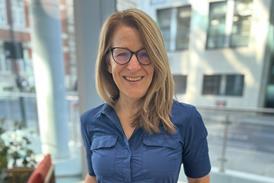








When prison governor Nikki Marfleet wanted to walk away from the pressure of leadership, God spoke with unmistakable clarity. That moment shaped more than two decades of service in one of the toughest environments imaginable, proving that calling is often found not in comfort, but in costly obedience
“Nikki, you are in the prison service to witness for me, not to further your career.”
These words seem to drop into Nikki’s consciousness, steadying the restlessness and anxiety within her. It was 2002, she was 24 and had just taken her first prison officer leadership post as part of a graduate training scheme. In charge of a wing of 150 prisoners, Nikki was beginning to feel out of her depth – forced to unearth leadership skills she was yet to hone. Under strain, her instinct was to leave. But God had other plans.
“Those words transformed me,” Nikki recalls, remembering her sense of assurance and clarity at the words she knew undoubtably to be from God. And her response was immediate: “OK, Lord, if You’re ever moving me out of the prison service, You’re going to have to be as clear, because until that moment, as long as this is Your will, I am here to stay.”
Knowing His voice
Nikki’s ability to recognise God’s voice in that pivotal moment – and respond in obedience – did not emerge overnight. She grew up in a small mission community in a remote valley in West Papua, Indonesia, where needing a doctor meant relying on a helicopter to fly you out. “Faith was everything when you were living in that climate,” she shares. “The richness and depth of my faith came from that time.”
The pressure meant Nikki came face to face with her own weakness daily
In that community, it was assumed that God would speak – daily, personally, intimately. Expectant faith was normal, not occasional, and Nikki absorbed this as part of her spiritual DNA. So, moving to England as a teenager brought culture shock in more ways than one. She left a tight-knit community, where dependency on God was palpable and necessary, and entered a culture where faith often felt tepid or conditional. God seemed periphery to everyday life, no longer central and essential. The shift was jarring and alarming. But amid the discomfort, this was also when Nikki’s faith deepened. If anything, the contrast clarified her conviction. Her call to obedience became sharper, not weaker.
An unexpected calling
Nikki was in her late teens when she first walked through the doors of a prison. Her dad had been asked to share his testimony, and Nikki agreed to go with him to play the piano. “The first prisoner I met was so normal…[the experience] blew all of my bias and misconceptions out of the water.” Nikki “caught the bug”, as she puts it. Determined to return, she worked to get her clearance and continued visiting as part of the Prison Fellowship for the next three years.
At this stage, her volunteering had nothing to do with exploring a future career in the prison service. It was driven instead by a genuine fascination with the environment and a growing compassion for the prisoners she met. Nikki had always imagined becoming a missionary, serving in a remote community much like the one she had grown up in. After studying visual communications with a specialism in photography at university, she had hoped to land herself a dream job as a photographer in the humanitarian sector.
Her plans were unfolding accordingly, until she unintentionally stumbled into a careers office on a rainy day in 2000, attempting to protect her hair from the onslaught of British weather. Hoping to make her vanity-induced detour look planned, she sat at a computer and searched for jobs. A graduate training scheme with the prison service caught her eye, and alongside it came a quiet but unmistakable question, “Would you be willing to stay here to serve me?”
Governing by 40
Overall, Nikki loved the early years of service, where an abstract system became an embodied community. “It was hard work, but we also laughed a lot,” she shares, recalling the bonding she experienced with other prison officers as part of the graduate training scheme she’d been accepted on to. And she felt ready for the inevitable intensities, as though God had been preparing her for this exact work throughout her childhood and adolescence.
“I knew He’d grown me into an individual with resilience, tenacity and compassion,” Nikki shares. She was ready to continually say “yes” to God’s calling on her life, even when moments of overwhelm inevitably set in. And she took her promise to stay seriously; so seriously it became her ambition to be governing her own prison by the time she was 40. A dream she achieved when she took on running HMP Woodhill, aged 39.
“I was thrilled to govern Woodhill. It’s a community I feel very attached to,” Nikki states, the warmth in her voice unmistakable. But the next eight years would become the most all-consuming and demanding of her life. During her time as governor, the words she had heard from God early in her career — “you’re here for me” — and her promise to stay would anchor her and hold her fast.
Leadership under pressure
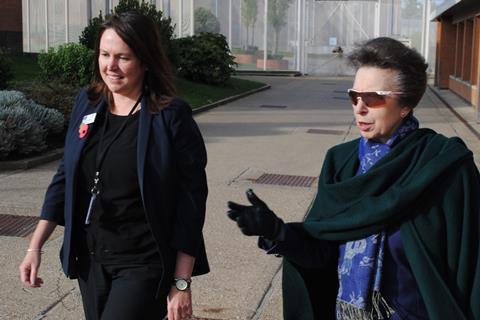
By far the most relentless challenge was running a prison with a drastically reduced workforce, at times operating at just over 50% staffing levels. “The prison system is overloaded, and staffing and retention are a constant challenge,” Nikki explains. “At Woodhill it was a constant balancing act, trying to keep the day-to-day activities running while battling the usual things you might anticipate in a prison – drugs, drones, violence, suicide. All those things are an everyday part of running a safe, secure prison community, something I took very seriously. And, because it was high security, I couldn’t in any way compromise. I had to keep it secure.”
Prison officers were frequently brought in from other counties – temporary staff whom Nikki and her team had to repeatedly train and induct. “With staff constantly coming and going, at times it felt like an endurance test,” she admits. “I was never able to say, ‘Hooray, we’ve done it! The cavalry is here!’”
Despite her tenacity, the pressure meant Nikki came face to face with her own weakness daily. “It was a painful, but important refining,” Nikki shares. “I had to rely on God as never before.” While grateful for the resilience God had nurtured in her, she also recognised the danger: resilience can harden into self-reliance; strength can calcify into emotional distance.
“I had to pray that God would keep my heart soft,” she shares. “And that I would always lead with compassion.”
Culture change
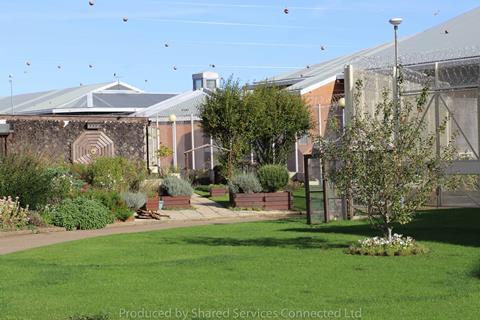
It was this compassion that compelled Nikki to pursue culture change within Woodhill, looking for ways to lift the morale of staff and prisoners. “I remember looking out a cell window one day and being struck by the view,” she shared. “All I could see was grey – cement walls and perimeter lights.” At the time, Woodhill had the highest suicide rate in the country. Nikki knew something needed to shift but didn’t know where to begin.
She prayed for inspiration. The answer came unexpectedly, through the words of a stranger during a chance encounter. “Trees.”
The vision was for a tree to be visible from every cell window. A vision that extended to planting a small orchard; green space to be tended, invested in and enjoyed. Life amid the concrete. “It was a small but significant way to lift staff and prisoners,” she explains.
But culture change wasn’t only about landscape; it was about people. Nikki worked intentionally to cultivate an atmosphere of encouragement, where individuals were known and their opinions, achievements and service genuinely valued. She organised free breakfasts for staff, scribbled handwritten notes of encouragement on paper coffee cups, and made deliberate efforts to honour prisoners’ families, recognising the importance of strengthening and maintaining those relationships. Much of this work went unseen and, at times, she endured criticism from individuals and the media. It was essential she remained rooted in her calling and in a conviction of her worth found in God.
A new season
In 2025, Nikki sensed a shift. The clear call to “stay” that had anchored her for years now felt as though it was lifting. She began praying and gently testing new doors. She applied for several roles in the prison service, positions for which she was well qualified, and wasn’t shortlisted for any. But her application for Director of Investigations at the Independent Office for Police Conduct (IOPC) was met with open doors. So, in May last year, Nikki left HMP Woodhill for the last time, to embark on a new season of her career.
Working for the IOPC – the body responsible for investigating complaints made against the police – felt like a natural continuation of her commitment to cultural change within public services. The role aligns closely with her belief in accountability, equality, diversity and inclusion, and in placing individuals at the centre of institutional life. For Nikki, meaningful change begins personally. It means recognising the influence she carries, examining her own assumptions and subconscious biases – including those shaped by her experience as a white woman in leadership – and committing responsibly to the long, complex work of systemic reform.
In January 2026, Nikki was awarded an OBE for her services as the longest-serving governor at HMP Woodhill. She was deeply moved by the honour, by the acknowledgment of what those years had cost and required. Yet she carries the title lightly.
“I know where my worth lies,” she says, with steady conviction. “It’s in Him. My task is simply to give a faithful offering and to walk in obedience.”
Words by Jane Knoop





















No comments yet