







As The Capture returns for its third season, Sophie Sanders says it feels less like fiction and more like a mirror held up to our present reality—one shaped by deepfakes, surveillance, and relentless disinformation. Once dismissed as far-fetched, the series now lands with unsettling force, asking the same question confronting a generation raised online: how do we begin to tell what’s true?
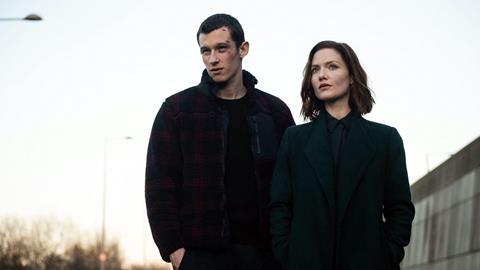
The conspiracy thriller The Capture is back for a third season feat. deepfakes, advanced surveillance technology, and disinformation galore. Once called the ‘most preposterous series’ on television, it’s now unsettlingly relevant, spookily applicable, and powerfully prescient.
Within minutes of the opening episode, viewers find themselves back in the BBC news studio with Khadija Khan. To say she has her finger on the pulse would be a gross understatement. She poses a perspicacious question to Acting Commander Rachel Carey – and it’s the question my generation is asking about every sphere of life. Having identified that questioning everything we see has become a national habit, she asks, ‘How do we begin to sort fact from fiction?’
READ MORE: My reaction to The Promised Land series surprised me, and now I want season 2
Growing up as digital natives in the age of information overload, Gen Z is quick to question facts, call out bias, and ‘curate playlists of truth’ drawn from diverse, often contradictory sources. Often, this deep-set distrust of ideas and opinions gleaned from the internet leave us asking this exact question because, as a generation, we’re suspicious of everything, cynical about what we see, and reject the idea that there’s absolute truth. And so, put simply, the allure of this series is vicarious mastery – the thrill as disinformation is uncovered and the comfort that truth can prevail.
The church isn’t immune from these AI-generated images
The church isn’t immune from these AI-generated images. After all, the internet was inundated with deepfake videos and images purporting to be the newly elected Pope Leo XIV, and synthetic media is being used to impersonate pastors to scam their congregations. But as those who trust in Jesus who is ‘the way, the truth, and the life’ (John 14:6) who ‘came into the world to bear witness to the truth’ (John 18:37), we must actively respond to the eroding faith in public institutions, the flood of misinformation, and the questioning of truth itself. And, I think this starts with taking the countercultural stance that there is absolute truth, that Jesus is not a relative truth or a truth among many truths but rather the truth who became flesh and made his dwelling amongst us.
READ MORE: Okay so, the #Rapture didn’t happen…
Centuries before deepfakes, Jesus came to earth as an embodied being. As God incarnate, his brow was pierced by a crown of thorns (Matthew 27:29), his feet crossed over the Kidron brook (John 18:1), his hands stretched out to touch and heal a man with leprosy (Matthew 8:3), to name just three examples. And then, after his resurrection, he spoke and ate with his disciples (Luke 24:36–49) – all supporting the truth that Jesus Christ wasn’t a hallucination, a deepfake, or some other technological mishap, but the promised Messiah, the hope of the world.
READ MORE: Equipping exploited women for a brighter future
We don’t need a Carey Cam, Operation Veritas, or other sophisticated technology to spot spatial or visual inconsistencies in the resurrection story.
We don’t need a Carey Cam, Operation Veritas, or other sophisticated technology to spot spatial or visual inconsistencies in the resurrection story. Rather, through the eyewitness testimonies (plural, unlike the terror attack in this season of The Capture) recorded in the gospels, we can have assurance that Jesus was who he says he is – the all-powerful, incarnate son of God. Put simply, and in the words of Billy Graham in a culture that’s cynical of truth, we can be confident in the truth – a truth that’s timeless and ‘does not differ from one age, one people, or one geographical location to another’ but rather ‘stands for time and eternity’.
And, just like the thrill that comes from seeing truth triumph in The Capture, as Christians we can have confidence and comfort that the truth will ultimately prevail. Because truth is not just a philosophical idea; it’s intimately tied to the nature of our unchanging God, in direct contrast to Satan who is ‘a liar and the father of lies’ (Jeremiah 10:10, John 8:44–45). Truth will triumph and it will set us free – even as deepfakes and deception swarm around us.
























No comments yet