









In a year defined by viral language and online intimacy, writer Sophie Sanders explores what our newest words reveal about the way we live, relate, and long to be known. From parasocial to delulu, the Cambridge Dictionary’s word of the year offers a revealing snapshot of a culture shaped by screens, celebrities, and a deep hunger for connection.
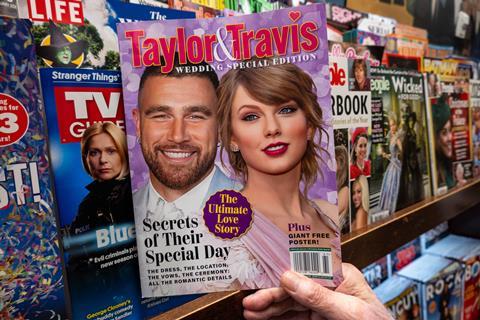
Maybe you had a ’delulu’ reaction when Taylor and Travis got engaged; put simply, you love keeping up with the minutiae of their everyday lives. Perhaps the Beckham family feud has hit so hard you started to ’doom spend on six seven things’. Or, whilst you might not like to admit it, ChatGPT or slop from your evening scroll is where you turn for relationship advice.
If you needed Google translate to help you understand this first paragraph, you’re not alone. It might sound like rage bait or merely skibidi to you, but these are some of the new words and phrases that have been and to the dictionary this year. Both individually and collectively they’re a window into the street speak, global events, technological advancements, TikTok trends, and viral memes that have both shaped and been shaped by common parlance.
READ MORE: Why we should be praying for The Real Housewives of London
From all 6,000 of the words and phrases that have been codified this year – delulu, six seven, doom spend, slop, skibidi, and rage bait to name just a few – parasocial was the word chosen by the Cambridge Dictionary as their word of the year.
From all 6,000 of the words and phrases that have been codified this year – delulu, six seven, doom spend, slop, skibidi, and rage bait to name just a few – parasocial was the word chosen by the Cambridge Dictionary as their word of the year.
parasocial /ˌparəˈsəʊʃl/ adjective: denoting a relationship characterised by a one-sided, unreciprocated sense of intimacy felt by a fan or follower for a well-known or prominent figure (typically a media celebrity), in which the fan or follower comes to feel that they know the celebrity as a friend.
READ MORE: What is hope and why is it so powerful?
It’s a shocking and exposing insight into the zeitgeist of our cultural moment, where loneliness and technological advancements tragically collide.
It’s a shocking and exposing insight into the zeitgeist of our cultural moment, where loneliness and technological advancements tragically collide. Even though they’re digital natives, those in the emerging generations are more disconnected than ever: recent studies have shown 70% of students feel lonely in halls of residence and 33% of Britons aged 16 to 29 reporting that the feel lonely ‘often, always, or some of the time’. And so, it’s no wonder that they’re turning – consciously or subconsciously – to parasocial relationships to fill their unmet need for connection. The sad reality is that these relationships will never fill that hole: they’re an illusion of intimacy, founded upon unilateral investment, and worst of all, said celebrity or fictional character will never give anything back.
READ MORE: ‘As a Christian, I wholeheartedly celebrate couples like Zendaya and Tom Holland getting engaged, because of what it points to’
It’s a heartbreaking reality of our western culture, but I think this relational deficit provides an unprecedented opportunity to show and share Jesus to those around us. In Psalm 68, we read that the ‘Father of orphans, champion of widows, is God in his holy house. [He] makes homes for the homeless, leads prisoners to freedom’. God’s heart is for those who need protection and vindication, who are vulnerable and lonely, and our practical love for those is part of how we image our relational Creator God. In the famous words of St Teresa of Avila,
‘Christ has no body on earth but yours, no hands but yours, no feet but yours. Yours are the eyes through which to look out Christ’s compassion tot he word. Yours are the feet with which he is to go about doing good; yours are the hands with which he is to bless men now.’
So, as we enter a new year, how will you seek to reach those who are lonely and feeling unfulfilled by parasocial relationships? You could invite your neighbours round for a meal, host a book group and put flyers in the local supermarket and library to reach those you might not otherwise meet, run a community coffee shop for 18–30s in your church building each month, or simply engage the cashier in conversation as you’re packing your shopping.
It’s nigh on impossible to predict what words will enter common parlance in the year ahead, let alone which ones will make it into the codified corpus. But my hope and prayer is that, through the hands of feet of Christ on this earth, there’ll be more words that speak of connection, community, and companionship entering the vernacular in the coming year.





















No comments yet