









Writer Jenny Sanders reflects on the death of Valentino Garavani at age 93, one of fashion’s last great couturiers. She contrasts his devotion to outward beauty with a faith-centred understanding of beauty that values inner character over image.
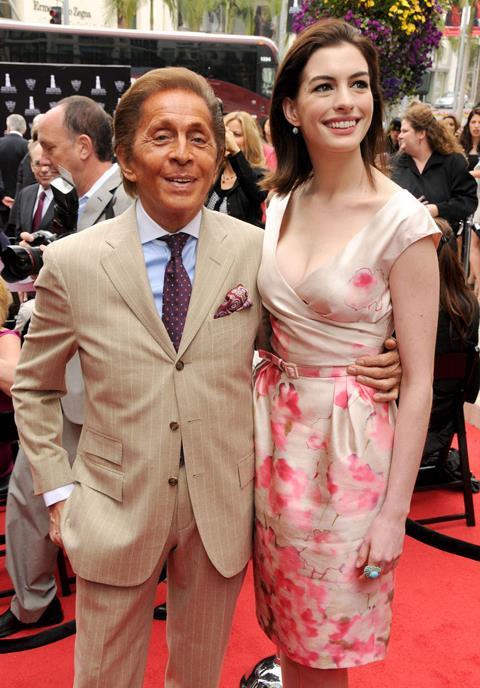
This week the fashion industry lost another giant. Valentino Garavani, who claimed, ‘I love beauty; it has always been my religion,’ passed away at the age of 93, surrounded by his family in Italy. For almost fifty years, he dressed some of the world’s most beautiful women, from Jackie Kennedy to European royalty.
His luxury brand was on par with designers such as Armani, Lagerfeld and Yves Saint Laurent, all of whom died before him. They came from an era of opulence we’re unlikely to see again; the last of the couturiers whose names became a byword in wealth.
READ MORE: ‘Fashion icon Iris Apfel inspired my walk as a Christian’
Having trained in Milan and Paris, producing hundreds of sketches for designs, and influenced by the glamour of cinema, he returned to Rome to start his own fashion house in 1960. In 1998 it was sold for around $300 million. Valentino remained at the centre of creativity there until retirement in 2007 and a final, emotional haute couture show in January 2008. Although he stepped back, uncomfortable with the corporate and financial emphasis of modern business, Valentino still designed costumes for a 2011 New York City Ballet production as well as for a few his favourite clients.
One of the few men to boldly claim he actually knew what women desire, he said, ‘I know what women want. They want to be beautiful.’
One of the few men to boldly claim he actually knew what women desire, he said, ‘I know what women want. They want to be beautiful.’
Valentino had strong opinions on fashion, loving the 60s when he launched his label, despising the 80s which he called, ‘a vulgar moment of fashion,’ and always favouring red, which appeared in many of his sumptuous gowns. He certainly didn’t appreciate the more relaxed, modern approach to clothing choices. He once said, ‘When I see somebody and unfortunately she’s relaxed and running around in jogging trousers and without any makeup, I feel very sorry… For me, a woman is like a beautiful, beautiful flower bouquet. She has always to be sensational, always to please, always to be perfect, always to please the husband, the lover, everybody. Because we are born to show ourselves always at our best.’
READ MORE: A respectful, low-key London Fashion Week starts today but it’s still a reminder that we need to take action against exploitation in fashion supply chains
Perfect? Always? How very unrealistic! Clearly not on the same page as twenty-first century women, his idealised version of femininity seems dated and oppressive. Real women in the real world are unlikely to want to live up to this kind of pressure where they beautify themselves to please everybody but themselves.
Image over substance is unattractive. It’s certainly at odds with what we might term, ‘biblical beauty’.
Image over substance is unattractive. It’s certainly at odds with what we might term, ‘biblical beauty’.
The Bible mentions several women who were considered beautiful, including Sarah (Genesis 12:11), Esther (Esther 2:7), Abigail (1 Samuel 25:3) and Tamar (2 Samuel 13:1) so there’s no suggestion that we should live as terminal frumps foreswearing flattering clothes or shunning all beauty products. However, while we can appreciate that different cultures and historical time periods have their own subjective views on what is truly beautiful, all of which continually change (how else would the fashion and advertising industries survive?) the Bible prioritises inner character rather than outer attractiveness.
READ MORE: Brigitte Bardot (1934–2025): A controversial life seen through faith
For those of us who see the years taking their toll physically or who don’t measure up to the idealised women featured in the media and cosmetic advertisements, that’s actually quite a relief. It means that beauty is not dependent on age, genes or DNA. For Valentino, this may have been disappointing. His funeral will take place in a Roman Catholic basilica but his life isn’t marked by personal faith.
I would love to be a fly on the wall to hear a conversation between Valentino and the apostle Peter who wrote, ‘Your beauty should not come from outward adornment, such as elaborate hairstyles and the wearing of gold jewellery or fine clothes. Rather, it should be that of your inner self, the unfading beauty of a gentle and quiet spirit [NB: spirit, not personality], which is of great worth in God’s sight’ (1 Peter 3:3–4).
Valentino may have contributed to high fashion, but did he ever understand that true beauty is more substantial than a couture dress and is beyond price?
























1 Reader's comment