





Jamie Phear reflects on what a women’s worship night taught her about the seeds we plant without knowing whether we will ever see the fruit. Through seasons of waiting, loss and uncertainty, she discovered that God is often doing his deepest work long before we can see the results.
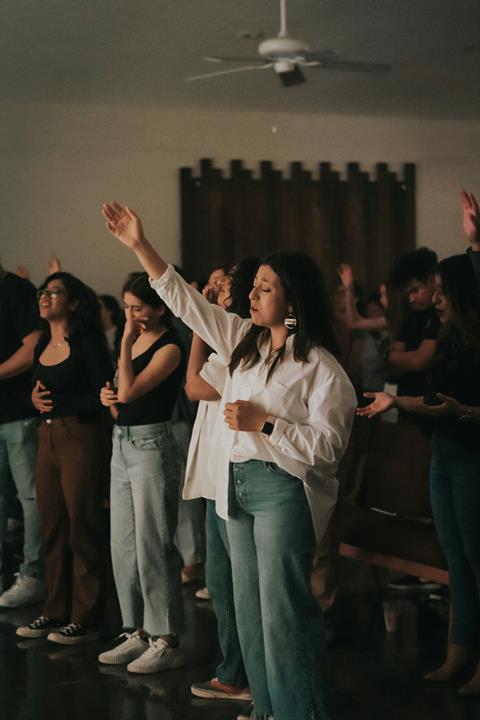
Photo by Ismael Paramo on Unsplash
In August, I was back in the Outer Banks, North Carolina, when I was invited to a women’s worship night at my parents’ church. A little over two years earlier, I had led their women’s retreat, a weekend centred on identity and calling and built around a condensed version of a course I had been developing called Boldly Rising. That evening, I found myself talking with one of the women who was preparing to share her testimony.
We’d spoken briefly at the retreat but hadn’t had much conversation since. She reminded me of an exercise we’d done around spiritual gifts and told me it had become a turning point, helping her understand how God had uniquely wired her. That clarity eventually led her into work she loves, using her gifts to support others. As she thanked me, we hugged, and I felt tears filling my eyes. Two years.
I had known God moved powerfully that weekend, but I didn’t know what came next for the women there. I hadn’t seen how he continued to lead them after I returned to London. And I certainly hadn’t known that something God brought forth through one of the hardest seasons of my life was still bearing fruit, years later, in one woman’s story. That conversation stayed with me when I returned home.
And now, the timing feels especially significant. On October 12, Boldly Rising began a new online cohort after I first piloted the full course at my church in London. Taking it online feels like another step of faith. I’ve found myself wondering: Will something that felt powerful in a room translate into a different kind of space? Then, just weeks before this new beginning, God let me glimpse fruit from a seed planted more than two years earlier. It felt like a reminder: There is fruit you can’t see yet. To understand why that moment affected me so deeply, I have to go back a little further.
Before I moved to London, I knew God had called me there but my visa was unusually delayed.
Before I moved to London, I knew God had called me there but my visa was unusually delayed. What was meant to be a six-month sabbatical stretched into thirteen months as I waited to step into the life I believed God was leading me toward. The waiting wasn’t only about a visa. God had also asked me to lay down a career in academia that I’d spent nearly a decade building. Teaching in higher education had been deeply connected to how I understood my calling, so releasing it left me with many questions. Who was I when I could no longer point to that career? What did calling mean when one chapter had ended, but I couldn’t yet see what the next would become?
Slowly, God began untangling my identity from work, achievement, and visible progress. He rooted me more deeply in Christ and reshaped the way I understood calling—not as something to discover and arrive at, but as a lifelong journey of becoming, obedience, and surrender. A women’s Bible study at my parents’ church became a safe place to wrestle honestly. They saw me in the waiting. Eventually, my visa came and I moved to London. The life that unfolded looked different from what I’d imagined, but what God taught me in the waiting began to take shape in Boldly Rising.
Later, I brought a shorter version of that material back to the Outer Banks for the women’s retreat. There was something sacred about returning to the community that had held me through uncertainty with material forged in that very season. The things I’d once cried over had become things I could offer someone else. Eventually, I launched the first pilot of the full course at my church in London. From the outside, the story could have looked beautifully complete: waiting, refinement, calling, fruit.
But life is rarely that tidy. Two days before the course launch, I learned at my 12-week scan that we had lost our baby.
But life is rarely that tidy. Two days before the course launch, I learned at my 12-week scan that we had lost our baby. The year that followed became one of the hardest of my life as I walked through two missed miscarriages and a depth of grief I hadn’t expected. Suddenly, the truths God had taught me in the waiting weren’t simply truths I wanted to teach other women. They were foundations I needed myself.
I needed to know my identity was rooted deeper than what I could achieve, build, produce, or carry. I needed to know calling was bigger than one role or outcome. I needed to know Christ was still enough when my life looked nothing like I’d hoped. That season was heartbreaking. And yet, in the middle of it, I experienced a profound closeness with God. The roots he’d grown in the waiting held firm. It changed how I understood that earlier season. At the time, I would have called those thirteen months a delay. And they were. But they were also formation. God had been deepening roots I would later need, forming truths that would become something I could offer others, and something that would sustain me through suffering.
Which brings me back to that conversation in August. Standing with that woman, I realised again how much of God’s work happens beyond our field of vision. For more than two years, her story had been unfolding without me knowing it. Something I had offered and moved on from had become part of what God was continuing to do in her life. I simply couldn’t see it. There are probably other stories I’ll never hear, other ways God has used something I wrote, taught, or offered that I’ll never be able to trace. And the same may be true for you. There may be seeds you’ve planted, prayers you’ve prayed, encouragement you’ve offered, or acts of obedience whose fruit you may never fully see.
Maybe that’s part of faithfulness too. We obey. We plant. We offer God what’s in our hands. Then we release our need to know what comes of it. Boldly Rising was built around the image in Psalm 1 of a tree planted by streams of water, bearing fruit in its season, its leaves not withering. I love that a tree doesn’t decide what fruit it will produce or strain to make something happen. It simply grows from where it’s rooted, and the fruit comes in season.
Jesus offers a similar picture in John 15:4–5: “Remain in me, as I also remain in you.… If you remain in me and I in you, you will bear much fruit.” The branch isn’t told to manufacture fruit. It’s told to remain, to abide, to stay connected to the vine. Our responsibility is rootedness and faithfulness. God brings the fruit in his way and in his time.
And often, we don’t get to see what he’s growing. Sometimes, though, in his kindness, God gives us a glimpse. The roots he grows in one wilderness may steady us in the next. And some of the places we’re most tempted to call wasted may be the very places where God is doing his deepest work. Our invitation is not to force the fruit. It’s to remain, to be faithful with what God has placed in our hands, and to trust him with what we cannot yet see.
There is fruit you can’t see yet.
A prayer practice for abiding
Read John 15:4–5 slowly: “Remain in me, as I also remain in you.… If you remain in me and I in you, you will bear much fruit.” Then spend a few minutes in quiet with God. Resist the urge to rush this part.
1. Name where you feel unfruitful
Ask: Jesus, where am I most tempted to measure my life by visible progress right now? Where do I feel delayed, hidden, or disappointed? Bring that place honestly before God. You don’t need to resolve it. Simply name it.
2. Return to abiding
Ask: What would it look like to remain in you here instead of striving for an outcome? Notice what helps you stay rooted in Christ—his presence, Scripture, prayer, community, surrender—and choose one simple way to abide today.
3. Release the fruit
Open your hands and pray: Jesus, you are the vine and I am the branch. Keep me rooted in you. Free me from the need to measure this season by what I can see. Form in me what you desire, and use my life in ways I may never fully know. Help me be faithful with what you have placed in my hands and trust you with the fruit.
Then sit quietly for a moment with this truth: My responsibility is to abide. The fruit belongs to God.























No comments yet