






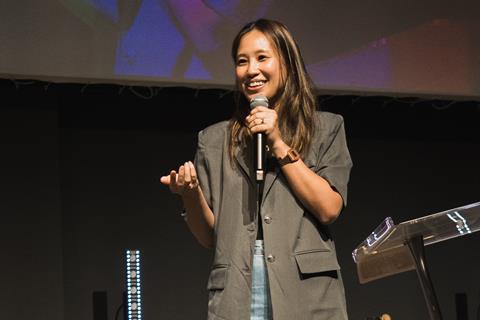
Jacintha Tagal Cheah is a pastor and leader at Holy Trinity Bukit Bintang (HTBB) Church, Kuala Lumpur. She spoke with our deputy editor, Jemimah Wright, about how God reached the headhunting tribe her family originated from and how she is seeing him move today
Jemimah Wright (JW): I’ve heard stories about a move of God in your family’s history. Can you share a bit about that?
Jacintha Tagal (JT): I grew up in East Malaysia, in a town called Miri, which is close to my father’s village. The tribe my father comes from is called the Lun Bawang tribe. They used to be headhunters, and books have been written about them (such as Drunk Before Dawn by Shirley Lees) because the people were constantly drunk. They were drunk for maybe two-thirds of the year. They were extremely superstitious and practised animism. For example, if a bird flew across the sky, it could be a sign that they didn’t need to work that day. That superstition often meant they didn’t care for their families, their children or their homes. Government documents at the time warned people not to try to reach the Lun Bawang because they were violent. They were at high risk of dying from disease and alcoholism, and the government thought they might become extinct.
JW: What do you mean by animist and headhunters?
JT: When I say animist, I mean they believed in spiritual beings — spirits of the mountains, animals and other entities — and they were very fearful. The headhunting part means literally chopping off heads. They would often go to war with other tribes. For example, if my great-great-great-great-grandfather wanted to marry, he had to chop off a certain number of heads to prove his worth. They’d hang skulls on doorposts so passersby could see how powerful the household was. That was their lifestyle.
Three Australian missionaries, fresh out of Bible college, felt God was calling them to Borneo. They first arrived at port cities and then had to make their way to interior villages like my father’s. They needed permission from the government, and repeatedly were warned not to bother because they would likely be killed. Yet they continued, knocking on doors, and eventually reached my father’s village. One missionary, Hudson Southwell, and his wife Winsome, a nurse, began offering medical care and teaching literacy. By the 1930s, the whole tribe had come to faith.
JW: That’s incredible!
JT: Yes. It was dangerous; the headhunters could have killed them. But the missionaries approached with love, and the tribe received them. My grandfather’s parents’ generation were the ones who experienced this.
If my great-great-great-great-grandfather wanted to marry, he had to chop off a certain number of heads to prove his worth
Then, in the 1970s, the Holy Spirit poured out on the village. It began in a neighbouring village called Bario. A revival started there with schoolboys who were around 15 years old and preparing for national exams. They planned to study together, but instead began praying, confessing sins and worshiping God in small groups. They told no one. Then, at a Christian Fellowship gathering, one boy shared how God had moved in his life. Others shared similar experiences, and revival broke out in the school.
JW: Did these boys have a Christian background?
JT: Yes. They came from the Christian legacy left by the missionaries, but revival erupted in a way that surprised everyone. It then spread to my father’s village. Six of the schoolboys from Bario came over to share the gospel, sparking a revival that lasted from 1974 to 1985.
JW: You weren’t born then?
JT: No, this was my parents’ generation. My grandfather was pastor at the time. He described the revival as simple. Many villagers couldn’t read or write, yet when the Holy Spirit came upon them, they memorised and sang scripture. Others received words of knowledge, telling people to remove charms or reconcile with family members. No one was left out; every person received a gift of some kind. The revival came in waves but was sustained over ten years.
It was like an Old Testament story. God asked the villagers to climb the highest peak in Sarawak and build a church there. They were scared because they believed evil spirits lived on the mountain. God gave them a sign — fireballs in the sky — and they obeyed. On one occasion, he told them to cook stone, sand and water. They did, and the mixture became rice cakes. Not only that, there was extra, like the feeding of the 5,000. This happened in the 1980s. My father was at university at the time, and my aunt (who is younger than him) remembers it vividly.
JW: Growing up with all this legacy, how did your own personal relationship with God develop?
JT: My parents had very different church backgrounds. My father grew up with the Borneo legacy; my mother grew up in Kuala Lumpur. I had a Christian faith, but the stories didn’t fully make sense to me personally. After marrying Abel, we wanted to find a church where we could plant roots together. We discovered HTBB in 2014. The services were Spirit-filled but very real — what some call naturally supernatural. On our first visit to HTBB, the message that evening was simple but profound — about the kindness of God. We were so moved we cried in the car afterwards. In our second week, Miles Toulmin, one of the pastors, approached us. He said: “You’ve got a revival spark in you, and there’s something about revival in your bloodline.” It was our first meeting, yet he shared such a specific word. That confirmed for us that HTBB was the church where we should plant our roots.
JW: And now you’re leading the church. How did that happen?
JT: Over ten years, God’s been moving in this church. Abel and I were working in education when friends invited us to join the Alpha hub in Kuala Lumpur, part of Alpha Asia Pacific and St Paul’s Theological College (SPTC). HTBB was planted with the vision of hosting the Alpha hub, overseeing church planting and raising leaders. I joined SPTC as a student, was ordained in 2020 and joined full time.
JW: Malaysia is mostly Muslim isn’t it, and Christianity in the minority?
JT: Yes. By law, Christians cannot share the gospel with ethnic Malays (who are Muslim). That reality is sobering — the good news is legally restricted from the majority group. But, within those boundaries, we do have freedom. Malaysia is also a deeply spiritual nation. It’s normal to hear someone say: “There’s a spirit in my house.” People often come to faith through dreams or visions.
JW: Any recent stories of people coming to faith?
JT: Rachel, now on staff with Alpha, went through a difficult and traumatic season. Years ago she would often have panic attacks at night during her sleep. One night, during one of those bouts of anxiety, Rachel heard a soothing melody that sounded like harps playing in her ears. The next day she went to work and she told her Christian colleague about the music. Her colleague said to Rachel: “I think it could be Jesus giving you comfort at this time.” So the next night, Rachel prayed this simple prayer before she slept: “Jesus, if it’s you, play the same music again.” And the music played! Then Rachel said: “OK, thank you, Jesus. If it’s you, can you please stop the music right now?” and the music stopped. Not long after, her colleague invited her to church and she went along to the Alpha course and gave her life to Jesus. In the months to come, her parents and wider family all came to faith in Jesus as well.
People are hearing the gospel for the very first time
JW: Is there a revival there, like the UK’s ‘quiet revival’?
JT: Growth is steady here, but not in quite the same way. Malaysia is more ‘pre-Christian’ than ‘post-Christian’. Many people have never even heard the Christmas story – we often explain it from scratch at Christmas services. But there is hunger. On our last Alpha, a 30-year-old man and a 19-year-old woman both came to faith. One of them said to me, tearfully: “I didn’t even know it was an option to choose Jesus.” That’s the context here; people are hearing the gospel for the very first time.
JW: Thinking of the revival spark in your bloodline, do you pray for revival?
JT: Yes. My village commemorates the revival every July. We ask God to do it again. But revival will look different from the past. In the 1970s, it involved prophets with church leadership accountability. Today, it may be more like the quiet, nameless revival in the West. We focus on equipping people, teaching them about the Holy Spirit and helping others discover faith. Revival involves leadership, accountability and obedience, not just miraculous events. It’s about God working through ordinary people in extraordinary ways.
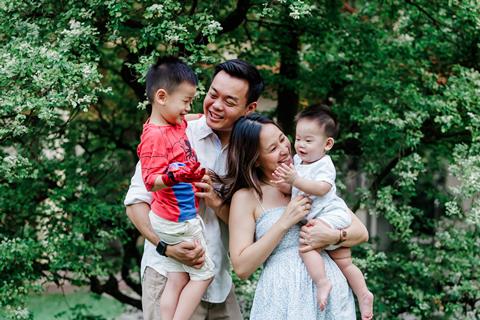
Jacintha Tagal Cheah is a pastor and leader at Holy Trinity Bukit Bintang (HTBB) Church (htbb.org), Kuala Lumpur, where she serves with her husband, Abel. They have two children, Levi and Lucas. Jacintha studied at Harvard University and has served in education and nonprofit roles, including head of operations for St Paul’s Theological College Malaysia and involvement with the Teach for Malaysia programme.





















No comments yet