







Hosted by Claire Musters
This month I’m reading…
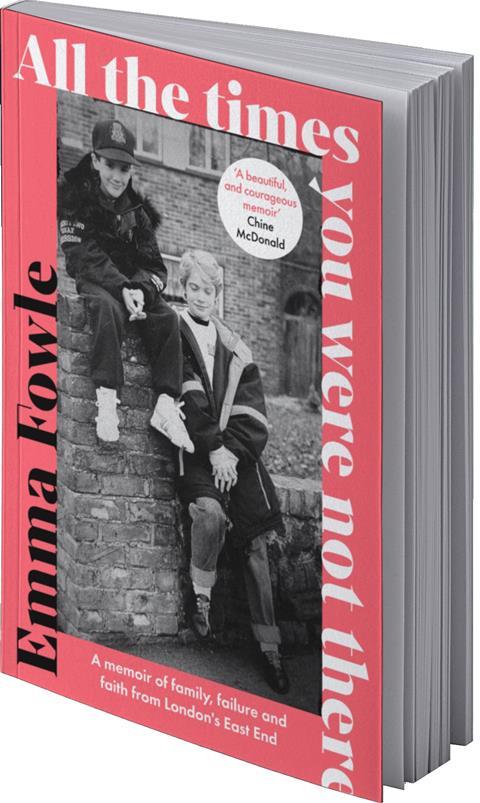
All the Times You Were Not There: A memoir of family, failure and faith from London’s East End
By Emma Fowle (SPCK, 978-0281091683)
Emma Fowle is deputy editor of Premier Christianity magazine and editor of Voice of Hope. As I work with her on both publications, I was keen to read her book. The memoir, set in 1980s East End and Essex, charts Emma’s family’s emotional turmoil as her dad became a champion powerlifter, but then his reliance on steroids, stronger drugs and infidelity tore them apart.
Everything is laid bare – the pain, questions, anger, as well as laughter and camaraderie – and, ultimately, the desperation to know and be known. Emma’s dad was – and is – a larger-than-life, charismatic character and Emma is aware she has inherited his sporting, competitive nature. But what she could never understand as a teenager is why he kept choosing to put them through hell as he chased yet another adventure.
Emma was the first in her family to find faith, and she shares the complexity of the journey – and the way her parents were also drawn to God. There wasn’t an instant reconciliation, but a long, difficult process in which each of them had to choose to hold on to hope.
There is a rawness to Emma’s writing – a brilliance and a refusal to ‘tidy things up’. All the Times You Were Not There is a compelling and grace-filled read.
You were born, you say, on the day that your dad began seriously pursuing his powerlifting career. Did you feel that you competed for his attention right from the off?
It’s hard to know really, as it’s all any of us ever knew. My dad and I are very similar and very close. I adored him, and really admired his sporting achievements so, honestly, even though he was absent a lot – and my mum was left to pick up the pieces – it never felt that way. Probably because he was such a large presence that, when he was present, he was really present – if that makes sense! I never felt like I had to compete with powerlifting for his attention when I was small but, looking back as an adult, I’m aware that sport often came first in a thousand different ways – from what we ate to when and where we went on holiday. My mum bore the brunt of that for sure, and it ended up impacting us in very catastrophic ways.
Your family lived in an area in Essex that many other East Enders had moved out to years before, but then you moved to the other side of town, to a more desirable road. What do you think fuelled your dad’s obsession with always reaching beyond what your family currently had?
To be honest, I am not 100% sure but I have an inkling that it’s probably the same thing that drove him to be so successful in his sport. And when I began to unpack more and more of his family story, I began to wonder if that was part of it too. Both my parents come from a part of London’s East End that was incredibly poor. Both families contain really harrowing stories of poverty, crime, loss, bereavement, family separation – the effects of two world wars and the deprivation of the place they grew up in. And these were generations that did not speak about their suffering but simply stuffed it down. Theirs was a hard world, and I’m not surprised that it produced a generation who wanted more.
You describe your dad’s affair as “such a cliché that it disappoints me even now”, and yet you are also able to recognise that they were both broken people from the start. How has it been navigating the rawness of your emotions but also the wider perspective of your family’s story?
It feels like another massive cliché to say it’s been the hardest thing I’ve ever done, but also so deeply cathartic. But it’s true! Understanding more of my family’s backstory has given me so much compassion not just for my parents, but for the generations that went before them who survived unimaginable hardship. Sometimes the stereotype of the ‘Cockney criminal’ glosses over the things that I struggle to comprehend from my nice, middle-class life. It doesn’t excuse them, but it does offer some sort of context. Looking back at my family story, I’m so stunned by what they went through – and what they were able to achieve. In the process of my research, I also tracked down a cousin of my dad’s who became the youngest person ever to swim the English Channel, aged 16, in 1961. For one poor, working-class family to produce two children of the same generation who have both been in the Guinness Book of Records is astounding.
What drew you to church initially, and ultimately to faith?
I first went to church aged eight, with Brownies. I’m honestly not sure what I found there, but I liked it and asked my mum if she’d take me again. The long story short is that I asked to be christened, then confirmed at that church. Then, a few months before my dad left us for the first time, Youth for Christ organised a weekend away for the young people in our area. I went along, and that was the first time that I really understood that I could have a personal relationship with Jesus – and made that commitment for myself. Many years later, a friend asked if I ever thought it weird that I gave my life to Christ and then my whole life literally fell apart. But I think God knew the horrific decisions my dad was about to make, and that we’d need God to get through it all.
During the years my parents were apart, church was a real refuge to me. My youth leaders were available to us all 24/7 and, as they lived round the corner from me, I regularly landed on their doorstep when things got too much. The whole church rallied round us – even before my mum (and eventually my dad) started coming too. They prayed, they befriended, they cooked for us, they helped my mum financially when she needed it. They really modelled family at a time when ours was falling apart. It showed me what real love looked like.
You worked hard as a family to forgive and be restored to one another, but you hadn’t realised how much your childhood experiences impacted your marriage. Could you explain what happened?
It really wasn’t until I got married that I realised that I had internalised certain things. For example, I had somehow subconsciously believed the lie that because my parent’s marriage had run into problems, mine would too. That if my dad could not remain faithful, then why would my own husband? Unsurprisingly, this caused a few issues. Things came to a head after the birth of our first child, and at that point, I realised I might need a bit of counselling to untangle all of that.
You now recognise that your relationship had originally been solely on your dad’s terms and is now much better. How much did the reflective exercise of writing the book help you get to that point?
It was difficult, but a great joy. I end the book in lockdown, during which I trained with my dad in our garage gym several times a week (we all live in the same property). It really felt like a full circle moment. My dad grew up with a very authoritarian father, at the tail end of two generations of men who were traumatised by two world wars. I feel really fortunate that we were always close, but he was also of his generation, too. He didn’t like to be questioned, and family decisions were taken fairly unilaterally. Our healing necessarily needed to include a rebalancing of this – and fortunately, Dad embraced that.
Emma Fowle on: The books that have changed my life
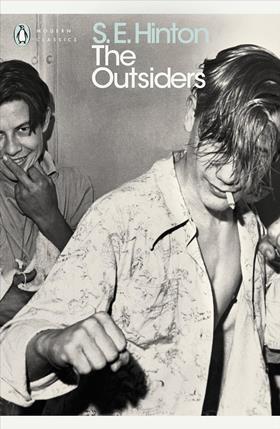
The Outsiders by SE Hinton
The first book I ever properly fell in love with, and still the one that I would probably rescue from a fire (apart from my Bible, of course!). A short-but-sweet coming of age tale that contains everything great fiction should.
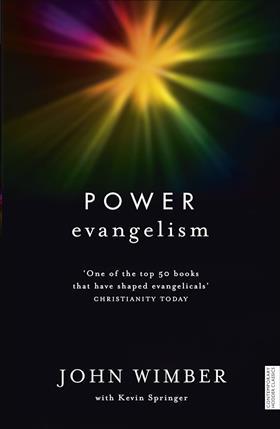
Power Evangelism by John Wimber
My youth leaders bought me this book shortly after I became a Christian, for my baptism. It was the early 90s, the height of the charismatic renewal in the UK. It was the first Christian book I read and really set the tone for what I expected a life with Christ to be.
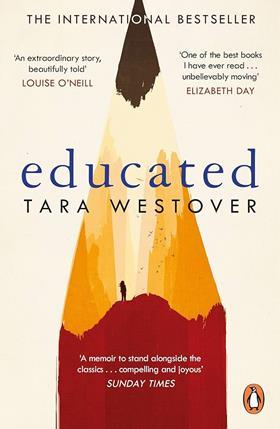
Educated by Tara Westover
Despite having not gone to school, Tara Westover managed to escape her abusive home and eventually ended up studying at Cambridge University. Hers is a searing account of religious extremism, and mines the complexities of memory, family and memoir like no other I have read.



















No comments yet