- Hot topics
- Join Now!






When grief meets calling
By  Kiri Jane Erb2026-03-31T05:59:00

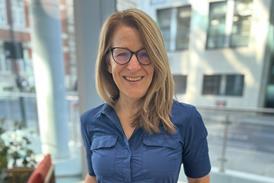
Kiri Jane Erb recounts her move from the UK to rural Canada, her experience of pastoral life, and the lingering impact of her father’s death. Through it all, she explores how wrestling with grief, calling and study led her to a deeper confidence in a theology that speaks honestly into suffering and hope.
In 2010, not long after my father passed away, I transposed my life to become a Brit fully submerged in North American “trad-mum” life. Based in rural Saskatchewan, Canada, I made my own kombucha, home-schooled, and embraced being “the pastor’s wife.”
I found prairie values and way of life fascinating; anthropology was always a favourite subject in my undergrad. At times it felt like stepping back in time. It had a wholesome air about it; a good contrast to the biting -50 degrees Celsius that came in the winter seasons when we’d boast being colder than the north pole.
To continue reading, register today for more access!
If you are a member or a registered user, or if you already have a login for another Premier website SIGN IN HERE
 ">
"> A NEW DIGITAL HOME FOR WOMAN ALIVE
Woman Alive is now fully online, with honest stories and thoughtful Christian perspectives on faith and the realities of women’s lives.
Start exploring today.
Register and choose two articles to read for FREE every month.
And if you like what you read, visit our subscriptions page and sign up for unlimited access.
If you already have an account with a Premier website SIGN IN HERE
Related articles
-
 Opinion
I don’t believe in manifesting – but I do believe in prayer
Sybilla Hart reflects on the growing popularity of manifesting and the occult, and why she believes Christians have something far more powerful to turn to. From teenage encounters with Ouija boards to a frightening experience in a French château, she shares how prayer and the presence of Christ have changed the way she responds to spiritual darkness.
-
 Opinion
Unearthing a suitcase leads to the discovery of one woman’s incredible story of service in Chile
Rebecca McConnell uncovers the remarkable story of Sadie Minnis, a Northern Irish missionary who spent 50 years serving God in Chile. Her story was rediscovered through an old suitcase – and includes the extraordinary discovery of a street named in her honour.
-
 Opinion
What a cathedral hidden in the mist taught me about faith
When Alison Reid found herself regularly driving through the misty Cambridgeshire Fens, a familiar landmark gave her a powerful picture of what it means to trust God when His presence feels hidden. From a childhood connection with Ely Cathedral to the terrifying illness of her baby daughter, Alison reflects on why knowing God in the “easy” days prepares us to trust Him in the tough ones.
More from Opinion
-
 Opinion
Three pearls of wisdom from 30 years of marriage
After 30 years of marriage, writer Titilola Ajayi-Jones has learned a thing or two about navigating the highs and lows of life together. Here, she shares three pearls of wisdom that have helped her marriage grow stronger – and explains why seeing well, sowing well and surrendering to God can make all the difference.
-
 Opinion
Barbara Cartland believed in God – but she was also drawn to a darker spiritual side
Jemimah Wright explores the extraordinary life of Barbara Cartland, whose new biography reveals a woman fascinated by God, romance and morality – but also by psychic phenomena and mystical ideas.
-
 Opinion
Can I belong in Church as a single person?
As a single Christian woman in her 40s, writer Alex Noel knows what it feels like to wonder where she fits in a Church culture that can often revolve around marriage and family. After attending the first Belonging Conference, she asks what it would look like for churches to truly make space at the table for single people.
- Issues
- Topics A-Z
- Writers A-Z
- © 2026 Woman Alive














Site powered by Webvision Cloud