
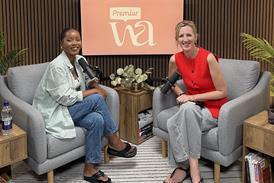

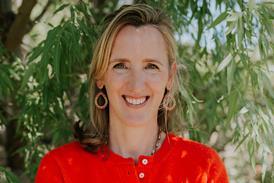



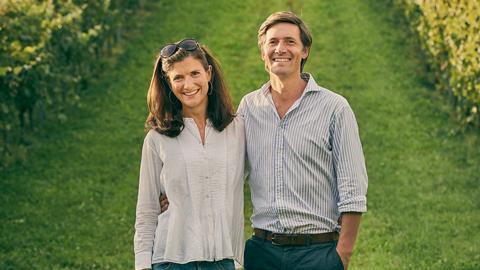

Kirsty Goring, of the award-winning Wiston Estate, shares what it is like to see a 50-year-old idea come to fruition
Kirsty Goring grew up in London, and is the daughter of Nicky and Sila Lee, who developed The Marriage Course. Kirsty’s passion for wine was kindled at Sunday lunches with friends’ parents, at her Oxford college (her tutor was the ‘Don of the Wine Cellar’) and at the Ballymaloe Cookery School in Ireland. Now, it encompasses everything that goes into making Wiston Estate’s award-winning wine as well – and more besides. Her role as brand director is as much about her own capabilities as it is about an extraordinary set of circumstances unfolding over several decades…centuries even. They have all converged, providentially, to create just the right conditions, at just the right time, for an idea that was conceived over 50 years ago to finally come to fruition.
The history of the estate
Wiston Estate is known to many Christians for hosting summer festivals, such as the Big Church Festival and Wildfires (it is also where David’s Tent started). Its story began way back in 1743, when a marriage between neighbouring landowners secured the current 6,000-acre farming estate in West Sussex. Elizabeth Fagge, heiress of Wiston House, married Sir Charles Matthew Goring. The estate is still managed by the Goring family to this day.
In terms of recent history, that story began in the early 1970s, when a young Harry Goring – Kirsty’s father-in-law – spent a year in South Africa before taking up the running of the estate. While there, he met and fell in love with his wife, Pip. Marrying in 1972, they honeymooned in South Africa rather than risk the English weather. Arriving back to the UK’s Gatwick Airport, the newlyweds were greeted by gloomy grey skies.
Pip felt homesick for the sunnier climes of her native Stellenbosch, South Africa’s well-known wine region, and its vineyards. She asked Harry if they could plant some vines, but alas, the estate was dedicated to arable and livestock farming, and that was not about to change any time soon. Pip’s homesickness soon faded, but what remained was the seed of a very persistent idea – along with a certain tenacity to see it through. “I call it passion”, says Kirsty, as she shares how it was that they came to plant their first vines in 2006 – 34 years later – and establish Wiston Estate’s vineyard.
Catching the vision for sustainability
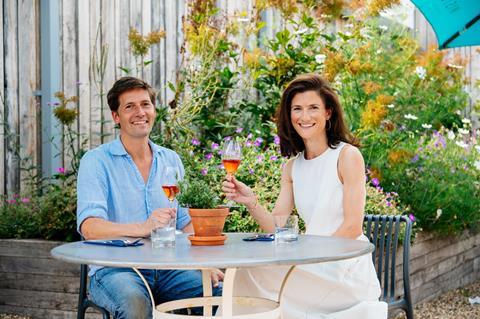
In the summer of 2006, Kirsty and husband Richard (Pip and Harry’s eldest son), moved on to the estate. Initially meeting as teenagers, they had dated in their early 20s and married in 2004. They then left London and travelled for 18 months. In Canada they had volunteered for Willing Workers on Organic Farms (wwoof.ca/en/). During this time, they saw people approaching sustainability in essential and complementary ways: “in how they ate and how they used resource, but also how they worked together as communities”, says Kirsty. What really impacted them was: “that way of knowing [your] neighbours and working together”.
They had learnt about sustainable living, investing in the soil and in community, and how to work together for long-term impact
They continued on to China, joining Jackie Pullinger in Hong Kong, where again they saw “how you could see transformation if people were doing things together”. After a stint with an affiliated charity in Beijing, they travelled back home, via Russia, on the Trans-Siberian Express. They had learnt so much: about sustainable living, investing in the soil and in community, and how to work together for long-term impact. But: “we didn’t really trust ourselves to implement [this] if we went straight back into our lives in London”. Instead, they asked Harry if they could make a start at Wiston Estate, living there and investing their time, energy and talents into its numerous activities, including the young vineyard.
From the first vintage to today
In 2008, just two years after planting those first vines, Wiston Estate had its first vintage: “and that was because the site was so favourable”, says Kirsty. The area’s warmer temperatures – attributed to climate change – had become similar to those experienced 50 years ago by the Côte des Blancs’ vineyards in France’s Champagne region. The estate’s uplands, which are part of the South Downs, had similar geology too. The chalk bedrock not only provided a moisture-rich aquifer for the vines’ root system but it supported a well-drained soil with the right pH. It also encouraged a diversity of grasses, wildflowers and rarer, more delicate, plants to flourish, while deterring weeds. In West Sussex, they could grow the same vines, and harvest the same grape varieties, which had put Champagne on the map. This hadn’t gone unnoticed and the estate had received visits from several of the well-known Champagne-producing families hoping to rent, or ideally buy, the land in order to plant their own vineyards. When a nearby estate, Nyetimber, planted vineyards and started producing their own wine, it was the final proof Harry needed that this could be a success. Pip had somehow known for years.
The first vintage was harvested by family and friends, producing 6,000 bottles. Now it’s a bigger operation: they produce an average of 75,000 bottles annually, based on harvesting an average of 120 tonnes of grapes. Their English sparkling wine cuvées either blend juice from the same year (producing a specific vintage) or different years (by adding reserve wine) to produce non-vintage, such as their bestselling Brut NV. In superabundant years they make still wine too. But it isn’t a straight increase; despite warmer temperatures they still have to reckon with the English weather. Kirsty will be watching the tennis at Wimbledon closely to see whether they use the covers or not; it’s a useful indication of how much the estate will harvest. If there’s rain while the vines are flowering in early July – or worse, hail – there will be fewer grapes to pick in October.
Wiston Estate is now served to passengers in BA business class and to dignitaries at state banquets. But Kirsty is under no illusions: “It’s a challenging business model…to see a bottle from grapes growing on the vine, to you drinking it, can [take] seven years.” The wine is produced using the traditional ‘Champagne’ method. Many of the processes are done by hand; and the wine goes through strictly prescribed stages to become the final product. Wiston Estate’s winery has the only traditional Coquard basket press in England (a hydraulic press that replicates the traditional vertical Champagne press). As a result, they are in demand to press grapes for other wine-producers, which they do in quantity through ‘contract winemaking’ (a range of services and consultancy for producers looking to make English sparkling wine). They do this because they believe that “collaboration rather than competition” is the best way to grow their business.
A story of faith, family and community
The Christian faith is intrinsic to life at Wiston: “we believe we are worshipping a God who created something beautiful, and would want to see that tended to and looked after”. Kirsty also notes that: “it’s incredibly cheering how much wine is mentioned in the Bible”. A book called The Spirituality of Wine (by Gisela H. Kreglinger, published by Wm B Eerdmans) has “definitely cheered us on our way at times”. One part of the winemaking process that reminds Kirsty especially of the Christian gospel is when the yeast responsible for fermentation dies: “it gives of itself…and that’s where those delicious, bready, briochey, more complex flavours start to be developed”. At a time when people are pursuing healthier lifestyles too, she puts in a bid for: “drinking much less, but drinking really well…[and choosing those brands] that have stories behind them, and people who care about the place they’ve come from”.
Their own story is woven through the brand
Kirsty thinks of Wiston Estate’s wine as “a delicious interpretation of the land”. This is captured not only in the wine itself, but in how their own story is woven through the brand. The design of their label features the family crest, while the vibrant turquoise is Pip’s favourite colour. The label on their vintage wines adds a further detail: a grapevine border taken from a plasterwork in the family’s house (a nod to the ancient Romans who planted vineyards in the area many, many years ago). Their ‘cellar door’ has been upgraded so visitors can experience the winery for themselves, and learn exactly how the wine gets from ‘grape to glass’. And there’s another important ingredient too, as visitors can now enjoy a glass of wine with locally sourced food at Chalk, Wiston Estate’s new restaurant, which celebrates the provenance and plenty of the land.
A lot has happened since 2006. Richard took over running the estate in 2011. And from Pip’s early idea, together with the right conditions and a lot of passion, Wiston Estate has cultivated a whole ecosystem with the vineyard at its heart. “What’s different about a vineyard is it does draw [people] – you need a team…and you suddenly find, wow, we’ve got a community”, says Kirsty. For the 80 employees on the estate, most of their work is connected in some way to the vineyard, winery or restaurant.
The vineyard continues to multiply its interests: “we’ve been really fortunate – the wine is very good, and has won awards…it can pay back if you’re patient”. Kirsty and Richard are now seeing their long-term investment – in people, the land and in nature bringing the transformation they first envisioned – regenerating a rural economy and producing real fruit. wistonestate.com
Words by Alex Noel





















No comments yet