







Hosted by Claire Musters
This month I’m reading…
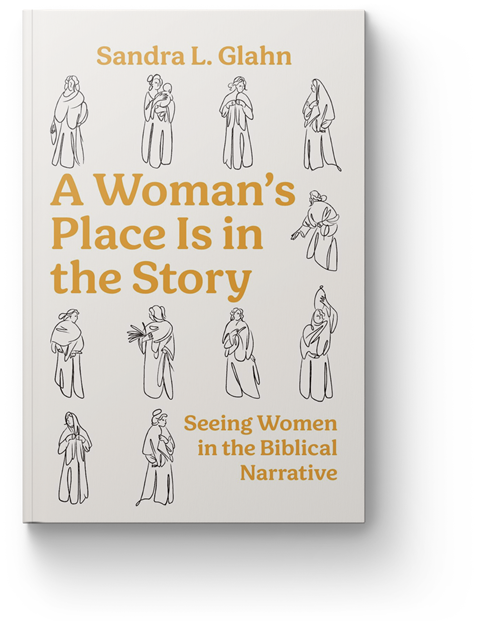
A Woman’s Place is in the Story
Sandra L Glahn
IVP Academic
Sandra Glahn is a professor of media arts and worship at Dallas Theological Seminary, a journalist and the author of more than 20 books. Although scholarly, A Woman’s Place is in the Story is an accessible read, relevant for church leaders and preachers as well as anyone interested in reading the Bible in a more rounded way.
Glahn doesn’t just focus on biblical women who have been overlooked, undermined, misunderstood or misrepresented by historical interpretations, but rather sets their stories within the overarching story of scripture. She begins by looking at the key elements of any story – narrative voice, character, plot and setting – and shows how biblical authors have utilised these.
While there are far fewer mentions of women than men in scripture, Glahn explains why, when women do appear, it is vital that we take notice, revealing how they are pivotal to God’s story of redemption.
She shines a spotlight on how excluding or distorting women’s stories not only affects our view of women, but God and His word. Her contention is that when women are left out, we all lose out – men as well as women.
In your introduction, you talk about the flawed approaches to the way we learn the story of scripture – could you introduce a few here?
I see numerous flawed approaches to the women in scripture. Four come to mind. First, people blame it all on Eve and the women who followed. They see Eve as a prototype of all women, both easily deceived and expert at deceiving.
The second approach is to ignore the women. People read the stories of men as being for everyone, but the stories of women being mostly for women. One example would be to skip the narrative about Tamar when teaching through Genesis. Some commentators describe the Tamar and Judah episode (Genesis 38) as tangential to the main plot. Many make the main focus of the Genesis storyline Joseph’s story. Yet while God did preserve Joseph’s family via his detour to Egypt, his brother Judah is the one through whom the Messiah would come. So, Judah is ultimately the reason the story is being told – it answers how God kept His promise to rescue humanity: through a family.
A third flawed approach is seeing the Bible as misogynistic and internalising the cultural backdrop as God’s perspective. Some people assume patriarchy is inspired by God rather than seeing the events that happened in patriarchal contexts as showing how God works through imperfect systems.
Another flawed approach is to assume females are mostly models of goodness – that men have macho energy and ‘boys will be boys’ while women stay home and keep the family grounded in virtue. Yet the biblical record demonstrates that men can demonstrate all the fruit of the Spirit, including gentleness and meekness. And women can be first-class sinners. Women are not more righteous than men. Both men and women sin; both men and women can be righteous.
Why do you think that some biblical interpreters have seen the lack of women in the Bible as a “literary choice to purposefully erase women”?
Most of the hero stories in the Bible highlight the actions of men rather than women. So, a person might conclude that God likes men better than women, or that it’s better to be a man than a woman. But that would be an incorrect conclusion.
Scripture says God made male and female in His image (see Genesis 1:27). And Genesis 3 tells us that abusing power is rooted in the Fall. Because men have more social power than women in most settings, women are more likely to experience erasure.
Let’s look at the data from a different angle. The Gospel writers are constantly throwing the male disciples under the bus. In contrast, the female disciples usually appear as the more faithful followers. Yet, I don’t think we’re supposed to assume women are more spiritual. I think the writers are making a statement about how often the spiritual outsider ‘gets it’ more than the insider does. In many cases in the New Testament, those outsiders are women. In some cases, like that of the Syrophoenician woman (Mark 7; Matthew 15), her nationality, gender and ‘other’ status in relation to her daughter’s demon possession make her the least likely person to follow Jesus. Yet Jesus spars with her and makes her a positive example of faith.
You tell readers to pay attention when women are mentioned in unexpected places – could you unpack what you mean?
When I was in high school, women did not really engage in professional sports. So, people concluded – and taught girls like me – that female bodies were not made for sports. After Title IX changed the rules [a landmark US civil rights law enacted in 1972 that prohibits sex-based discrimination], I played on my high school’s first varsity soccer team. And today, we see women excel at professional soccer. The cultural absence of women was not an indication that women lacked ability by virtue of their design.
Something similar happens when we encounter women in the Bible. Rewind to a world where food is scarce and people spend most of their waking hours obtaining it and processing it. People lack both contraception and knowledge about ovulation – so conception happens with greater frequency. In a world in which women spend most of their adult years pregnant, nursing or chasing toddlers, you have a world where most of the men are doing the nation building. It’s easy for people to conclude that women are not designed for nation building. But the cultural absence of women does not indicate the inability of women. That’s why we should take note when we do see women engaging in nation building. It’s remarkable that Jael (Judges 4-5) does something the entire army has been unable to do – take down the enemy’s general. It’s remarkable when one of the least powerful people in Assyria – Esther – saves her people from extermination, and has a whole book of the Bible named after her. It’s remarkable when Paul includes ten female ministry partners in his greetings at the end of his epistle to the Romans.
Why should we think about the placement of a woman’s story within the wider narrative?
For the same reason we view an entire TV series rather than only one episode. If we watch only a single night, we might meet key characters and observe them in a limited setting. But without the context of the entire series, and knowing how the episode fits into the greater storyline, we miss a lot. In the case of scripture, this includes insights into the storyteller Himself and what He wants us to know.
When we disconnect women from the greater story and treat them merely as cameos or isolated character studies, we miss how women are functioning in the overall story that God is telling. For example, the story right before the narrative about the woman Jesus meets at the well in Samaria (John 4) is about Nicodemus. He’s a religious leader who comes to Jesus at night. Jesus rebukes him for having such little spiritual insight when he is a high-status insider, a teacher of the law. In contrast, Jesus strikes up a conversation with this low-status outsider at noon. She has every reason to know nothing. Yet she asks important spiritual questions and expresses her hope in the coming Messiah. For her, Jesus reveals Himself as the “I am” – the same divine name spoken to Moses at the burning bush. Nicodemus left confused; she leaves with clarity and tells her entire village about Jesus.
This is an example of why I insist that A Woman’s Place is in the Story is not a ‘women’s book’, even though it is about women. It is a book for both men and women who want to know God as revealed in scripture. We misread the Bible when we leave out the women, or merely cameo them. We need to see the whole story of scripture, recognising the significance of women in God’s redemptive plan. The implications for us all today are that, ultimately, we gain a clearer view of God.
Sandra L Glahn on: The books that have changed my life
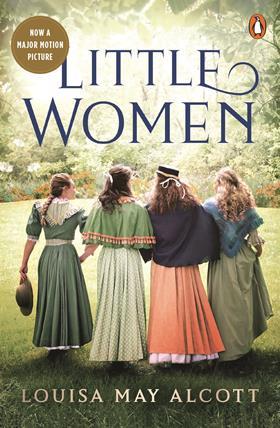
Little Women by Louisa May Alcott
When I was a girl, this book showed me for the first time that a female could make a career from writing. Who knew? Sometimes we need to see something to dream it. The character of Jo March as a writer unleashed me to dream.
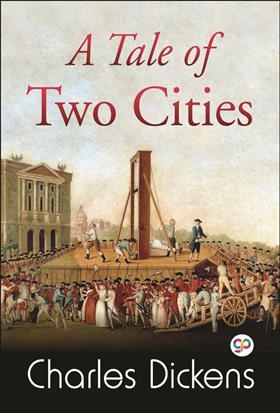
A Tale of Two Cities by Charles Dickens
Advert
This revealed how a story could be about two men in two different cities but also be about Jesus dying in someone else’s place. For those with eyes to see, the story in front of us can tell a much greater story. I determined to learn to tell deeper, more layered stories thanks to Dickens.
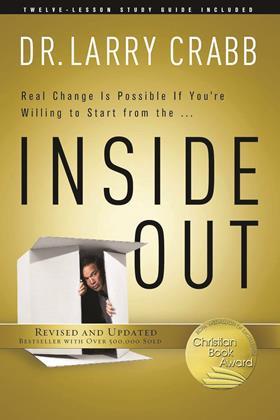
Inside Out by Larry Crabb
This book showed me that, often, our sin is rooted in trying to avoid pain. When my husband and I went through a decade of infertility treatment that included pregnancy losses and failed adoptions, I sought to relieve my pain with the most socially acceptable tonic in the Church: workaholism. I am a recovering workaholic thanks to the way God used this book to challenge and heal me.





















1 Reader's comment