
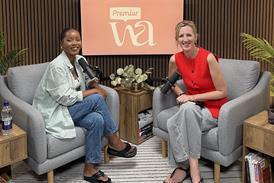






Welcome to our brand-new monthly book column. Alongside the book club, we now have this brilliant opportunity to get to know authors better as they share how they got into writing, their writing process and how their faith impacts what they do.
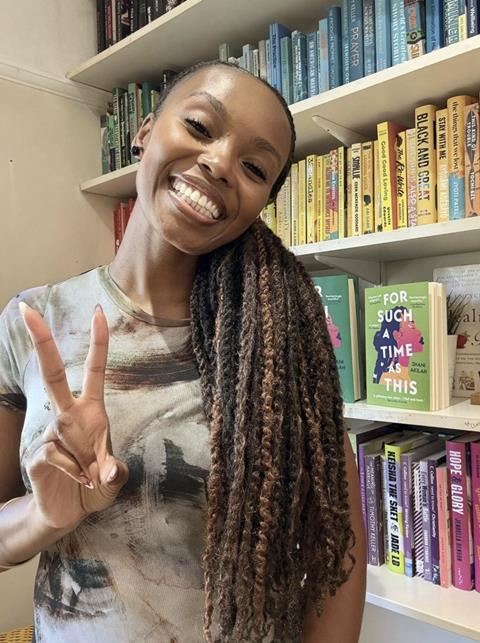
Shani Akilah is an award-winning author, creative writing tutor and educational facilitator from South London. She is the author of For Such a Time as This, which won ‘Best Short Story Collection’ at the 2024 Cosmopolitan Book Awards and has been optioned for TV. She holds a Master’s degree in African Studies from the University of Oxford and has served as a literary judge for the 2026 Brick Lane Bookshop Short Story Prize and the 2023 Nota Bene Prize. In 2024, the Shani Akilah Library opened in Woolwich in recognition of her contributions to literature and community. Booker Prize winner Bernardine Evaristo has described her as “a glittering new voice in the literary firmament”.
From Shani: ”I haven’t always been an author, although I’ve always loved writing. My journey really began while I was working in project management in the Civil Service. I was feeling quite depleted creatively and reached a point where I realised I needed to prioritise joy.
READ MORE: Life Lessons: I became a bestselling Christian author in my 40s - it’s never too late to follow your God-given dreams!
It was during that time that I met Bernardine Evaristo at my local library in Woolwich. Hearing her talk about writing, publishing and the craft of storytelling was incredibly inspiring. I signed up to a creative writing course she was running in my borough, and it was in that first session that I had this very strong feeling that writing was something I was meant to pursue. From that moment, I committed to becoming a published author. That was in 2019.
A few years later, I was experiencing burnout in my full-time job – not necessarily because I was doing too much, but because I felt increasingly out of alignment with what I believed I was meant to be doing. I eventually decided to take a chance on myself and pursue something new. I was already running a side business that was going well, so I took a leap of faith. Not long after handing in my resignation, I was offered my book deal. That was in 2022, and since then I’ve been working as a full-time writer and entrepreneur.
I got my first book deal after signing with my literary agent, Sian, at Blake Friedmann before my book was even finished – which is quite rare in publishing. I was her first client, which was really exciting. Over the next nine months, I developed the stories in my collection, wrote new ones and worked closely with Sian, who provided invaluable editorial support throughout the process. Once the manuscript was ready, Sian sent it to editors at various publishing houses. I received lots of rejections – so many that, at times, it was quite disheartening. But I remember one of my mentors saying to me: “All you need is one yes.”
READ MORE: From atheist to Christian author and other miracle stories
Sian then submitted the manuscript to another group of independent publishers, and that’s when everything changed. I received what’s called a pre-empt from two publishers, including Oneworld, who wanted For Such a Time as This to be their super lead title for 2024. It was a dream come true. When I think back to the writing I did as a child and teenager, I’ve always gravitated towards the short story form. In terms of genre, I love writing contemporary fiction that’s rooted in everyday life. That’s been
I had quite a structured routine. I’d wake up at 5am, have an hour for devotion – journalling, praying and reading the Bible – then I’d read for an hour
I’m very systematic and organised, which probably stems from my background in project management. When I was working in the Civil Service, I had quite a structured routine. I’d wake up at 5am, have an hour for devotion – journalling, praying and reading the Bible – then I’d read for an hour: half an hour of fiction and half an hour of non-fiction, before writing for two hours in focused 30-minute blocks using a productivity app called Forest. I’d then start work at 10am.
Life looks a little different now, but I still try to apply the same principles. I usually write for two to three hours on Mondays, Tuesdays, Thursdays and Fridays, aiming for around ten hours a week. I’ve also recently started taking a midweek Sabbath on Wednesdays, so I don’t write then or on Sundays. I’m a big advocate of consistency and the power of compound interest – those small, regular writing sessions really do add up over time, even if it’s just 15 minutes a day. I also set clear writing goals every two weeks, whether that’s completing a particular chapter or making progress on a specific section of the novel I’m currently working on.
Beyond the routine, I also see writing as something much deeper than a job or a hobby. It’s a sacred practice. I see it as one of God’s gifts to me, so I try to honour it by continually developing my craft and intentionally making space for it in my life. That’s why, after spending time with God and exercising, writing is the first thing I do. It’s a priority because it’s part of my calling. I recently read a book that described writing as an act of love, and that really resonated with me. For me, writing is an act of self-love as much as it is a way of serving others. It fills me up, brings me immense joy and is one of the places where I feel most alive.
READ MORE: Meet the 1800s’ most incredible Christian female author - who didn’t just tell girls to get married
I don’t want to give too much away at this stage, but my next book is very much rooted in everyday life from a Black British millennial perspective. It explores friendship, relationships and the love that’s found in ordinary moments, while also touching on themes of mental health, wellbeing and community. As with much of my writing, it draws on some of my own experiences and observations of the world around me.
I wouldn’t describe myself as a Christian fiction author, but I am a fiction author who is Christian, and I think there’s a difference.
I wouldn’t describe myself as a Christian fiction author, but I am a fiction author who is Christian, and I think there’s a difference. I don’t intentionally try to bring faith into my work; it naturally flows from who I am, in the same way that being Caribbean or being from South London does. Because I see writing as part of my calling and one of the ways I express my faith through my life, themes of faith naturally emerge in my stories. That might be through characters navigating difficult seasons, holding on to hope, or exploring the impact that growing up in church can have on different aspects of a person’s life – for both good and bad.
Ultimately, I think my work is characterised by hope. I want readers to come away knowing that, while life can be difficult, there is also so much beauty, love and hope to be found. Faith isn’t presented in an overt or preachy way; it’s simply woven into the fabric of the stories in a way that feels natural and authentic.
To unwind, I actually read quite a range of genres. I love contemporary fiction and historical fiction, as well as books about spiritual growth and theology.
Some of my all-time favourite novels are Homegoing by Yaa Gyasi, Open Water by Caleb Azumah Nelson and The Vanishing Half by Brit Bennett. On the non-fiction and spiritual side, I regularly return to The Ruthless Elimination of Hurry by John Mark Comer, The Artisan Soul by Erwin Raphael McManus, On Writing by Stephen King and The Right to Write by Julia Cameron. These are books I revisit almost every year because they continue to inspire me, both as a writer and as a woman of faith.

















No comments yet