
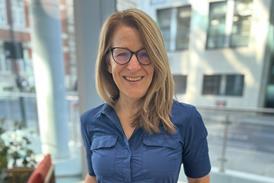




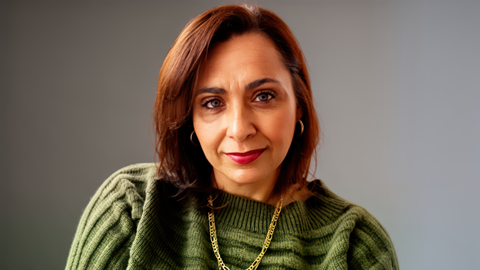
Jacquelene Botha’s parents were murdered in their South African home by someone they trusted. In the years that followed, Jacquelene has wrestled not only with loss, but with a faith that speaks of ’honey from the carcass’—and what that could possibly mean in the aftermath of the unthinkable
Ten years ago, Jacquelene Botha’s parents were murdered in their South African home, killed by someone they trusted. “The police phoned my sister,” Jacquelene says. “They said, ‘We’ve found your parents’ car, but we can’t find them.’” That evening, Jacquelene was at an event. She didn’t see the messages immediately. “I only checked my phone at about eleven that night,” she says. “And I saw my sister’s message: ‘Pray like you’ve never prayed before. Mom and Dad are missing.’”
By the time she called her sister, her brother had already gone to the house (the police had been there previously but not gone inside). “He was the one who found them,” she says quietly. Her father had been attacked in the kitchen. Her mother’s body had been hidden in a manhole outside. “There’s no way to soften that,” Jacquelene says.
“The day after we found out about the murder,” she says, “one of my Nigerian friends from our Bible group messaged me. He said his father had been praying for me, and he felt he needed to give me a word: ‘there will be honey from the carcass’.” She pauses. “I didn’t understand it. Not at all. But that phrase…it became the theme of my life.”
An internationally bound marriage
Jacquelene grew up in Nigel, a small town on the eastern outskirts of Johannesburg. Her identity, she says, is rooted deeply in her South African upbringing. She met Martin after university. They married in 2001, and, almost immediately, life began to stretch beyond what she had known. “He proposed, and then said, ‘By the way, I want to go to Cape Town.’ So we just…went.” Their early years in Cape Town were, in her words, “glorious”. But even that first move carried emotional weight.
“Back then, people didn’t just fly everywhere,” she says. “Leaving your family like that, it already felt like immigration.” In 2005, they moved again, this time to the UK, under the Highly Skilled Migrant Programme. Martin had spoken at their wedding about wanting to sit on a bench with his grandchildren one day and tell them an “international story”. That vision became a thread that ran through their marriage.
Work took them across continents, to France, Canada, Saudi Arabia. For years, Martin commuted internationally, sometimes working two weeks in one country and two weeks in another. “If you read it all together,” she says, “it almost doesn’t seem possible. But we were incredibly blessed.”
The day that split everything in two
That sense of blessing collided brutally with loss. Her parents were preparing to visit her in England. Jacquelene, pregnant at the time, had planned a surprise. “I hadn’t spoken to them for three or four months,” she explains. “Not because anything was wrong; I wanted to surprise them that I was pregnant with our third.”
Jacquelene had arranged a photo shoot. Her daughters would meet their grandparents at the airport holding a sign announcing the new baby. “It was going to be this beautiful moment,” she says. Instead, that same morning became the estimated time of her parents’ deaths. “The very hour I took those photos,” she says, “is the hour the evidence suggests they were murdered.”
Jacquelene still struggles to hold those two realities together. “I look at those photos and think, I was trying to do something so beautiful for them. And that’s the exact moment they were dying.”
When something like this happens, it doesn’t just bring grief. It exposes everything
The news did not come all at once. Her parents were killed three days before they were due to travel. That afternoon, police found their car, driven by the family’s gardener, with belongings still inside. He had been clearing out their house, and was taken into custody.
At the time, even Jacquelene’s physical response was shaped by that tension between life and death. “My body immediately went into protection mode,” she explains. “It was like, there’s life inside you, you have to protect it, even while everything else is collapsing.” She remembers the shock viscerally. “My sister and I both said the same thing: we both needed to go to the toilet. Trauma does strange things to your body.” She herself lay on the bathroom floor that night, unable to sleep.
“You’re just stuck in a loop,” she says. “Your life is ripped away from you. Everything you knew, gone.” The investigation and trial that followed only deepened the trauma.
“For three years, we had no clarity,” she says. “Court dates would be postponed, judges would change, lawyers would change. You just lived in this constant uncertainty.”
The murder had been planned, she believes. “It wasn’t just a robbery,” she says. “[The gardener] knew the house, the routine, the vulnerability.” While the gardener was sentenced to double life without parole there were suspicions of others being involved, but no definitive answers and no one else was put on trial. “You never get closure,” she says again. “That’s one of the hardest things. You always wonder: What really happened?”
In the aftermath, family relationships broke down. “When something like this happens,” Jacquelene says, “it doesn’t just bring grief. It exposes everything.” Old wounds resurfaced. Distance made reconciliation harder. “We became estranged,” she says. “And when you’re in another country, you don’t just bump into each other. The silence grows.” Her relationship with her mother had already been complex. There had been pain in her upbringing, emotional and physical, but also deep love.
In 2013, they had begun to heal. “I said to her, ‘I love you, but I have this against you,’” Jacquelene recalls. “And she listened. She acknowledged it. She apologised. I forgave her.” That reconciliation changed everything, briefly. “We were meant to see each other again for the first time after that,” she says. “That visit…it was meant to be healing.” Instead, it never happened.
“So I was left with what psychologists call complicated bereavement,” she says. “There were things I couldn’t resolve, conversations I couldn’t finish.”
Faith in the tension
Jacquelene’s faith did not shield her from the impact of what happened, but it shaped how she understood it. “We grew up in a very strong Christian home,” she says. “Faith was always central.” But after the murders, that faith was tested. “I asked God, ‘Why?’” she says. “Why this? Why more? Wasn’t this enough?” The prophetic phrase returned to her again and again: “honey from the carcass”.
“It comes from Samson’s story in Judges 14,” she explains. “Something sweet coming from something dead.” But she is quick to clarify: “There was no honey at the beginning. There was just a carcass. Brutal, ugly, unbearable.” It took ten years before she could begin to see anything else.
“The honey isn’t material,” Jacquelene says. “It’s not money or success. It’s spiritual. It’s the knowledge that God is still good, even when nothing else is.”
If anything, life became more difficult. After moving to Saudi Arabia, just weeks after the birth of her youngest daughter, Jacquelene found herself alone, grieving and adjusting to yet another country. “I was in trauma, in mourning, with a newborn, immigrating again,” she says. “It was a lot.”
Later came COVID, financial losses and ongoing instability. “It felt like the suffering didn’t stop,” she says. “You think trauma is one event, but sometimes it’s not. Sometimes it’s a season. Or a decade.” One of the deepest impacts, she says, was on her identity.
“The way I describe it is like a puppet,” she says. “And the strings are cut. You just fall.” Everything that had anchored Jacquelene – family, belonging, history – was gone or fractured. “I wasn’t who I used to be,” she says. “And I couldn’t go back.” Her book traces that journey: who she was, what she lost and who she is becoming. “I will never be that person again,” she says. “But I can become someone new.”
Choosing the honey
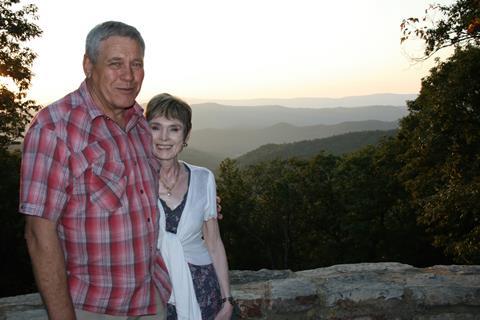
Today, Jacquelene lives with what she calls a constant tension between good and evil, life and death. “God didn’t remove the carcass,” she says. “He put honey inside it.” That does not mean the pain disappears. “It’s still there,” she says. “The grief, the questions, the loss.” But it does mean she has a choice.
“The theme of my life now is this,” she says. “If I’m looking at something painful, can I find the honey?” She teaches her daughters the same perspective, grounding them in faith while acknowledging the reality of suffering. “It’s not about pretending things are OK,” she says. “It’s about knowing God is still at work, even here.”
Jacquelene’s story stands as both testimony and challenge. “What is your carcass?” she asks. “And can you find the honey?” Because, she says, that is the truth she has come to live by: “God doesn’t separate the two. The carcass stays. But so does the honey.”
She adds “There is always honey. You just have to choose to find it.”
Jacquelene’s memoir Honey from the Carcass is published by Honey and Crown Publishing, an independent imprint she founded to publish honest stories that nourish readers. To find out more go to honeyandcrown.com
















No comments yet