








As growing numbers of women feel forced to abandon outdoor exercise during the darker winter months, Jenny Sanders asks why women should have to change their behaviour because of harassment. She explores how Christians and churches can help women reclaim their freedom and feel safer in their communities.
Ever since I collapsed in an asthmatic heap after a primary school race, it’s been evident that I’m not a runner. This was confirmed more recently when I downloaded the Couch to 5K app in a bid to improve my personal fitness. A combination of storms, winter flu and a twisted knee conspired to bring that experiment to an abrupt end.
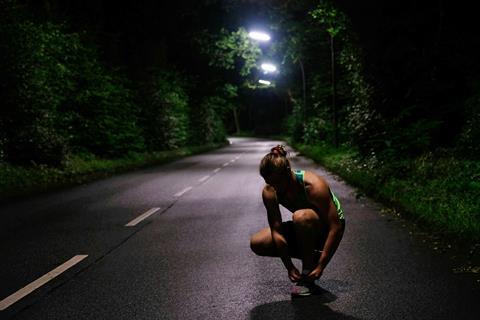
For better and more committed runners than myself, there’s a seasonal element to throwing in the proverbial towel on outdoor exercise. Changing the clocks has ushered in darker evenings; consequently, many women now face the prospect of what’s becoming known as an ‘unspoken curfew’.
BBC News recently reported on both national and local stories, confirming that the seasonal hazards facing women who exercise outside have reached untenable levels.
Catcalling, sexualised jeering, whistles and unsolicited comments are all making evening exercise more challenging than usual, as runners express concern for their personal safety. Some women report that they have been followed by vehicles, others by intimidating male runners; still others tell of men running alongside them, increasing their feelings of threat and vulnerability.
READ MORE: I prayed for God’s protection… I forgot to pray about my Zara trousers
So, what choices do women have?
So, what choices do women have? Gyms and swimming pools have lighting, but running routes frequently do not. There may be differences between urban and rural running conditions, but the basic question remains: do we sacrifice our autonomy and put those running shoes away until the spring or, quite literally, run the gauntlet of possible harassment? If women give up this form of pre- or after-work exercise, are they effectively being punished twice over by sacrificing something they love?
Common sense tells us that there’s safety in numbers, so finding a local running group may be a positive way forward, but that’s not so practical if you live in a more isolated area. Equally, groups are often populated by ‘serious’ runners whose pace may be markedly different from your own.
Sport England, which has been operating since the late 1990s, is sponsored by the Department for Culture, Media and Sport and funded by the National Lottery. Its ‘Lift the Curfew’ campaign has attracted 10,000 sign-ups and aims to challenge the accepted norm that women should be the ones adjusting their behaviour rather than holding harassers responsible. Its This Girl Can campaign reported that 55 per cent of women feel unsafe exercising outdoors alone after dark, compared with 33 per cent of men.
READ MORE: Shining a light on women’s safety
Similarly, Team England says that, in the last fortnight, more than 22,500 people have actively participated in its week-long campaign to highlight the challenges women face when exercising over the winter months. It quoted statistics showing that more than 75 per cent of women alter their outdoor activity during this season, which not only impacts mental health and wellbeing but also reinforces the startling ‘gender activity gap’.
One Lancashire running group has been given a body camera to deter would-be harassers and record any incidents. Appropriate footage is handed over to the police as part of the ‘Her Right to Roam’ project. In Surrey, another group now includes plain-clothes female police officers who are providing protection, boosting confidence and identifying hotspots of intimidation.
READ MORE: The Lens: I signed up for a half marathon and somehow found God in the pain
Runners or not, what can we do to help?
1. As Jesus-followers, we have an obligation to support the women in our communities, regardless of whether we are runners ourselves. Do you have a friend, or friends, who are struggling to continue their outdoor sports? We can encourage them to reach out to a local group, but why not suggest that your own church family starts one? It could be a great tool for evangelism and provide a refuge for women who are looking for solidarity as they run.
2. If, like me, you’re not a runner, perhaps you can don a high-vis jacket and cycle next to a running friend one or two evenings a week so they aren’t alone. If you choose a pace that allows conversation, it could be a great time for catching up and even praying together (so long as you keep your eyes open!).
3. Phone apps that track locations and allow friends to check in on one another can be helpful too.
In the race of life, we all need friends to run with us and encourage us. Now is a good time to start.
























No comments yet